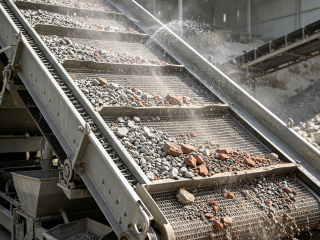
This practical guide breaks down the core rules for selection and bulk procurement of quarry aggregate screening mesh, tailored to real-world site conditions across North America, Australia and Europe
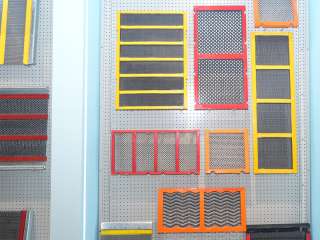
Self-cleaning screens have quietly become a game-changer on modern mining sites—not by adding complexity, but by solving a problem every operator knows too well: blinding When fine, damp material clogs standard mesh, productivity tanks
Savvy operators are discovering that the unique properties of polyurethane fine screens provide the ultimate line of defense, delivering desliming and dewatering performance that traditional steel screens simply cannot touch
 wire Shift and Ensures Long-Term Screening Accuracy">
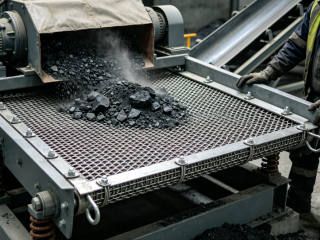
Choosing a lock-crimp woven wire screen is a strategic decision for any operation that values precision By mechanically locking the wires in place, this design prevents the dreaded wire shift that plagues standard meshes
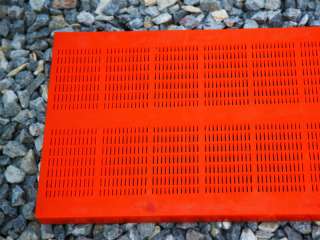
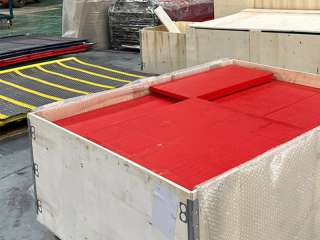
In the screening of sand and gravel aggregates, polyurethane modular screen panels offer comprehensive upgrades in terms of service life, maintenance, and efficiency
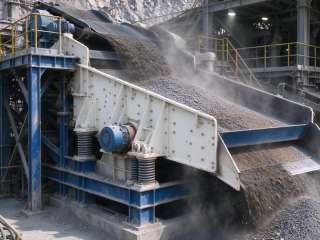
A Vibrating Screen Equipment is not magic: it is a tuned system where the particle has to stratify, present itself to the aperture, and pass or reject without the deck getting in its own way
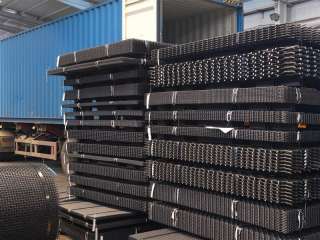 wire Screens in Mining and Quarrying Industries">
In mining and quarrying, the true cost of a woven wire Mesh panel is not the invoice—it is screened tonnes per millimeter of crown loss, changeout labor, crusher overload, and product that missed spec
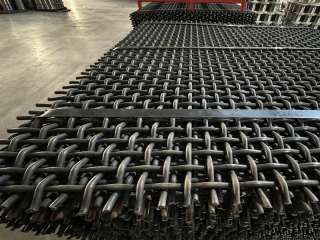 wire Screen: Why It Performs Exceptionally Well in the Coarse Screening of Large Ore">
If you frequently replacing screens, the issue may be the choice of screen, Heavy-duty metal screens are specifically engineered to withstand such demanding operating conditions, and their superior performance is well-proven
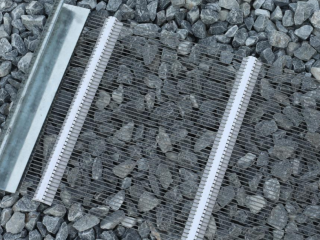 wire Screen: Efficiently Application to Screen Dry and Wet Sand As Well As Soil Aggregates">
A Harp wire Screen solves this differently: instead of a locked grid, it uses long parallel wires held apart by widely spaced cross bonds
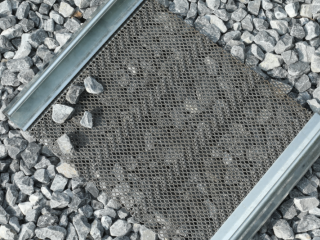
Anyone who has ever screened fine particles knows that these materials often clog the screen,leading to a decrease in throughput The D-type diamond self-cleaning screen is designed to solve these problems
