Harp Wire Screen for Wet Sand and Sticky Aggregate Anti-Blinding
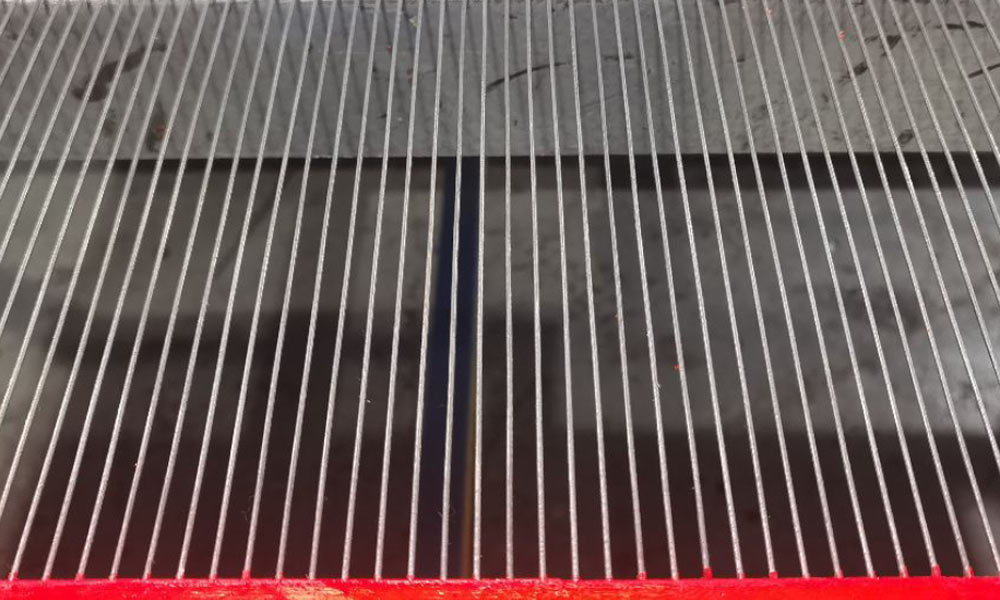
A rigid square mesh does fine until the feed stops being polite. The moment sand carries surface moisture, or soil aggregate shows up with clay lumps and near-size grains, the crossover points in woven wire become dead zones where fines paste over and apertures quietly seal shut. Throughput drops, the bed thickens, oversize rides into the fines pile, and the crew reaches for the scraper again. A Harp Wire Screen solves this differently: instead of a locked grid, it uses long parallel wires held apart by widely spaced cross bonds, so each wire is free to find its own micro-vibration under the screen box motion and the weight of the material itself. That independent movement is what keeps damp sand flowing and sticky soil aggregates from turning the deck into a clogged tray.
How the Independent Wire Stays Clean
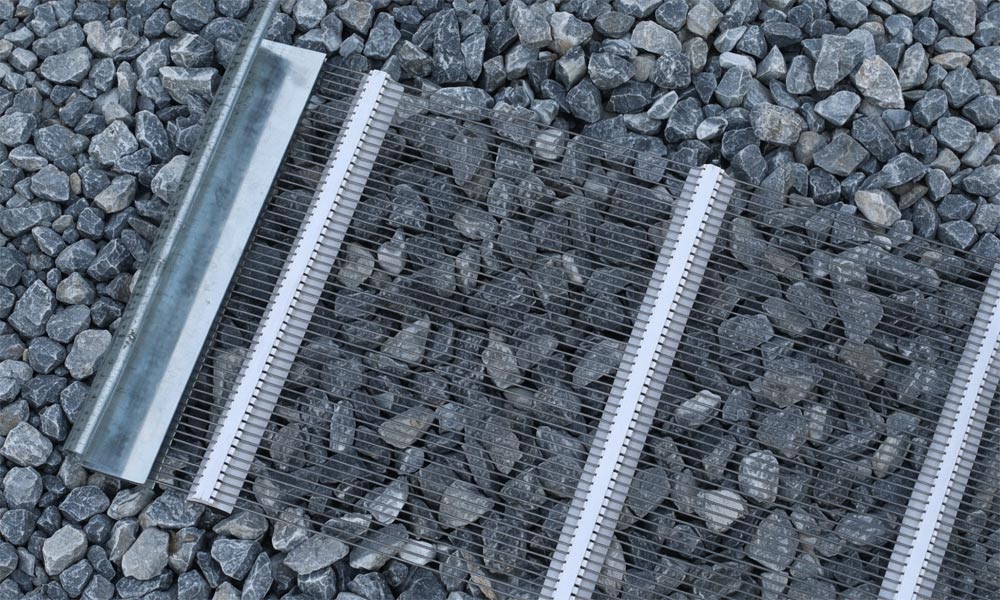
The self-cleaning action is not a coating or a gimmick—it is physics. In a conventional weave the warp and weft lock the hole still; in a Harp Wire Screen the longitudinal wires are tensioned separately and bridged at intervals by thin metal or polyurethane cross straps. When the deck runs, every wire oscillates slightly out of phase with its neighbor, creating a secondary whipping vibration that flicks near-size particles out of the slot and breaks the capillary film before wet fines can bridge across. Pegging gets ejected by the wire movement, blinding never gets the quiet moment it needs to set, and the effective open area stays high through the shift instead of collapsing after the first rain. The cross bonds also let the panel keep a stable slot geometry, so the cut point stays readable even while the surface is doing its own vibration on top of the machine stroke.
Dry Sand and Free-Flowing Aggregate
On dry, free-flowing sand the harp layout is almost unfair. Because there are no tight woven intersections choking the opening, the slot-style geometry gives one of the highest open areas of any screening media—often meaningfully more than square woven cloth of similar wire diameter. Fines drop fast, stratification improves, and a smaller screen box can push more tonnes per hour than it could on rigid mesh. For concrete sand, plaster sand, silica, and clean gravel fractions, a Harp Wire Screen removes the 0–3 mm or 0–5 mm fines efficiently without the bed packing. The trade-off is accuracy: slots pass flaky or elongated particles a little more readily than square holes, so for tight spec shapes a triangular or diamond harp variant is the smarter pick. But where the goal is throughput and anti-clog rather than laboratory-grade sizing, the harp wins quietly.
Wet Sand, Clay Soil, and the Sticky End
Wet feed is where the harp earns the invoice. Moist sand around the critical 4–8% range, washed aggregate, loamy soil, and clay-bearing pit run material normally blind a standard mesh within minutes; the harp keeps working because the wire never sits still. Vertically crimped harp wires suit round or cubic wet grains with maximum permeability, horizontally crimped variants handle flatter shapes with better accuracy, and straight-wire string harps with PU cross ties shine on clay-rich soil where flexibility and wear life both matter. A Harp Wire Screen on the fine deck of a washing circuit typically needs far less spray water, far fewer stoppages, and almost no manual scraping, while holding the cut far better than a blinded square mesh pretending to be 3 mm. Around 10% of the feed being coarse "knocking" particles—several times the aperture—further helps by tapping the wires clean as they fall.
Zoning, Tension, and Where Not to Use It
Like every self-cleaning media, the harp has a lane. Put it on the impact lip of a primary scalp deck and it will fatigue—coarse ROM wants punch plate, manganese, or thick lock-crimp woven wire up top. The harp belongs on the middle and lower decks where fines separation actually happens, paired with impact protection at the feed nose and cushioned support bars so the wires are not cut at the crown. It must be tensioned along the wire direction, not diagonally, or the self-cleaning frequency never develops. Wire diameter is a balance: too thin and it breaks early, too thick and the independent vibration dies. A Harp Wire Screen is usually high-tensile spring steel, with stainless for corrosive wash circuits, and PU cross straps where abrasion is brutal. Zoned correctly, it outworks rigid mesh on exactly the feeds that used to shut the plant down.
If your sand blinds after rain, your soil aggregate screens into clumps, or your fine deck spends more time being scraped than screening, the mesh was specified for dry catalogue ore instead of your real pit. Send us the material type, moisture and clay load, PSD with the near-size band, deck model, stroke and G-force, current panel photos, and the cut your product spec enforces, and we can lay out a Harp Wire Screen strategy instead of another doomed roll order: slot, triangle, or diamond geometry matched to grain shape, wire diameter and crimp tuned to impact and self-cleaning frequency, PU cross ties for abrasion, feed-end impact protection, correct longitudinal tensioning, and a wear log by blinded area and aperture drift. Do that, and damp sand stops pasting the deck, sticky soil stops clumping over the holes, the fines report clean to the product pile, and the Harp Wire Screen finally does what it was built for—keep moving, keep open, and keep the plant running while the rigid mesh crowd is still looking for a scraper.