The Final Line of Defense: Maximizing Coal Recovery with Polyurethane Fine Screens
In the high-stakes world of coal preparation, the thickening and filtration stages get plenty of attention, but the real final exam happens on the dewatering screen. This is the absolute last stop before clean coal hits the conveyor belt and heads to the customer. For plants wrestling with fine coal slurry, the choice of screen media isn't just a detail—it's a critical business decision. Increasingly, savvy operators are discovering that the unique properties of polyurethane fine screens provide the ultimate line of defense, delivering desliming and dewatering performance that traditional steel screens simply cannot touch.
Superior Desliming: Removing the "Junk" from the Coal
The primary mission of the final screen is desliming—scrubbing off those fine, sticky clay particles that cling to the coal surface. These slimes are dead weight; they lower the coal's heating value and can even cause issues at the power plant. Polyurethane fine screens excel here because they maintain perfectly consistent apertures. Unlike woven wire, which can stretch and deform over time, polyurethane holds its shape. This ensures a sharp, clean cut that effectively washes away impurities while keeping the valuable coal on the screen, resulting in a much purer final product.
Aggressive Dewatering for a Heavier Payload
Water is expensive to ship. The more moisture left in the coal, the less money you make per ton. The magic of a polyurethane fine screen lies in its flexibility. As the screen vibrates, the elastic material creates a snapping action that breaks the surface tension of the water. This action forces moisture through the openings far more aggressively than rigid steel. The result is a drier product with a significantly lower moisture content—meaning you’re putting more saleable coal and less water on those outbound trucks.
Built to Last in a Brutal Environment
Let’s be honest: the discharge end of a dewatering screen is a brutal place. The constant flow of abrasive slurry and corrosive chemicals chews through metal panels. Polyurethane is different. Its resistance to abrasion and chemical attack means these screens have a much longer service life. You aren't constantly stopping production to patch holes or swap out worn panels. This durability ensures that your final line of defense remains strong, shift after shift, without constant babysitting.
Anti-Clogging Elastic Structure Eliminates Fine Coal Loss from Blocked Mesh
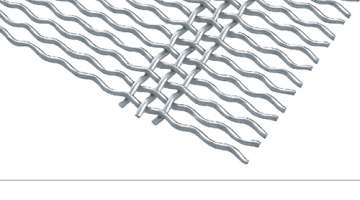
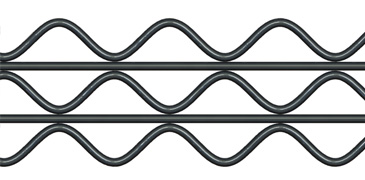
The first core performance advantage of these specialized screens comes from the precisely formulated polyurethane elastomer matrix, whose unique alternating soft and hard molecular segment structure gives it a low friction coefficient of only 0.3 to 0.5, far lower than the surface friction of ordinary metal woven fine screens. The pre-crimped interlocking weave structure embedded inside the polyurethane body creates a subtle secondary micro-vibration effect under normal high-frequency screen operation, which shakes off sticky fine coal particles that would otherwise adhere to the mesh edges and cause persistent clogging, eliminating the common scenario where blocked screen openings force fine clean coal to flow directly into the tailings pond. Field test data from multiple large-scale coal washing plants shows that these screens can maintain more than 90% of their total open area even after 30 days of continuous operation processing 12%+ moisture sticky raw coal, drastically reducing fine coal loss caused by blocked mesh, making this high-quality Pre-crimped hooked woven screens directly boost total fine clean coal recovery rate by 3% to 6% for most coal washing circuits.
Optimized Tapered Aperture Design Maximizes Effective Throughput
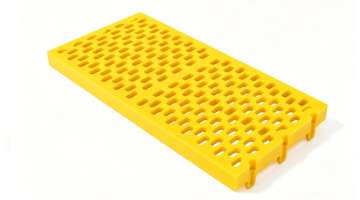
The second key functional benefit comes from the precision molded inverted tapered aperture design, where the inlet opening is 15% to 20% larger than the outlet opening, creating a natural "suction effect" as coal slurry flows through the mesh that pushes fine particles smoothly through the screen instead of getting wedged and stuck in the openings. Unlike traditional metal woven fine screens that have to reduce open area drastically to improve structural strength and avoid tearing, the excellent elastic deformation resistance of polyurethane allows the screen to retain a total open area ratio of 30% to 45% while still maintaining consistent, uniform mesh openings with tolerance kept within ±3%, drastically improving fine coal slurry throughput by 20% to 30% compared to ordinary fine screens with the same separation particle size. This optimized open area design also avoids the common problem of oversize gangue particles slipping through the screen and contaminating the final clean coal product, ensuring the final clean coal ash content stays strictly within the required specification, making this Pre-crimped hooked woven screens a critical upgrade that balances high recovery rate and strict product quality control perfectly.
In conclusion, integrating polyurethane fine screens into your coal slurry circuit is a smart move. They provide superior desliming to purify your product and aggressive dewatering to maximize your payload. As the final checkpoint in the process, they ensure that what leaves your plant is exactly what the customer ordered: clean, dry, high-quality coal.