Comprehensive Guide to Selection and Bulk Procurement of Quarry Aggregate Screening
Every quarry operation manager knows that a poorly chosen screening mesh can eat up 20% of your production capacity in no time. Frequent tear-offs, unexpected downtime and inconsistent aggregate grading are common pain points that come with picking the wrong product. This practical guide breaks down the core rules for selection and bulk procurement of quarry aggregate screening mesh, tailored to real-world site conditions across North America, Australia and Europe.
Match Mesh Type to Your Exact Aggregate Stage
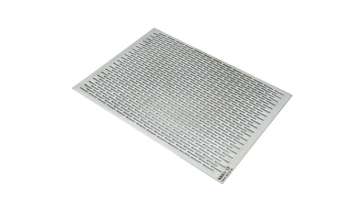
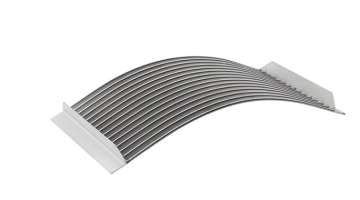
For coarse scalping before the primary jaw crusher, locked crimped high manganese steel woven mesh is the top pick. It handles 300mm+ rock impacts without shifting apertures. For mid-stage aggregate sizing, wedge wire welded mesh delivers 95%+ grading accuracy and cuts blinding rates by 35%. For fine finished aggregate classification, modular polyurethane panels reduce noise by 40% and last 3 times longer than standard steel mesh. Many Australian quarries report 25% higher throughput after switching to stage-matched quarry aggregate screening mesh.
Start With the Rock, Not the Catalogue Number
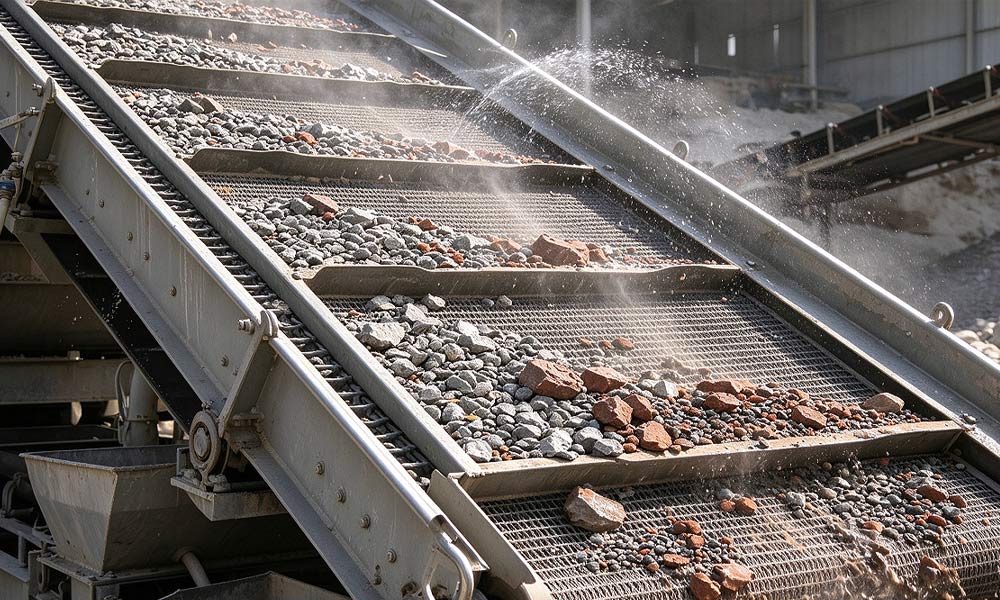
The first mistake in any quarry is asking “what mesh do you sell” instead of “what is my material doing on the deck.” A Screen Mesh has to answer four questions before a single wire is drawn: what is the PSD and how much near-size material sits around the cut point, what is the moisture and clay content through the season, how much impact does the feed end take, and what product spec does the customer actually pay for. Dry cubical gravel behaves nothing like wet, clay-coated limestone, and flaky shale pegs a square hole while a slotted opening shrugs it off. A Screen Mesh matched to rock hardness, particle shape and feed moisture will outproduce a “stronger” panel that was chosen from a price list.
Mesh Family: All Five Screen Types
Quarry plants usually need more than one media type. Woven wire Screen Mesh — high-carbon, 65Mn spring steel or stainless — gives high open area and accurate sizing on dry, relatively clean aggregate, and it remains the default for fine-to-medium classification. Polyurethane panels win on abrasive decks and sticky fines because they resist wear, damp pegging and often keep apertures stable far longer than steel. Rubber panels soak up impact on primary scalping decks and cut noise around residential quarries. Perforated plate handles big lumps and coarse scalping but sacrifices open area. Self-cleaning wire or PU-strip panels earn their money when moisture and near-size material would blind ordinary cloth. A quarry that buys only one Screen Mesh type is usually paying for it in either downtime or misclassified product.
Aperture, Wire Diameter and Open-Area Trade Nobody Can Ignore
Aperture gets all the attention, but wire diameter is the silent driver of cost per tonne. For square woven media, open area is roughly (aperture ÷ (aperture + wire diameter))², so a 10 mm hole with 2 mm wire runs about 69% open area, while the same 10 mm hole with 4 mm wire drops near 51%. Thinner wire passes more material and improves stratification, but wears faster and dents under impact. Thicker wire fights abrasion and boulder shock, but steals open area and can make the bed deep and sluggish. A Screen Mesh spec should therefore state aperture, wire diameter, material, crimp or panel type and tolerance — never just “10 mm mesh.” Two panels with the same hole and different wire are two completely different machines.
Crimp Style, Slot Direction and Why Square Is Not Always Right
Crimp is not decoration. Double crimp and lock crimp keep intersections from walking under heavy vibration, flat-top crimp reduces impact wear on sharp aggregate, and intermediate crimp sits between the two for general quarry duty. Aperture shape matters just as much: square holes give familiar gradation control, slotted openings raise open area and help flaky or elongated particles tip through instead of pegging, and tapered PU or rubber apertures release near-size rock instead of corking the hole. A Screen Mesh on a granite chip line may want square for spec control; a damp limestone deslime deck may want slotted or self-cleaning just to keep breathing. Slot orientation relative to flow should also be specified, because a slot running the wrong way can quietly downgrade product quality.
Bulk Procurement Tips to Cut Long-Term Costs
When ordering quarry aggregate screening mesh in bulk, never only compare unit prices. Ask suppliers to provide 2 full sets of test samples first, run a 72-hour on-site trial to check actual wear resistance. Lock in a 90-day lead time buffer and 30% emergency stock for high-wear sizes. Top European quarry groups use this method to cut their annual screening mesh procurement cost by 32% without sacrificing service life.
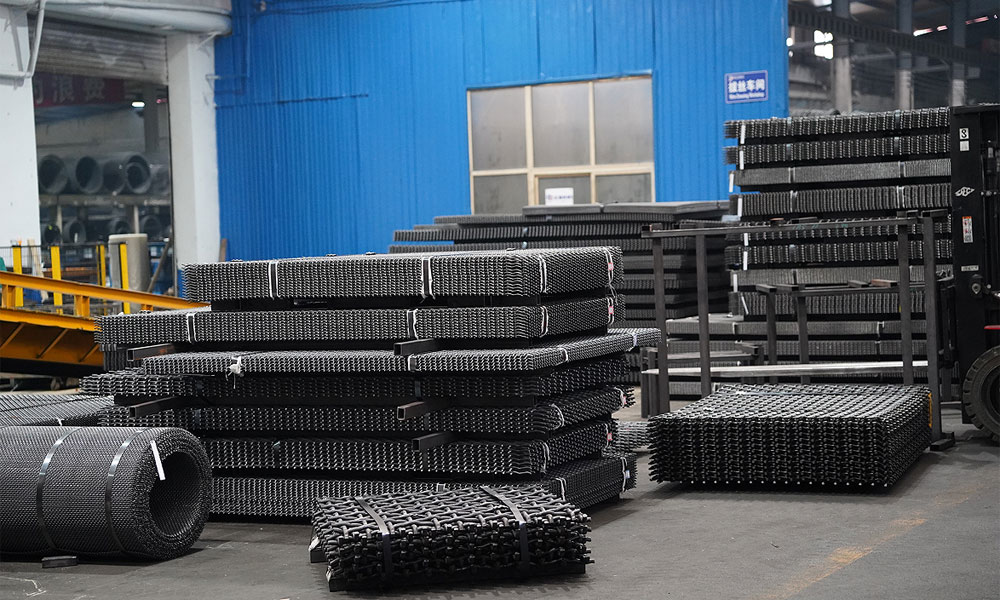
The right selection and bulk procurement of quarry aggregate screening mesh is never about chasing the cheapest price. It is a practical investment that reduces unplanned downtime, stabilizes finished aggregate quality and brings consistent long-term returns for every quarry operation.