Structural Principles and Practical Mining Applications of Self-Cleaning Screens
Self-cleaning screens have quietly become a game-changer on modern mining sites—not by adding complexity, but bysolving a problem every operator knows too well: blinding. When fine, damp material clogs standard mesh, productivity tanks. That’s where the structural principles and resonance effects of these specialized screens come into play, turning a maintenance headache into a seamless part of the extraction process.
The Structural Logic Behind Reduced Blinding
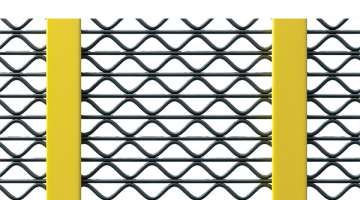
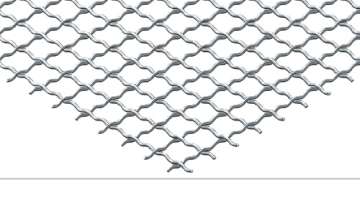
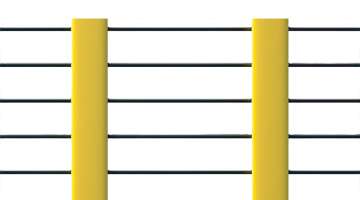
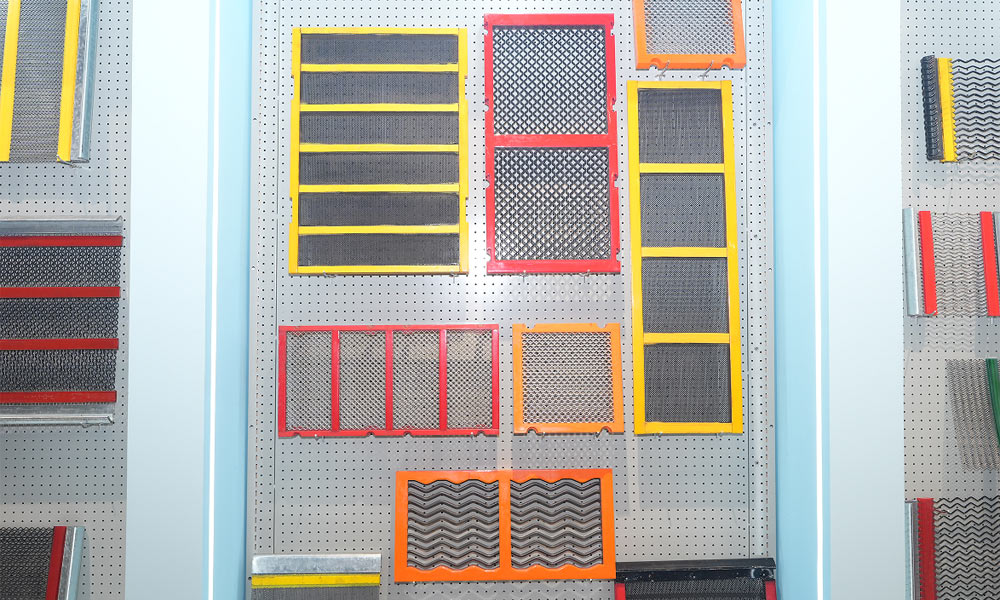
Unlike static woven wire, self-cleaning screen panels are built from independently vibrating polyurethane strips or crimped wires set at alternating angles. This design creates thousands of micro-movements across the surface with every vibration cycle. In practical terms, it means particles don’t get the chance to settle and wedge into the openings. I’ve seen sites switch from traditional mesh to modular self-cleaning decks and immediately notice fewer stoppages—the structure quite literally shakes off the issues before they start.
Why Wire Diameter Is the Real Control Knob
People talk about aperture like it is the only number that matters, but aperture is only half the story. For a square Mining Welded Screen the open area is roughly (aperture ÷ (aperture + wire diameter))², so the wire thickness sits inside the denominator and quietly governs how much deck is actually hole. Take a 10 mm aperture: drop from 4 mm wire to 2 mm wire and open area jumps from about 44 percent to about 69 percent, which is not a tweak — that is a different machine. The same panel with 4 mm wire will outlive the thin version on abrasive feed, but it will also pass less material per hour and can let the bed cake if feed moisture rises. A Mining Welded Screen spec that fixes the hole and forgets the wire is like buying a pump by inlet size and ignoring the impeller: the number looks right, the plant still underperforms.
Wear Resistance Comes From Cross-Section, Not Slogans
Abrasion is a volume game. Every tonne of sharp ore sliding across the deck removes metal from the wire crown, and a thicker wire simply has more material to lose before the aperture drifts. Impact is a different beast — a boulder dropping on a thin welded wire can dent, fracture the weld nugget, or loosen the intersection even if the steel is hard, because the energy has nowhere else to go. A Mining Welded Screen in the primary or scalping position therefore leans toward heavier wire or wear-pad inserts at the feed end, while the lower sizing deck can afford a finer wire because the bed is thinner and the impact has already been spent upstream. High-carbon steel, oil-tempered wire, 65Mn and wear-alloy grades all help, but no alloy fully compensates for specifying a 1.5 mm wire where the circuit is throwing 40 mm angular iron ore at it all shift.
Screening Efficiency Collapses When Open Area Drops
The other side of the bargain is just as unforgiving. A Mining Welded Screen with too much steel on the surface stratifies poorly: fines cannot reach the apertures fast enough, the material bed stacks up, near-size particles skate across the top, and the oversize pile starts carrying saleable fine ore. In wet or clay-tainted feeds this gets worse, because lower open area means fewer escape routes for the undersize and more surface for slime to bridge against. Plants often blame “bad mesh” when the real crime was specifying a heavy wire to chase life and accidentally choking the deck. A Mining Welded Screen is supposed to separate, not filter through a steel lattice, so once open area falls below what the feed density and vibration parameters need, efficiency leaks away long before any wire breaks.
The w/d Ratio: A Simpler Way to Talk to the Plant
Instead of arguing “thick vs thin,” experienced screen engineers argue w/d — aperture divided by wire diameter. Light, non-abrasive powders can run w/d of 4 to 6 because open area rules and wear is mild. Sand and aggregate usually sit at 2 to 3, where the panel still passes good tonnage without folding under its own vibration. Heavy-duty mining — basalt, iron ore, hard sandstone — typically lands at 1.5 to 2, because the wire has to survive sliding abrasion and impact even if it costs open area. A Mining Welded Screen specified with this ratio in mind stops being a catalogue guess and becomes a duty-matched component: the quarry knows why the top deck is heavy, the mill knows why the bottom deck is finer, and procurement stops reordering the same panel for every deck position.
How Resonance Effects Keep Material Flowing
By adjusting the frequency of the self-cleaning screen to align with the natural settling characteristics of the material, the phenomenon of wet ore or fine aggregates "clumping" can be effectively prevented. Real-world data from mining operations indicates that adjusting the resonance parameters of the self-cleaning screen during humid weather conditions resulted in a 20% increase in screening efficiency; achieving such results requires an understanding of the screen's structure and working principles.
Real-World Mining Wins: From Theory to Tonnes
Moisture content tends to fluctuate during iron ore processing, and self-cleaning screens can significantly reduce downtime compared to conventional equipment. In coal washing operations, the high stickiness of wet coal often leads to screen blinding; self-cleaning screens mitigate this issue, making them a superior choice over standard screens. They withstand highly abrasive operating conditions and do not require frequent manual cleaning or maintenance. For mining facilities, adopting self-cleaning screens reduces the need for manual cleaning, extends the service life of the screen panels, and boosts production efficiency.
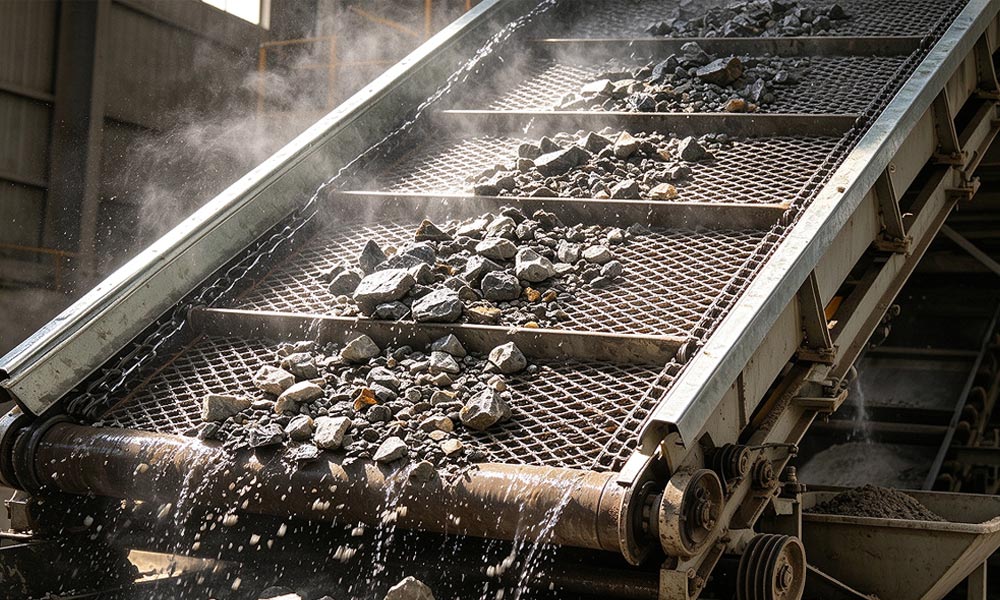
Self-cleaning screens ensure stable operation across the diverse and challenging conditions found in mining plant screening processes. Whether handling sticky, fine materials at high temperatures or frozen aggregates in cold weather, understanding and correctly utilizing self-cleaning systems can significantly boost screening productivity and efficiency. If your mining operation is struggling with screen blinding due to improper screen usage, self-cleaning screens are an excellent solution.