Built to Last: How Lock-Crimp Weaving Prevents Wire Shift and Ensures Long-Term Screening Accuracy
If you’ve ever had to shut down a screening plant because your mesh stretched out of spec, you know the frustration. In mineral processing, screening accuracy isn’t just about getting the right size; it’s about staying that way. Standard woven wire screens are prone to “wire shift”—those tiny movements that turn a precise 12mm opening into a useless 14mm gap. This is where lock-crimp woven wire screens come in. They aren’t just another screen; they are engineered to hold their shape, ensuring your product stays consistent and your profits stay protected.
The Engineering Behind the Lock-Crimp Weave
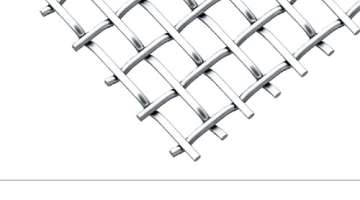
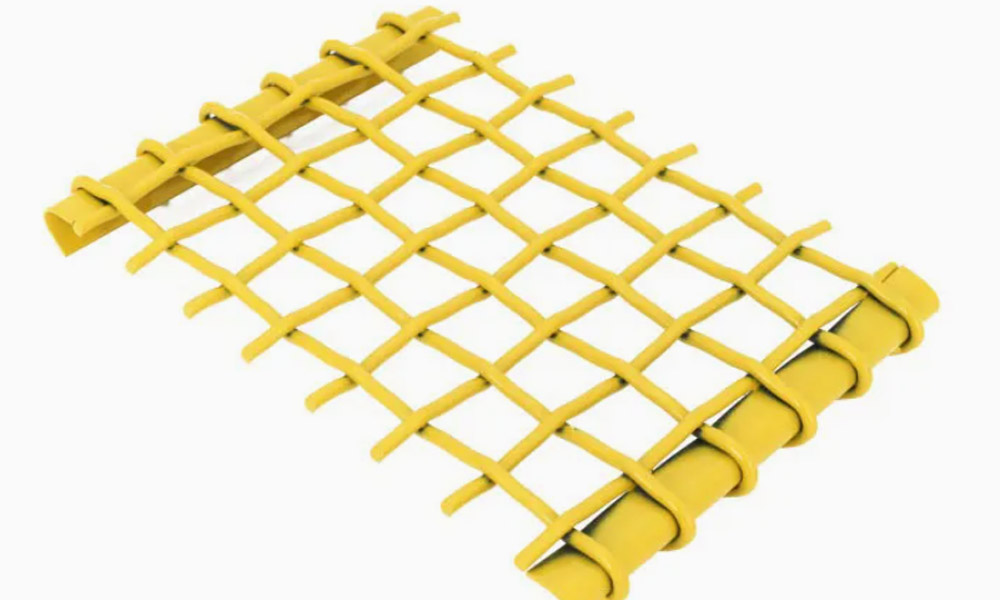
So, what makes lock-crimp different? It all comes down to the crimping pattern. Unlike standard weaves that rely on simple intersections, lock-crimp wire cloth features deep, intermediate crimps pressed into the wire at each point of contact. These extra crimps act like a locking mechanism, physically preventing the wires from sliding past each other under vibration. This creates a rigid, grid-like structure where the aperture is locked in place. It’s a design that prioritizes dimensional stability over everything else.
Preventing Wire Shift in Heavy-Duty Applications
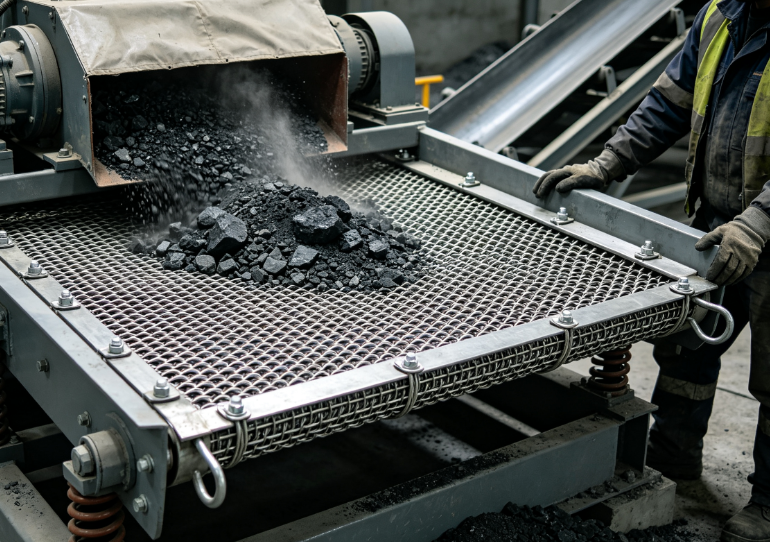
In high-impact environments, like scalping run-of-mine ore or processing large aggregates, the constant pounding tries to shake everything loose. Ordinary screens eventually lose their tension and the wires begin to move, leading to uneven openings and off-spec material. The lock-crimp weave fights back. By eliminating the freedom of movement, it ensures that the screening surface remains flat and the apertures remain square. This stability is crucial for operations that cannot afford to send contaminated or mis-sized product to their customers.
Crimped Interlocking Joints Eliminate Wire Shift at the Source
The first core structural breakthrough that sets this specialized mesh apart from ordinary plain woven wire screens is the unique pre-crimping process, where both warp and weft wires are rolled with precise, matching crimped notches before being woven together, creating fixed interlocking joints at every single wire intersection that lock every wire firmly in its designated position. Unlike ordinary plain woven screens where smooth uncrimped wires can easily slide and shift under continuous heavy material impact and high-frequency vibration, the crimped notches on a high-quality Lock-Crimp Woven Mesh create a rigid, non-slip connection that prevents any lateral movement of the wires even under extreme continuous load. The straight wire segments between the interlocking joints also distribute impact stress far more evenly across the entire mesh surface, eliminating localized stress concentration points that cause premature wire breakage, drastically extending the overall service life of the screen.
Consistent Aperture Maintains Long-Term Grading Precision
The second key performance advantage comes from the precise, repeatable weaving process that ensures every single aperture across the entire mesh panel maintains the exact same designed dimensions, with aperture tolerance strictly controlled within ±3%, far more accurate than the ±15% tolerance of ordinary plain woven wire screens. Unlike standard woven screens where shifting wires create random oversized or undersized gaps that let oversize particles slip into the fine product or block qualified fine particles from passing through, the fully locked aperture geometry of a properly manufactured Lock-Crimp Woven Mesh stays completely consistent even after thousands of hours of continuous operation, maintaining classification accuracy above 95% for far longer. Field test data from multiple mineral processing and industrial material plants shows that this specialized screen reduces mis-screening rates by 60% compared to ordinary plain woven wire screens, delivering far more uniform final product quality that meets strict industrial grade specifications without extra reprocessing steps.
High-Strength Material Options Adapt to Diverse Scenarios
The third critical operational benefit is the wide range of customizable high-strength material options that can be adapted to fit almost any heavy-duty precision grading scenario, from high-abrasion hard rock quarry screening to corrosion-resistant fine chemical material classification. You can select high-carbon steel or 65Mn manganese steel formulations for high-wear mining and quarry applications, where the high tensile strength and excellent abrasion resistance drastically extend screen service life under continuous sharp particle scouring, or choose T304 or T316 stainless steel for food processing, pharmaceutical or corrosive industrial material scenarios where rust resistance and chemical compatibility are top priorities. This flexible material selection, combined with the rigid interlocking structure, makes a well-configured Lock-Crimp Woven Mesh deliver 3 to 5 times longer total service life than ordinary plain woven wire screens of the same wire diameter and aperture size, drastically cutting screen replacement frequency and unplanned downtime for your entire operations team.
Long-Term Screening Accuracy and ROI
The real benefit of a lock-crimp woven wire screen is consistency. Because the wires don’t shift, the screening accuracy you see on day one is the same accuracy you get on day ninety. You aren’t wasting time checking for stretched openings or replacing screens that went out of tolerance. While the initial cost might be slightly higher than a basic mesh, the extended service life and reduced downtime make it a smarter financial choice. It’s an investment in reliability.
In summary, choosing a lock-crimp woven wire screen is a strategic decision for any operation that values precision. By mechanically locking the wires in place, this design prevents the dreaded wire shift that plagues standard meshes. It delivers unwavering aperture stability and ensures your screening operation runs smoothly, accurately, and profitably for the long haul.