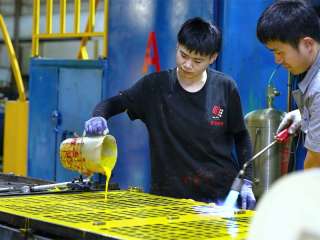
 Polyurethane Screen Panels: Combining Lightweight Design with High-Strength Performance">
The Steel-Reinforced Polyurethane Screen delivers a perfectly balanced solution that eliminates most of these long-standing on-site pain points
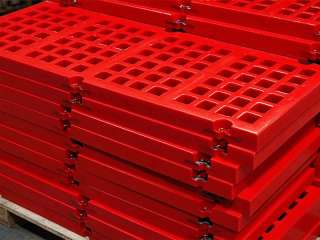 Polyurethane Screen Panels and Safe Operation">
For operations processing wet, sticky, or fine materials, Screen blinding is a major efficiency killer Beyond choosing the right aperture, the surface design of Polyurethane Screen panels is critical
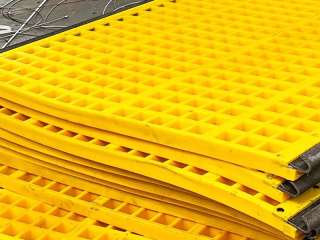 Polyurethane Screen Panels for Zinc Ore Processing">
Processing zinc ore presents a unique set of challenges for Screening equipment This is where specially formulated Polyurethane Screen panels offer a targeted anti-adhesion and wear-resistant solution
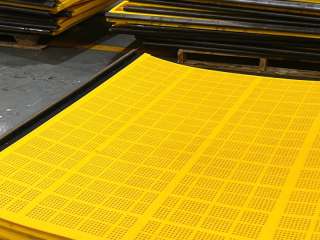 Polyurethane Screen panels to extend service life">
In mineral processing, vibrating Screen panels face constant stress, and failure often begins at the edges While panel aperture determines separation, edge integrity dictates overall lifespan
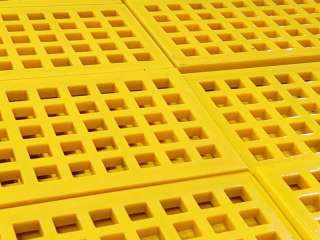 Polyurethane Screen Panel Replacement Cycles: Wear Monitoring and Spare Parts Planning">
The solution of unplanned Screen panel failures is shifting from reactive replacement to a predictive system for Polyurethane Screen panel replacement cycles based on wear monitoring and data-driven spare parts planning
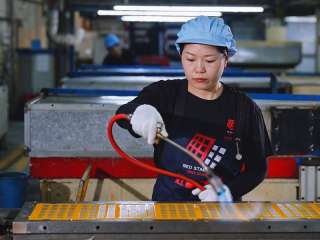 Polyurethane Screens In Preventing Clogging for Screening Sticky Materials">
Processing sticky, high-moisture materials like clay-rich spodumene is a constant fight against Screen blinding The structural design of Polyurethane Screens tackles this problem at its source
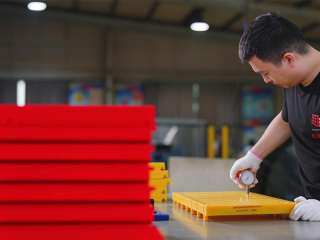 Polyurethane Screen Panels">
As industries prioritize sustainability, managing waste Polyurethane Screen panels has become a key challenge Their robust design complicates disposal, making simple landfilling wasteful and increasingly costly
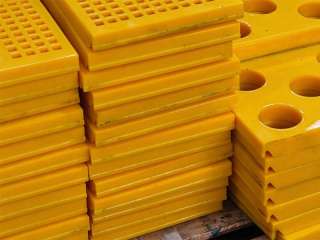 Polyurethane Screen Panel Bolt Hole Design and Quick-Assembly Structure Analysis Guide">
A Polyurethane Screen panel s performance hinges on how securely it s mounted The attachment system is crucial for stability and minimizing downtime
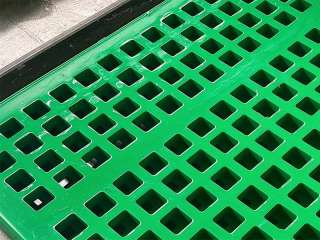 Polyurethane Screens and Respective Application Scenarios">
Selecting the right Polyurethane Screen panel requires careful consideration of aperture shape, as it directly impacts performance For Polyurethane Screen panels, the three primary shapes—round, square, and slotted apertures
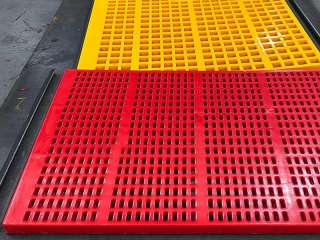 Polyurethane Screen Panels: Reducing Manual Handling and Installation Time">
Replacing heavy, cumbersome Screen panels is often a labor-intensive and time-consuming task, requiring multiple personnel and specialized equipment Lightweight Polyurethane Screen panels are engineered to directly address this challenge
