Steel-Reinforced Polyurethane Screen Panels: Combining Lightweight Design with High-Strength Performance
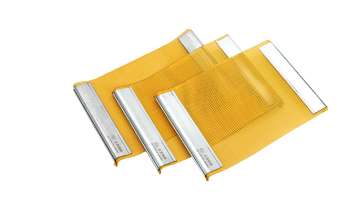
For mineral processing, quarry and aggregate production teams that have long faced the frustrating tradeoff between heavy, hard‑to‑install all‑steel screen panels and lightweight pure polyurethane panels that deform easily under heavy impact, the Steel‑Reinforced Polyurethane Screen delivers a perfectly balanced solution that eliminates most of these long‑standing on‑site pain points. This innovative panel design embeds a precision‑tensioned high‑tensile steel skeleton inside a wear‑resistant polyurethane matrix, so it retains the excellent abrasion resistance, noise reduction and anti‑clogging properties of premium polyurethane, while gaining the structural rigidity and impact load tolerance that pure polyurethane screens can never match.
Why Steel Goes Inside, Not On Top
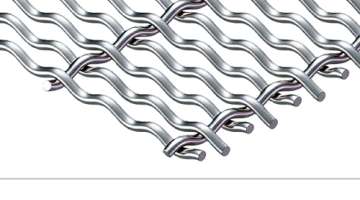
The first design principle is unglamorous: steel does the holding, polyurethane does the screening. A Steel-Reinforced Polyurethane Screen is not a steel plate with PU painted on, and it is not a wire mesh dipped in elastomer. It is a molded part where the reinforcement sits below the working face, encapsulated so slurry never touches bare metal, so the aperture zone stays non-corroding and the support zone stays stiff. Encapsulated cable or rod reinforcement spreads point impact across a wider area, lowers local strain at the bolt boss, and stops the panel from “walking” out of the frame under high G-force. Without reinforcement, a thick PU panel tries to do everything with polymer and either gets too heavy or too soft; with reinforcement, the compound can stay resilient where the ore touches it and structurally honest where the deck clamps it. That split personality is the whole product: soft where the particle lands, rigid where the frame grabs.
Lightweight Without Losing Deck Rigidity
Everyone talks about weight reduction, but few explain why it matters on a vibrating machine. A lighter deck means lower centrifugal load on the vibrator assemblies, less beam fatigue, easier manual changeouts, and often a wider choice of screen box without re-engineering the building. A Steel-Reinforced Polyurethane Screen typically weighs far less than an equivalent steel grating while carrying more abuse than a non-reinforced PU panel, because the steel skeleton lets you thin the elastomer in low-stress zones and thicken it only at impact and fastening lands. The panel still “feels” light to the crew, but torsionally it behaves like a structural component instead of a rubber mat. On multi-deck machines this is gold: the top deck stops stealing vibration from the bottom deck, bed depth stays controllable, and the plant gets accurate cut points without bolting a small bridge onto the screen house roof.

Impact Zone, Fastening, and Where Reinforcement Actually Sits
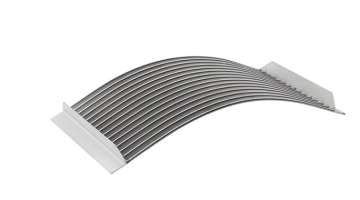
Reinforcement is not sprinkled uniformly like pepper. A good Steel-Reinforced Polyurethane Screen puts the steel where the stress lives: a heavier rod or stamped grid under the feed nose, a cable spine running the long axis, side rails that match the support bar spacing, and localized steel around pin holes or bolt bosses so the fastening land cannot elongate. The aperture zone itself stays mostly pure polyurethane—tapered slots, wave bars, or harp strands—because that is where self-cleaning happens and steel near the opening would invite corrosion at the encapsulation line. The craft is in the bond: the PU must wet the steel, the steel must be cleaned and sometimes knurled or grit-blasted, and the mold must avoid air pockets that later become water ingress paths. A reinforced panel that blisters at the steel interface is worse than no reinforcement, because the failure is hidden until the bond lets go and the skeleton rattles inside the elastomer like a loose ruler in a guitar.
Wear Life, Cost Model, and the False Cheap Panel
Buyers trained on unit price hate reinforced panels at first quote, because a Steel-Reinforced Polyurethane Screen costs more than a plain PU panel and a lot more than woven wire. Then the life-cycle math arrives. Steel wire mesh may need changing every few weeks on abrasive ore; plain PU lasts longer but can fail at the mount; reinforced PU runs months, resists pegging, protects the frame, cuts maintenance labor, and reduces unplanned downtime that costs more per hour than the screen house budget for the quarter. The honest comparison is cost per screened tonne, not dollars per panel: include changeout labor, crane or hoist time, lost production during the swap, bearing wear from heavy decks, and the grade penalty when a sagging panel drifts the cut size. Reinforced media usually wins that spreadsheet even when it loses the Instagram quote screenshot. The “cheap” panel is often the most expensive object in the plant because it fails quietly—sending oversize to flotation, fines to the crusher, and maintenance to the overtime column.
Integrated Structural Design Logic
The core performance advantage of the Steel‑Reinforced Polyurethane Screen comes from the seamless integration between its two core materials, where the outer polyurethane layer fully wraps every exposed surface of the internal steel skeleton to eliminate the rapid abrasive wear that usually cuts short the service life of all‑steel panels, while the embedded steel structure prevents the soft polyurethane material from stretching, sagging or tearing under continuous heavy material impact. Many operations that previously used pure polyurethane panels often found local deformation and mesh distortion appearing on the deck after just a few weeks of high‑volume production, but the embedded steel skeleton inside every Steel‑Reinforced Polyurethane Screen completely eliminates this problem by delivering consistent, dimensionally stable support across the entire panel surface.

Real‑World On‑Site Performance Benefits
In actual daily production, a properly installed Steel‑Reinforced Polyurethane Screen typically delivers 2 to 3 times longer service life than traditional all‑steel screen panels, while also cutting the total labor time required for each screen replacement by over 30% thanks to its much lighter weight that makes handling, positioning and tensioning far easier for small maintenance teams. The thick polyurethane outer layer also drastically reduces sharp steel‑on‑steel impact noise on the deck, creating a far more comfortable working environment for on‑site crews.
The Steel‑Reinforced Polyurethane Screen is one of the most practical, high‑return upgrades available for modern screening operations, helping sites extend screen service life, cut unplanned downtime, reduce equipment wear and improve on‑site work safety all at the same time. If you need a fully customized panel design that matches your exact aperture requirement, feed material characteristics and existing deck dimensions, our technical team can provide you with a tailored solution that delivers the exact balanced lightweight high‑strength performance your operation needs.