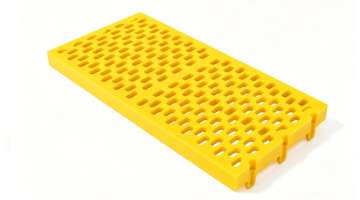
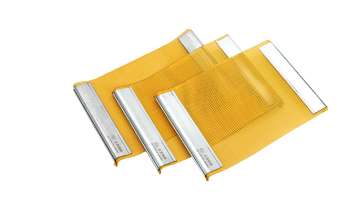
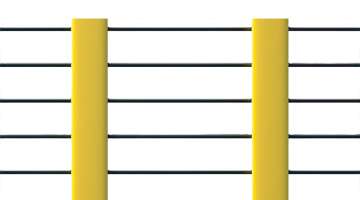
Prediction of Polyurethane Screen Panel Replacement Cycles: Wear Monitoring and Spare Parts Planning
For plant managers, unplanned screen panel failures halt production, while overstocking spares ties up capital. The solution is shifting from reactive replacement to a predictive system for polyurethane screen panel replacement cycles based on wear monitoring and data-driven spare parts planning. This turns maintenance from a cost into a controlled, efficient process.
Establishing a Baseline with Caliper Measurements
Start by measuring new polyurethane screen panels replacement cycles at marked points. Re-measure after 100-250 operating hours. The difference gives a precise, site-specific wear rate, far more reliable than generic estimates. A copper mine established a 0.8mm/100h wear rate, predicting a 6-month lifespan within a two-week error margin.
Wear Signals Worth Logging
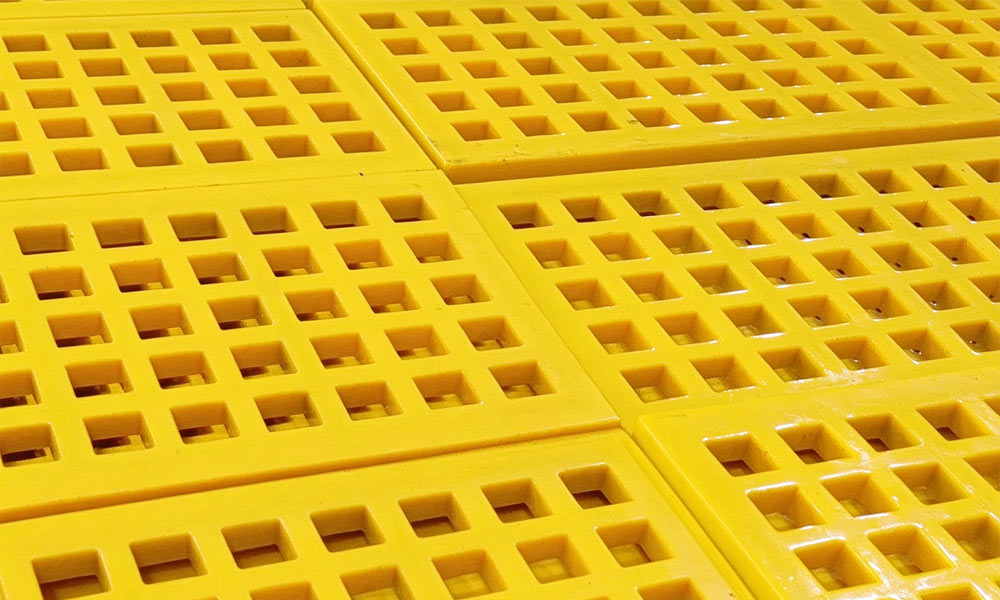
The first mistake in managing a PU Screen Replacement Cycle is measuring the wrong thing. Operators love "looks okay," which is not a metric; the panel can look okay and still be shipping off-spec fines because the slot geometry collapsed internally. The signals that actually predict failure are physical and countable. Ridge or crown height at the feed end tells you how much abrasion buffer is left; slot width measured with calibrated gauges tells you whether the cut point has migrated; edge/hook condition tells you whether the panel is about to creep, leak at the side plate, or delaminate from its steel insert; surface cracking, micro-tearing, and UV/ozone chalking tell you the polymer is aging faster than the tonnage justifies. Then there is process feedback: bed depth rising, blinding increasing after washdown, moisture in the dewatered product creeping up, undersize in the oversize pile, amperage on the vibrator drifting because the deck load changed. A plant that logs ridge loss, slot drift, tonnes screened, feed moisture, slurry pH, and deck amperage per panel position builds a real wear curve. Once two or three campaigns are recorded, the PU Screen Replacement Cycle stops being a guess and becomes a function: "feed-end 92 Shore A ceramic-filled module on zinc scalper = pull at 11,500 t or 30% ridge loss, whichever comes first."
From Wear Curve to Replacement Forecast
A wear curve is useless if it lives in a clipboard nobody opens. The next maturity step is turning those numbers into a forecast the planner can act on. Say the data shows a dewatering panel loses 0.4 mm of ridge per 1,000 t of coal slime, the usable limit is 2.5 mm of ridge loss, and the plant feeds 900 t/day through that deck. That is not poetry—it is a calendar: roughly 6,900 t of life, about 7.6 operating days, pull it on day 7 during the planned washdown, not day 9 when the cake leaves the deck at 28% moisture. The PU Screen Replacement Cycle should be expressed as a window, not a date: a soft alert at 80% life, a hard alert at 95%, and an automatic stores reservation so the correct SKU is already allocated before the maintenance supervisor starts texting the supplier. Clever plants zone the deck: feed-end PU wears out in weeks, mid-deck lasts months, discharge dewatering zone lasts longest, so the forecast is never "replace the whole screen," it is "replace three feed-end modules, leave the rest." That single habit probably saves more money than any discount negotiation, because it stops the industry’s favorite waste—throwing away a panel that still had six weeks of honest life in the discharge zone.
Spare Parts Planning Around the Forecast
Forecast without spares is just a sad spreadsheet. The whole point of predicting the PU Screen Replacement Cycle is to make the storeroom move before the failure does. Spare planning starts with SKU discipline: every panel variant—hardness, slot width, thickness, hook type, compound batch, zone position—gets its own code, because "the yellow one" is not procurement language. Safety stock is then set by consequence, not by cost: feed-end impact modules on a copper scalper get higher cover than a spare discharge-edge seal nobody notices until it leaks; long-lead custom-compound panels get forecast buys, standard modules get rack stock, and exotic hydrolytic-resistant PU for acidic zinc slurry gets a minimum bin quantity tied to the mine’s maintenance calendar. Kitting closes the loop—when the system flags panel pull at 95% life, it should already have reserved the panel, the side seal, the tension bar, the grade-12.9 fasteners, and the torque sheet, so the crew changes the deck instead of wandering the storeroom. A PU Screen Replacement Cycle program that talks to the ERP turns "we’re waiting on parts" into "parts were here last Tuesday," which is the entire game in a plant where downtime costs more per hour than the screens cost per year.
Dynamic Forecasting with Operational Data
Integrate your baseline wear rate with plant control system data like feed rate, material hardness, and vibration amplitude. When these variables spike, adjust your forecast. Processing exceptionally hard ore might shorten the polyurethane screen replacement cycle by 10-15%, prompting a proactive check. This creates a living forecast that reacts to actual conditions.
Phased Spare Parts Ordering
With a reliable prediction and implement phased spare parts planning. Place a long-term purchase order, but only trigger manufacturing and delivery for a subset 4-6 weeks before the predicted failure of high-wear zones on polyurethane mesh. This minimizes inventory, improves cash flow, and ensures just-in-time delivery, not just-in-case storage.
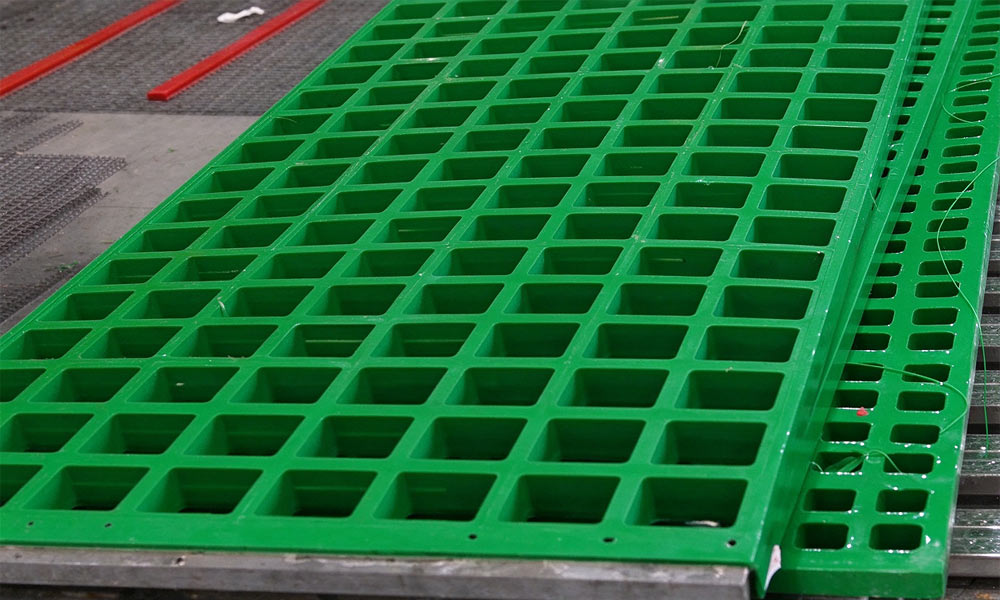
Predicting polyurethane screen panel replacement cycles replaces guesswork with data. Combining caliper checks with operational data allows you to schedule downtime, not react to it. This disciplined approach to wear monitoring and spare parts planning cuts emergency costs, reduces waste, and ensures predictable production. Start measuring your panels wear today to build your own model.