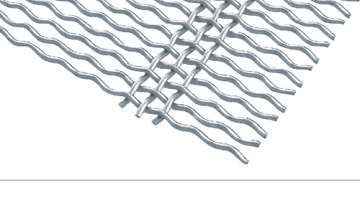
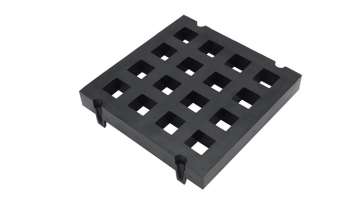
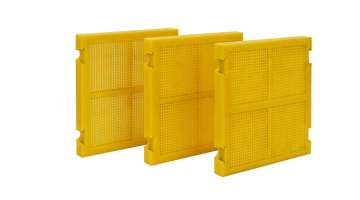
Design of Anti-slip Surface Texture for Polyurethane Screen Panels and Safe Operation
Edge-binding on woven metal screens does a lot more than just finish the edges. It plays a big role in keeping the screen secure during installation, cutting down on vibration, and making the whole thing last longer. When it comes to the binding itself, picking between rubber and polyurethane isn’t just a minor detail—it seriously impacts how the screen performs and how much it costs, especially in tough working environments. This guide lays out the key differences: how each material holds up, how they’re applied, and where they perform best. All of that helps you decide which edge-binding fits your job the best.
Core Material Properties: Flexibility and Durability
The fundamental choice of woven metal screens hinges on the inherent properties of each material. Rubber binding is prized for its high flexibility, excellent vibration absorption, and ability to create a good seal against fines. It is generally the more cost-effective option upfront. However, its main limitations are susceptibility to degradation from oils, certain chemicals, and ultraviolet light, alongside lower abrasion resistance in extreme conditions. Polyurethane binding, in contrast, is engineered for superior performance in harsh environments. Its standout feature is exceptional abrasion resistance, significantly outlasting rubber in high-wear applications. PU also offers excellent resistance to oils, ozone, and weathering, maintaining its integrity across a wider temperature range.
Rubber Binding: Vulcanize, Don’t Just Glue
Rubber edge-binding for a Woven Metal Screen is fundamentally a curing job, not a sticking job. The factory prepares uncured or semi-cured rubber strip—often extruded to a controlled weight and cross-section—positions it around the mesh edge, sometimes with a primer or bonding layer, loads the assembly into a heated mold or platen press, and vulcanizes it: typical processes run mold preheat around 150–160°C, clamp/vulcanization around 160–180°C, several minutes under pressure, then de-flashing.What the buyer should understand is that vulcanization chemically cross-links the rubber, so the edge becomes one piece with itself rather than a tape that might peel. Rubber’s process strength is forgiveness: it flows into minor irregularities, dampens vibration, seals fines against an imperfect side plate, and absorbs the shock of coarse rock hitting the border. Its process weakness is sensitivity—oil, diesel mist, strong solvents, and prolonged UV slowly break the compound down, and if the vulcanization temperature or pressure is wrong, you get soft edges, trapped air, poor adhesion to the wire, or a binding that looks fine and dies quietly.
Polyurethane Binding: Cast, Inject, Control the Profile
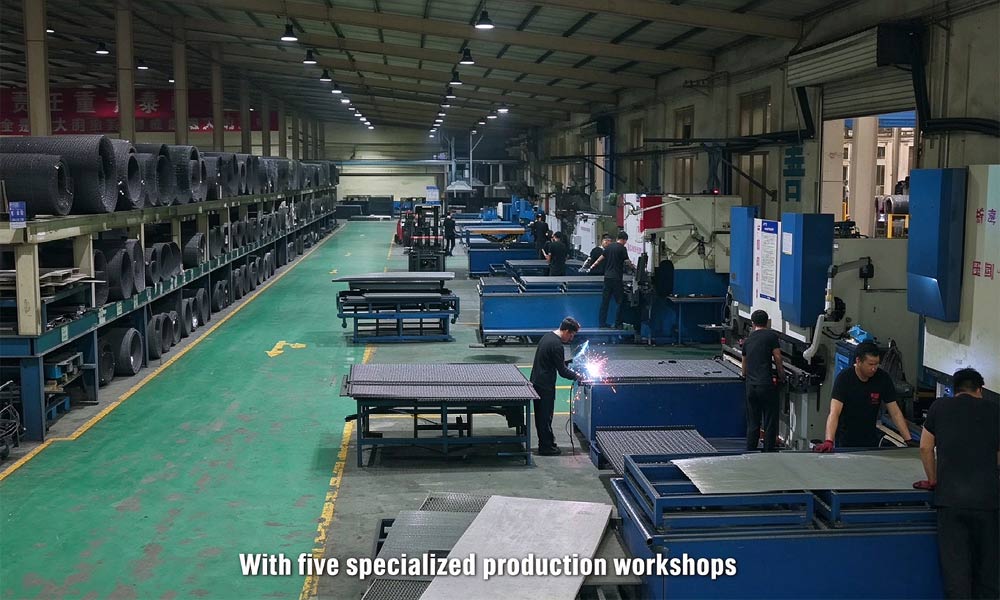
Polyurethane edge-binding is a different religion: less "cure the rubber," more "react two chemicals into a shape." The mill prepares a two-component PU system—prepolymer plus curative—dehydrates and degasses the components, sometimes preheats the wire skeleton or steel insert, then casts or low-pressure injects the mix into a mold that defines the hook, the seal lip, the slot, or the modular panel frame.Because PU starts as a liquid, the process can reproduce complex deck profiles with tight repeatability: a banana-screen hook, a modular panel rim, a tapered side seal, a reinforced internal steel frame all become mold features rather than hand-built additions. After molding comes post-cure—often 80–100°C for 12–24 hours, sometimes longer for high-wear grades—so the elastomer reaches full cross-linking and the bond to the Woven Metal Screen wires matures. The process reward is performance: PU edges resist abrasion, oils, ozone, slurry cutting, and wet fines far better than rubber, and they hold dimension under steady vibration. The process risk is discipline—if the wire is not cleaned, shot-blasted, primed, or preheated correctly, the PU delaminates; if the A/B ratio drifts, hardness and tear strength wander; if bubbles are not controlled, the edge looks smooth and fails at the root.
Process Differences That Change the Buying Decision
The buyer who only hears "rubber is cheaper, PU lasts longer" misses the operational truth. Rubber binding usually has lower tooling and setup burden for simple hooked mesh, so small batches and standard tensioned panels stay affordable; the process is mature, the presses are everywhere, and a good vulcanized edge is plenty for many dry duties. Polyurethane binding carries higher process overhead—mold making, chemical storage, temperature control, post-cure ovens, bond preparation—but it pays that back through consistency on complex profiles and longer life in nasty duty. On a Woven Metal Screen, rubber binds like a cushion: it gives, it seals, it quiets the deck, and it asks you to keep solvents away. Polyurethane binds like a molded component: it defines the geometry, it resists the slurry, it keeps the aperture honest at the border, and it asks you to spec the Shore hardness, the curative system, and the bond procedure instead of treating the edge as an afterthought. Lead time follows the process too—rubber edge on stock mesh can be quick, while a custom PU-bound panel may need mold validation, sample casting, post-cure, and dimensional inspection before bulk production.
Application Processes and Practical Considerations
The manufacturing process differs, impacting the final product. Rubber is typically applied through vulcanization, where uncured material is molded and heat-bonded to the screen edge, creating a strong, seamless seal. Polyurethane is usually applied via casting or injection molding. This method allows for precise control over the edge profile and hardness, facilitating customization for specific deck systems and tensioning mechanisms. While both processes yield durable bonds, the precision of PU molding can offer a more consistent fit for complex deck designs.
Making the Strategic Choice for Your Operation
The decision should be driven by your operating environment. For woven metal screens facing severe abrasion—such as in primary screening of hard rock, ores, or aggregates—polyurethane’s extended wear life typically justifies its higher initial cost, resulting in a lower total cost of ownership through fewer replacements and less downtime. For secondary screening, finer sizing, or where initial budget is the primary constraint, rubber binding provides a reliable and economical solution. Always consider additional factors like exposure to chemicals, ambient temperature extremes, and the specific design of your screen deck’s tensioning system.
By understanding the distinct advantages of rubber and polyurethane edge-binding, you can make an informed choice that extends the service life of your woven metal screens. Aligning the material’s strengths with your screening challenges optimizes performance, minimizes maintenance interruptions, and protects your capital investment over the long term.