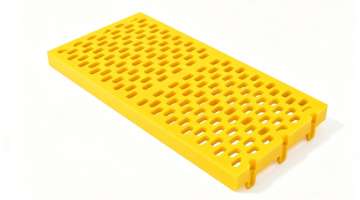
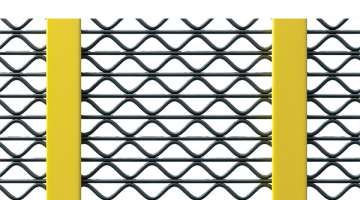
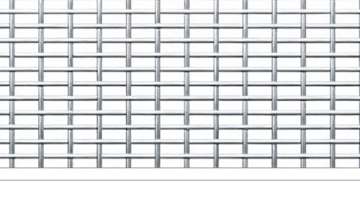
Comparison of Round, Square, and Slotted Apertures in Polyurethane Screens and Application Scenarios
Performance of a polyurethane screen panel hinges on how securely it's mounted. The attachment system is crucial for stability and minimizing downtime. This guide analyzes traditional bolt hole design and modern quick-assembly structures to help you choose the most efficient and reliable system for your operation.
Traditional Bolt Hole Design Fundamentals
The classic bolt hole design involves precisely molded holes that align with the screen frame. Key elements include the hole diameter for bolt clearance and a counterbore to recess the bolt head, preventing wear. The most critical aspect is reinforcement around the hole, often with embedded steel inserts or denser polyurethane, to withstand clamping forces and prevent the hole from elongating under vibration—a common failure known as "egg-shaped" wear. This design polyurethane panel offers robust, adjustable clamping force but requires tightening numerous bolts, which is time-consuming.
Bolt Hole Geometry: Where the Panel Either Grips or Tears
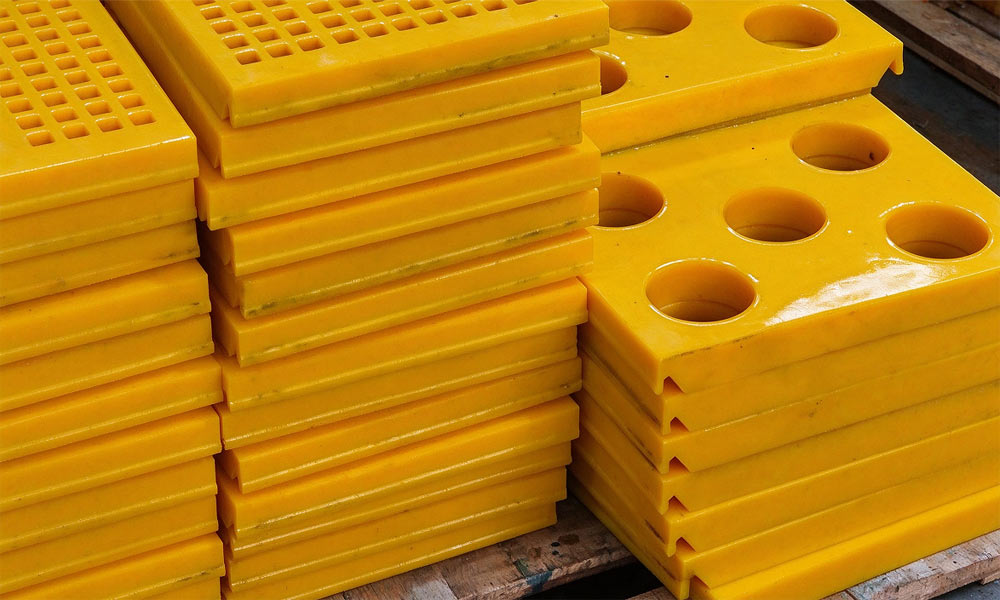
The bolt hole in a Polyurethane Screen Panel is never “just a hole”—it is a stress concentrator, a potential leak path, and the anchor that decides whether the panel stays seated when the deck is throwing 4 mm near-size material and a slab of damp ore at the same time. A plain molded hole with no reinforcement will survive in light duty, but under industrial vibration the polyurethane cold-flows around the washer, the bolt backs out, and the panel starts micro-sliding until the hole elongates into a slot and the edge rips. That is why serious panels use molded-in steel inserts, threaded bushes, or captured nuts: the bolt loads the metal insert, the polyurethane carries the vibration damping, and the load path stays in the right material instead of asking soft elastomer to resist shear it was never meant to win. Hole clearance also matters more than people admit—too tight and the panel cannot be seated quickly during a rushed changeout, too loose and the bolt rattles, the insert hammers the urethane, and a hairline crack starts at the boss. A well-drawn Polyurethane Screen Panel bolt hole has a chamfered entry, a reinforced boss, a controlled clearance, and often a counterbore that hides the fastener below the wear face so nothing sticks up to catch material or gouge the panel beside it.
Insert Type, Boss Thickness, and the Quiet War Between Urethane and Steel
Polyurethane wants to flex; the bolt wants everything around it to stay rigid. The art of the fixing zone is balancing those personalities so the Polyurethane Screen Panel damps vibration where the deck needs it and stays locked where the fastener lives. Thin bosses save weight and material cost but invite insert pull-out, especially in coarse scalping where a lump lands on the bolt zone and tries to yank the panel off the stringer. Oversized steel backing plates solve pull-out but can create a hard spot that changes how the panel flexes, sometimes causing crazing radially outward from the hole when the deck runs hot or the urethane compound is too stiff. Quick-assembly systems often use a hybrid: a molded nut or threaded sleeve surrounded by a tuned boss, plus a wide load-spreading washer, so the clamping force spreads into the polyurethane instead of pinching it to death. The compound itself enters the story here—a high-rebound ester-based urethane will behave differently around the insert than a hydrolysis-resistant ether grade in a humid iron ore circuit, so the bolt-hole design and the polymer spec have to be written by the same brain, not purchased separately on two purchase orders.
Quick-Assembly Structures: Cassettes, Snap Locks and Wedge Bars
Bolted panels are honest and familiar, but in modern plants the quick-assembly Polyurethane Screen Panel is where the maintenance math actually improves, because the saving is not the bolt itself—it is the elimination of wrench time, dropped washers, cross-threaded inserts, and the human tendency to under-torque a panel when the rain is coming sideways. Cassette systems let a pre-assembled screen cartridge drop into a frame, snap-lock tabs let a crew pop panels in along a rail, and wedge or compression bars turn a row of panels into one tensioned assembly without a single nut in the wear zone. The trade-off is interface discipline: a cassette that is not squared to the frame binds, a snap lock with worn latches lets the panel walk, and a wedge bar with bad corrosion protection becomes a future demolition job.
Evolution to Quick-Assembly Structures
To drastically reduce installation time, quick-assembly structures have been developed. These systems minimize or eliminate individual bolts. Common designs include three types, T-Bolt or Wedge Systems: Panels have integrated T-slots. A single long T-bolt or wedges are driven laterally to clamp multiple panels at once against a frame rail Modular Clip Systems: Panels feature molded hooks that engage with frame rails, allowing for tool-less "snapping." A final locking pin may secure them.Pin-and-Hook Systems: Heavy-duty pins drop through aligned holes and are secured with a clip.
Analyzing the Trade-offs: Comparation of Security and Speed
Each polyurethane screen system involves trade-offs. Traditional bolt hole design provides maximum, adjustable clamping force and universal compatibility but is the slowest to install. Quick-assembly structures can cut change-out time by over 50%, reduce lost fasteners, and enhance safety by minimizing tool use. However, they may require more precise screen frames and can have a higher upfront cost. While offering excellent security for most applications, they might be less suitable for extreme high-impact scenarios where the absolute rigidity of multiple bolts is critical.
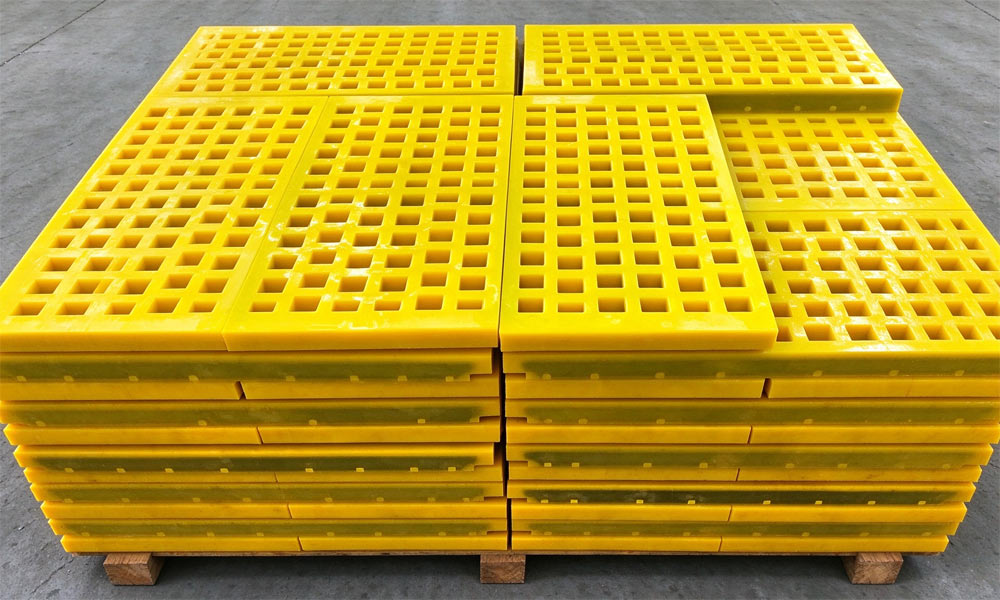
The choice of screen panel configuration depends on specific requirements and application scenarios. For operations involving panels prone to damage—where frequent replacement is necessary yet minimizing downtime is a priority—polyurethane panels with quick-assembly structures can enhance screening efficiency; conversely, for extreme operating conditions, a robust, wear-resistant bolt-hole design may be the most suitable choice. A comprehensive evaluation should be conducted to select an installation method that ensures panel stability while optimizing production screening efficiency.