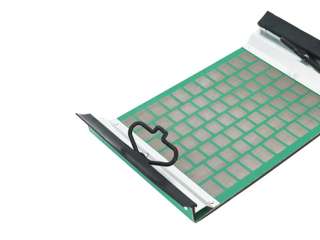
 Screen Mesh">
Flat Composite Vibrating Screen Mesh adopts flat multi-layer stainless steel woven mesh compounded with vulcanized rubber frame It features stable aperture, good solid-liquid separation performance and convenient installation Widely used for solids control in oil drilling, as well as grading, dewatering and desliming in mining, aggregate and coal washing industries
 Screen manufacturer">
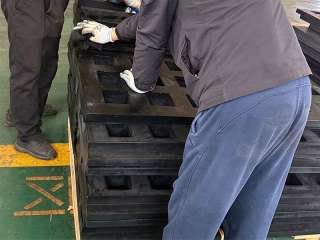
Vulcanization is the step that decides whether a rubber Screen panel survives a full season on a vibrating deck or starts cracking along the tension rails after six weeks, and it is also the step that almost no buyer ever witnesses
 Screens">
A sensible approach follows the whole life of a rubber Screen panel — the ore it separated, the steel or textile reinforcement bonded inside it, and the value still locked in the compound
 Screens and Recommendations for On-Site Testing">
Self-cleaning Screens are particularly worth testing in advance, because their performance depends so heavily on how the feed behaves in the real circuit rather than how it looks in a specification sheet
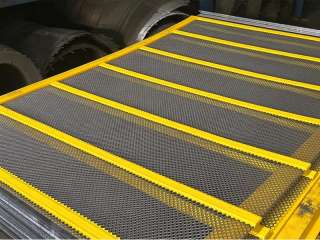 Screens for Processing High-Clay Ore">
Anyone who has run a high-clay ore through a conventional sizing deck knows that the trouble rarely announces itself all at once The mesh loads up gradually, open area disappears faster than the shift report suggests
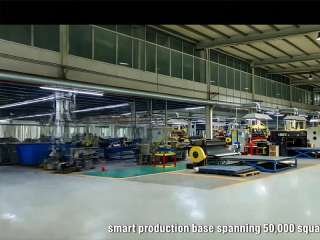 Screens: Rubber, Polyurethane, or Metal">
Anyone who has spent time around self-cleaning Screens knows the edge doesn’t get much attention—until it starts causing headaches
 Screen Conducts One-on-One Training for New Staff">
To help new foreign trade employees integrate into the team more quickly and gain a solid grasp of product and business knowledge, RedstarScreen recently organized a specialized one-on-one training program for new staff
 Screening Operation Running Smoothly">
Our after-sales service team has arrived at the customer s plant to deliver on-site technical support and resolve Screening-related issues, ensuring that every machine continues to operate exactly as it should
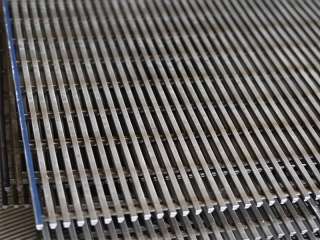 Screens Running for Slurry Processing">
Picking a wedge wire Screen for slurry isn’t just about ticking the box for slot size—it’s about being honest about how the material behaves, what really happens when things speed up
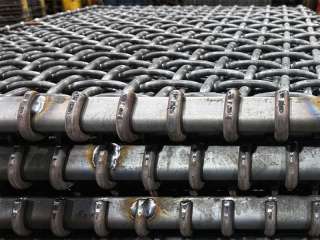 Screens for Copper Ore Processing">
Selecting the right woven metal Screens with a wear-resistant formulation and establishing a data-driven replacement cycle are therefore critical strategies for maximizing Screen life
