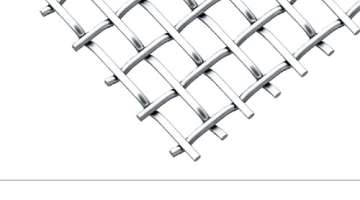
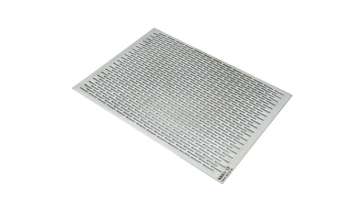
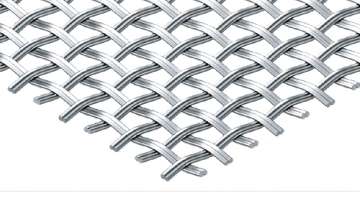
How to Choose and Keep Wedge Wire Screens Running for Slurry Processing
Slurry has a way of making every short-sighted decision painfully obvious. You think you’ve picked the right screen. It looks fine on paper, but the moment solids loading spikes, or the feed goes from chunky to flat, that “good enough” screen blinds up fast. Suddenly you’re wrestling with lower throughput, pumps working overtime, and operators stuck babysitting a piece of equipment that should have been nearly invisible. So, picking a wedge wire screen for slurry isn’t just about ticking the box for slot size—it’s about being honest about how the material behaves, what really happens when things speed up, and how much cleaning will actually happen when everyone’s strapped for time.
Getting Slot Size and Profile Right for Actual Slurry
Most headaches start when people obsess over just one particle size number. Here’s the tricky part: even if your slurry’s average particle size is well above the slot opening, there’s always that fraction of solids—flat bits, needles, flakes—that clog up the works because they orient the wrong way and lodge tight. Wedge wire screens help here. Their continuous slot and “V” shape give solids less to grab onto and let most particles drop straight through, so a smart slot profile design keeps your open area clear longer than any punched plate with the same rating. Still, there’s always a trade. Thinner wire means more open area and higher flow—but less strength. Heavy or uneven loading can bend fine wires, and then you’re in trouble.
Spec the Slot to the Slurry, Not the Sales Sheet
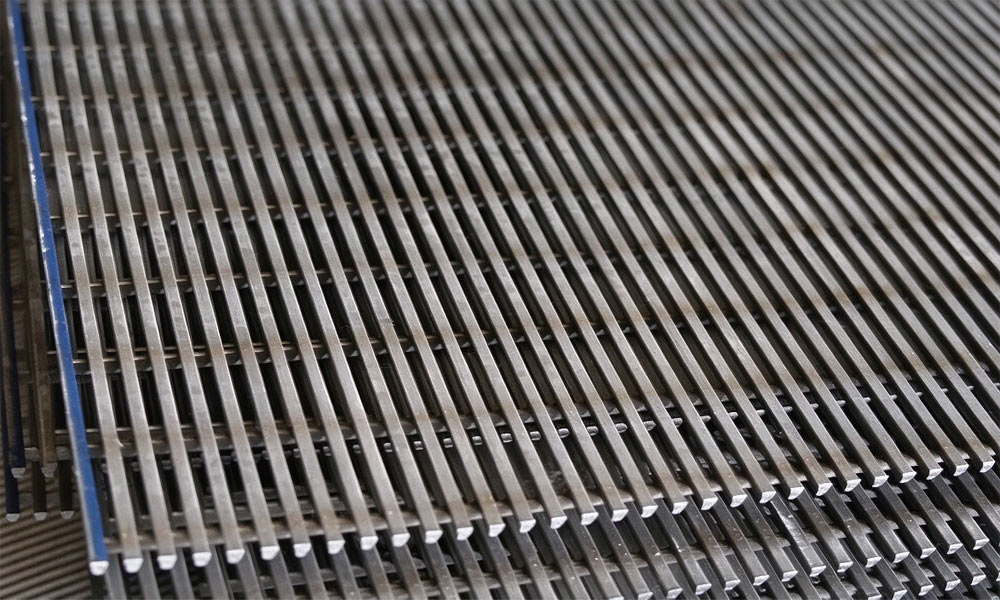
The first trap in slurry duty is picking a Wedge Wire Screen by a single particle-size number, usually the D50, and assuming everything else will behave. Real slurry carries flat flakes, needle particles, clay agglomerates, and a fines fraction that orients sideways and wedges where you least want it. The slot width should be set against the full particle-size distribution and the retention target, not just the average: too tight and the panel fouls, pressure drop climbs, and the deck starts carrying a sticky carpet; too open and the undersize you were supposed to recover rides over with the reject and the product grade slips. Profile wire size and support-rod spacing matter just as much, because a finer slot with a skinny wire looks great for open area until a thick bed load bends the wire and the slot drifts permanently. A Wedge Wire Screen for abrasive mineral slurry usually wants a heavier profile, closer support pitch, and sometimes a slightly wider slot than the lab cut point suggests, while a water-treatment or food-process slurry can run finer wire, higher open area, and gentler cleaning. Flow direction is part of the same conversation—outside-to-inside, inside-to-outside, cross-flow, or gravity over a curved deck—because the V-wire has to point the right way for the solids to release instead of packing.
Alloy Choice Is Really a Chemistry and Abrasion Bet
A Wedge Wire Screen lives or dies on material grade, and slurry is rarely just "wet." Chlorides, low pH from acid leach, cyanidation, flotation reagents, gypsum scale, and abrasive silica all attack different ways, so 304 stainless is a reasonable starting point for clean freshwater duty but a poor bet for aggressive process slurry. 316L earns its premium where chlorides or mild chemicals show up; duplex stainless steps in when abrasion and corrosion arrive together, as they usually do in mineral processing; super duplex or nickel alloys enter the picture for seawater intake, aggressive acid filtration, or hot chemical streams where a cheaper grade would pit, widen slots, and start leaking oversize within a season. The wear does not only show on the wire crown—feed-impact zones and support-rod welds are where abrasion quietly removes metal, distorts the panel, and eventually lets the structure flex under differential pressure. A Wedge Wire Screen program that logs alloy, slurry pH, chloride level, solids loading, and temperature at commissioning avoids the classic mistake of buying on first-cost and paying for it in unplanned changeouts, warped baskets, and product that no longer meets the cut.
Cleaning Without Destroying the Geometry
The charming part of a Wedge Wire Screen is that the slot widens inward, so a properly timed backwash or cross-flow spray can push trapped particles back out instead of scrubbing them deeper. The uncharming part is that plants often "clean" the screen to death: high-pressure lances held too close round off the V-wire edges, grind the slot wider, and turn a precision element into a leaky sieve with a polished face. Good slurry practice matches the cleaning method to the foulant—low-pressure flushing and backwash for loose fines, alkaline or enzymatic cleaning for organics and biofilm, mild acid passivation where mineral scale and the alloy both allow it, and soft mechanical brushing only when the deposit will not release hydraulically. A Wedge Wire Screen should be watched through differential pressure first and eyesight second: at constant flow, a creeping pressure drop across the panel is the earliest honest signal that effective open area is fading, long before the surface looks dirty. Weekly pressure checks, monthly visual inspection, and quarterly slot-gauge measurement beat the "blast it until it looks clean" routine every time, because the goal is to restore flow without erasing the geometry that made the screen accurate.
Picking Alloys and Planning for Wear Nobody Talks About
People nearly always let cost steer their choice of wedge wire material, then regret it later. Corrosion and abrasion rarely show up alone. Standard 304 stainless wedge wire screens can handle most slurries, but when chlorides or low pH sneak in, 316L really earns its extra cost. For abrasive minerals and tailings, you’re better off going for duplex or high-chromium alloys—even though they cost more—because softer grades can lose their slot depth fast, sometimes in a single season. And you can’t only look at the wire itself; most wear shows up where the feed slams into the screen and at the support rod welds. That’s where you need to start your inspections.
Maintenance That Actually Adds Years
Good maintenance isn’t just about scrubbing harder. If you’re blasting the screen with high-pressure cleaning, you’ll end up rounding off the wire edges and changing the slot size for good. But if you stick to a regular, gentle backwash, your wedge wire screen stays closer to its specs. Checking slot width with a gauge pin every couple of weeks gives you solid data—so you can plan replacements before the screen fails, not after.
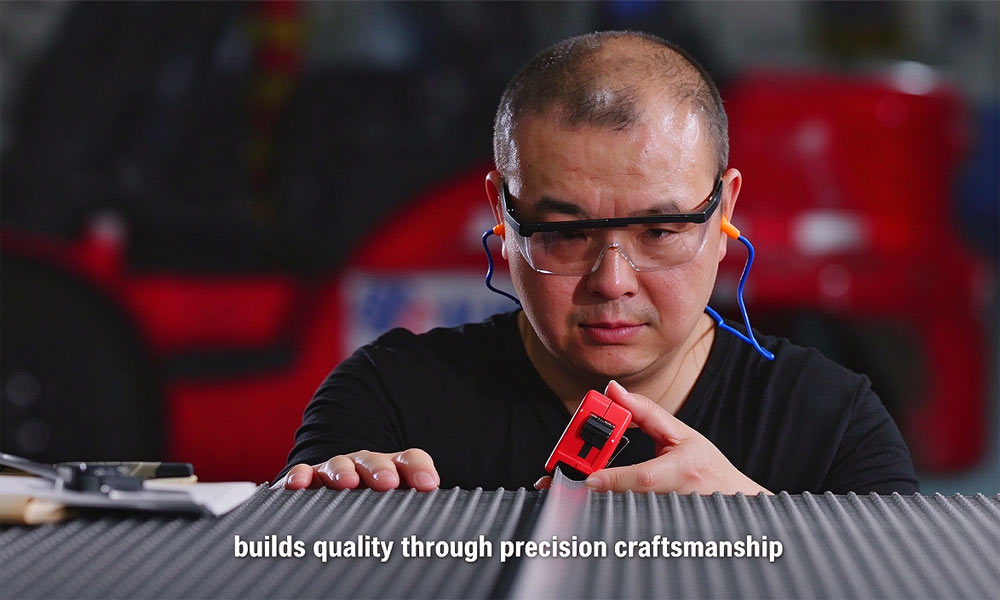
The best setups aren’t always the priciest. They’re just matched to what actually happens in the plant. Give us your slurry details, flow rate, and cleaning habits, and we’ll help you pick the right wedge wire mesh, alloy, and tolerances for what you really need.