Requesting Samples from Manufacturers of Self-Cleaning Screens and Recommendations for On-Site Testing
Ordering a sample panel before committing to a full deck replacement sounds like obvious practice, yet plenty of plants skip it and end up discovering a mismatch in the worst possible way, once the crates are already on site and the shutdown window is ticking. Self-cleaning screens are particularly worth testing in advance, because their performance depends so heavily on how the feed behaves in the real circuit rather than how it looks in a specification sheet, and a short structured trial will tell you more about daily capacity, blinding behaviour, and cleaning frequency than any amount of correspondence with a sales team ever will.
Getting the Right Information to the Manufacturer First
What ends up in the crate depends almost entirely on the information you provide before shipping, so it’s worth taking a few minutes to write a brief about your feed. Be specific — note the particle size distribution, moisture content, clay or plasticity levels, overall tonnage, deck slope, and the cut size you actually need to maintain. Good suppliers of self-cleaning screens will ask for this anyway. If they don’t, chances are they’re just pulling something off the shelf, not actually building a panel for your job. Also, make sure to ask for a sample that matches the panel size and fixing pattern you already use, not just some generic piece. If you have to adjust anything to make it fit, the whole trial’s compromised before you even get started.
Writing the Sample Request That Suppliers Respect
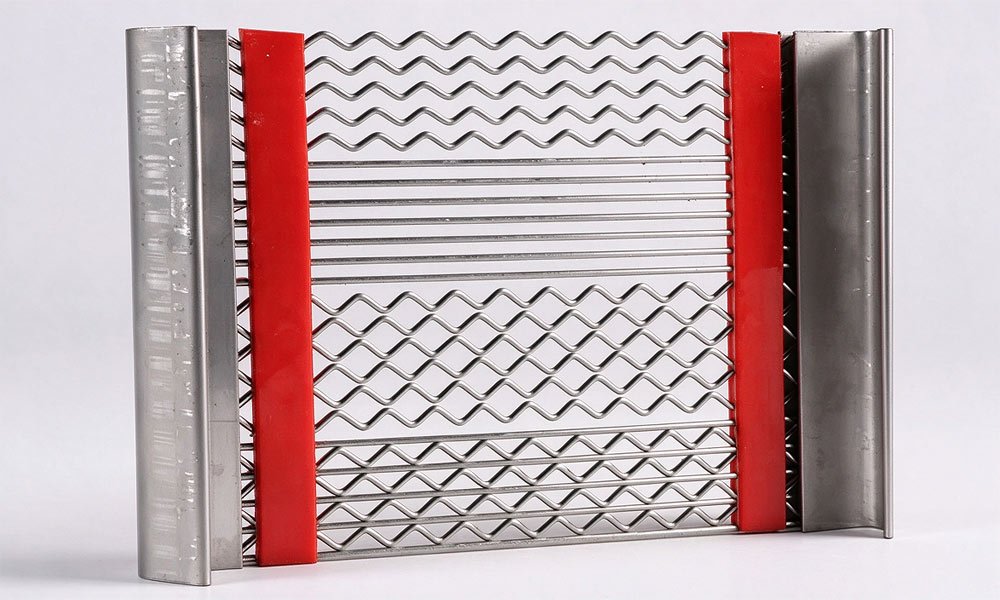
The first rule is that a Self-Cleaning Screen sample request should read like a process brief, not a shopping list, because the panel that solves sticky limestone is not the panel that solves damp coal or clay-coated granite fines. The plant sends the supplier the feed top size, PSD, moisture band, clay or sticky content, current open area, deck angle, vibration type, stroke and rpm if known, panel dimensions and hook style, and—most important—the failure mode of the current media: blinding, pegging, near-size carryover, premature strip wear, or loss of tension. A good supplier will come back with questions, not a PDF, and may propose a different wire profile, a different polyurethane hardness, or a hybrid twisted-and-straight configuration the buyer had not considered. The request also pins down commercial basics so the trial stays serious: how many panels, who pays freight, whether the sample is free or credited against the first order, what the trial duration should be, and what acceptance criteria count as "pass." A Self-Cleaning Screen sample agreed on vague hopes will be judged on vibes; one agreed on tonnes screened, blinding area per shift, and oversize-in-undersize will be judged on numbers.
Installing the Sample Without Poisoning the Test
A sample panel is only as honest as its installation, and the classic error is bolting the Self-Cleaning Screen into a deck section that is already compromised—warped frame, uneven tension, sprayed water hitting one corner, feeder dumping everything onto the trial zone like it owes money. The trial zone has to be representative but controlled: same feed as the rest of the deck, same spray arrangement, same amplitude, and ideally bordered by panels of the existing media so the comparison is side-by-side rather than month-to-month against the weather. Tension matters enormously with self-cleaning media, because twisted-wire and poly-twisted panels rely on controlled flex; too loose and they sag, too tight and the anti-blinding action dies before the rock arrives. The installer logs panel serial or batch, install date, deck position, tension value, spray pressure, and the exact feed stream the panel sees. A Self-Cleaning Screen that blinds during the trial may not be a bad product—it may be a panel asked to clean itself while the feeder piles wet clay on one end and the sprays are pointed at the walkway. The trial is invalid the moment the conditions are not the conditions.
What to Measure During the Run
The charm of a Self-Cleaning Screen is that it is supposed to shed near-size and sticky particles by its own motion, so the measurement plan has to watch the thing it promises to prevent. Blinding area is the headline metric: photograph the panel grid at shift start, mid shift, and end of shift, overlay the images, and quantify what percentage of apertures are clogged at each point—a good self-cleaning panel stays in the low single digits under the same feed that pushes the old media into double digits. Near-size carryover tells the second half of the story: sieve the oversize reject and check how much "should-have-passed" material is riding over the top because the panel lost its kick. Aperture drift over time matters too, because some poly-twisted media relaxes and narrows the effective opening, quietly changing the cut point without a visible failure. Then there is wear: measure strip thickness or wire crown at the feed end every few hundred tonnes, because a Self-Cleaning Screen that stays clean but loses profile in three weeks is just trading one downtime for another.
Agreeing the Terms of the Trial Before It Starts
Before the sample is installed, agree with the manufacturer exactly what success looks like, whether that is a target throughput, a maximum number of washdowns per week, or a minimum efficiency on the undersize fraction, and confirm in writing who covers freight, who supplies labour for installation, and what happens if the self-cleaning panel underperforms. Most suppliers will credit the sample cost against a subsequent order, and it is entirely reasonable to ask for that in writing up front rather than discovering the policy later.
Running the Test So the Data Means Something
Install the panel in the same position it would occupy in service and resist the temptation to judge it during the first hour, since the first shift usually reflects installation rather than performance. Run it for at least two full weeks against a documented baseline, recording throughput, moisture, blinding incidents, and any visible wear at set intervals, and keep the operating conditions as close to normal as possible so the comparison holds up.
Conclusion
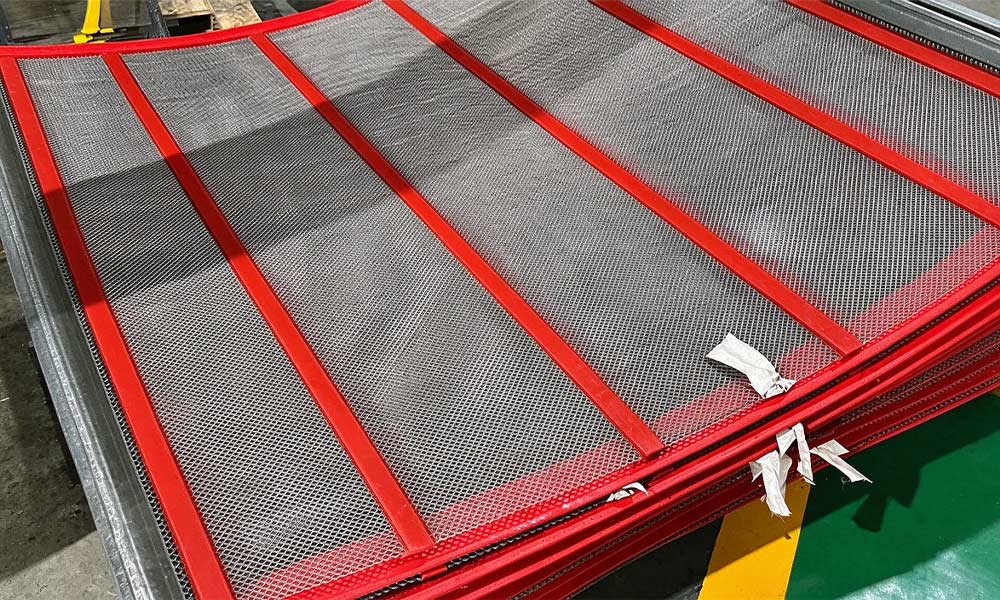
A well-run trial almost always pays for itself in avoided rework. Send us your feed brief and panel dimensions, and Redstar will arrange a sample of self-cleaning screens configured for the duty you actually run, along with a simple data sheet to make the trial easy to evaluate.