Choosing Edge-Binding for Self-Cleaning Screens: Rubber, Polyurethane, or Metal
Anyone who has run a high-clay ore through a conventional sizing deck knows that the trouble rarely announces itself all at once. The mesh loads up gradually, open area disappears faster than the shift report suggests, and before long the circuit is circulating material it should have already passed, simply because the deck can no longer shed what sticks to it. That slow loss of capacity is what pushes most operators toward self-cleaning screens, though the decision is worth far more than a like-for-like panel swap, because the screens that genuinely handle plastic clay behave quite differently from those that merely claim to resist blinding.
What Clay Actually Does to a Screening Surface
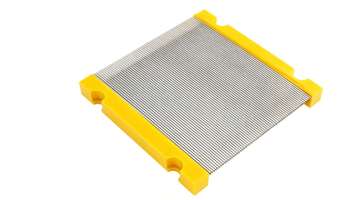
Clay misbehaves for reasons that have less to do with particle size and more to do with behaviour under pressure and moisture, since a soft, plastic feed tends to smear across wire rather than tumble over it, and once a thin film bridges the slot the remaining material builds on that film with impressive speed. This is where the difference between ordinary wedge wire and self-cleaning screens becomes obvious, because the latter rely on independently vibrating wires or resilient polyurethane strips whose movement breaks the forming bridge before it can consolidate, which means the deck keeps its effective open area instead of losing it quietly over a shift.
Read the Clay Before Picking the Screen
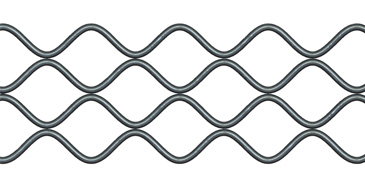
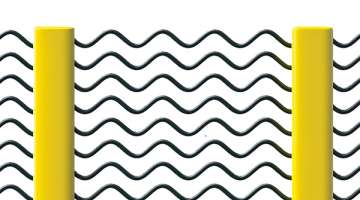
The first mistake is specifying a Self-Cleaning Screen by aperture alone, as if clay cares whether the slot is 6 mm or 8 mm. What matters more is how the clay carries water: a weathered iron ore at 15–18% moisture with a moderate plasticity index will blind a square mesh in minutes but may run clean on independently vibrating wires or polyurethane cords, while a swelling laterite or smectite-rich ore will try to pack even a self-cleaning deck into a socket if the aperture walls are parallel and the surface energy is wrong. A Self-Cleaning Screen for this duty usually comes in three flavors—twisted/ripple wire where each wire flexes and sheds near-size, polyurethane cord or strip media with low surface energy and tapered slots, and flip-flow or vari-frequency decks where the mat snaps with high local acceleration to launch sticky agglomerates off the surface. The selection logic is practical: light clay and damp fines favor ripple wire because open area stays high and the cut stays sharp; heavy plastic clay with fines domination favors PU self-cleaning panels because the smooth, flexible aperture resists film build-up; very sticky, fine, high-moisture ore favors flip-flow because nothing else produces enough deck acceleration to break the mud bridge.
What the Trial Actually Looked Like
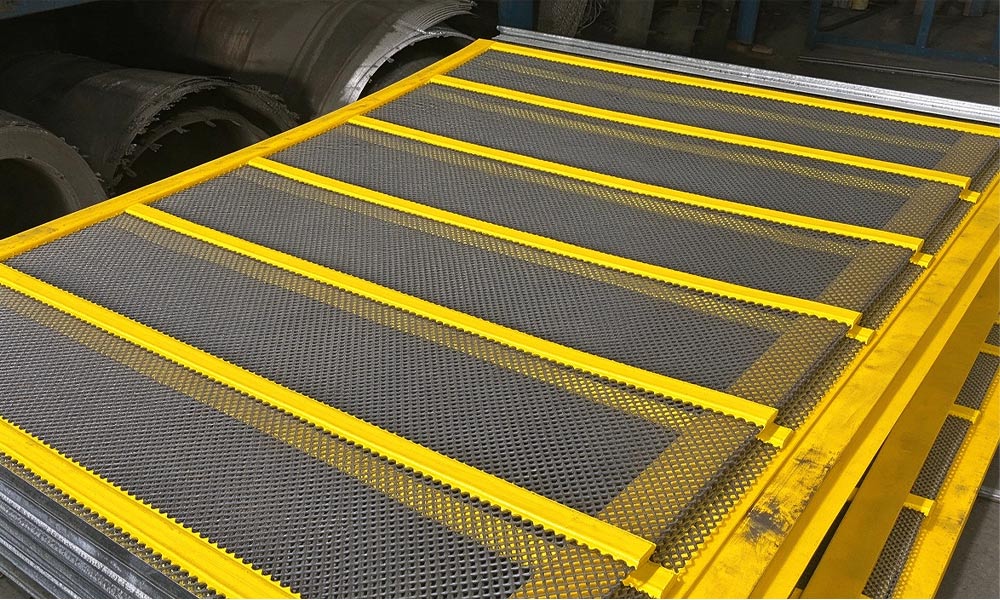
On one weathered ore circuit running roughly 16–18% moisture and a meaningful clay fraction, the plant ran a side-by-side trial: the existing high-carbon woven wire on the top section, and a Self-Cleaning Screen panel—polyurethane cords with slotted tapered apertures—on the comparable section of the lower deck under the same feeder split. The first two hours meant nothing; clay ores flatter any media in the opening act. The story showed up by day three. The woven wire section started carrying a grey film by mid-shift, operators hit it with hoses every four to six hours, and effective open area dropped into the low sixties while oversize-in-fines climbed because the sticky near-size rode over the top. The Self-Cleaning Screen section kept flexing the slots open: blinding area stayed in the low single digits through the shift, scheduled washdowns dropped from several per day to one per shift, and the undersize efficiency on the target fraction settled near 90–92% instead of sliding into the mid seventies.
Numbers That Mattered More Than "It Looks Clean"
A Self-Cleaning Screen can look fine and still be losing the war, so the trial scored the boring things. Blinding area per shift: woven 25–35%, self-cleaning 3–6%. Manual cleanouts per week: nine versus one. Screening efficiency on the contracted fraction: 76% versus 91%. Aperture drift after six weeks: the woven panel had enlarged where wires abraded and narrowed where clay packed, while the PU self-cleaning slot held dimension because the flexible web flexed instead of taking a permanent set. Carryover of minus-target material into the coarse product dropped enough that the downstream crusher stopped choking on plastic fines, and amperage on the vibrator motor stopped spiking every time a clay pocket hit the feed. The one compromise was honest: the Self-Cleaning Screen gave slightly less surgical cut than a brand-new square mesh in the first hour of a dry run, but on high-clay ore the dry-run cut is fiction anyway—what mattered was the sustained cut across a whole week of rain, slug, and sticky overburden. Cost per tonne told the ending: higher panel price, lower cleaning labor, fewer changeouts, steadier product grade, and a media bill that looked expensive until you subtracted the downtime it prevented.
Selecting for the Duty Rather Than the Datasheet
Selection starts with the moisture content and plasticity index rather than the headline tonnage, and the teams that get this right usually accept a slightly coarser cut at the panel to protect capacity, since chasing an extra two millimetres of precision on a sticky feed nearly always costs more in throughput than it returns in product quality. Wire orientation, deck slope, and the amplitude of the cleaning action all deserve equal attention, and it is sensible to ask a supplier how the self-cleaning panel performs after eight continuous hours, not merely in the first thirty minutes of a demonstration.
What the Plant Trial Showed
Over a twelve-week trial on a weathered ore with roughly eighteen percent clay, the self-cleaning screens held throughput between 210 and 235 tonnes per hour against the 165 to 190 range recorded on the previous woven wire panels, while blinding-related washdowns fell from nine per week to a single scheduled clean. Screening efficiency on the undersize fraction settled near ninety-two percent, and the panel showed no measurable slot widening at the halfway inspection, which was the figure that finally convinced the maintenance team.
The most useful outcome of a trial like this is knowing which compromise you are making, and choosing it deliberately rather than discovering it later. Send us your feed analysis, moisture range, and target cut, and Redstar will help you match screen type and panel specification to the ore you actually run.