How to Balance Aperture Size and Strength for Metal Woven Screens in Coarse Screening
For operations in mining or aggregate processing, selecting the right metal woven screen for the coarse material screening stage is a pivotal decision. The core challenge is balancing a sufficiently large aperture size for high throughput and effective separation with the necessary strength to endure the severe impact and abrasion from large, heavy feed. An improper balance leads to either inefficient processing or frequent, costly screen failures. Achieving this equilibrium is key to optimizing performance and minimizing total operational costs.
Understanding the Fundamental Trade-Off
The relationship between aperture size and strength is inherently a trade-off. Larger apertures, achieved by using thicker wires with wider spacing, increase open area and throughput. However, this can reduce the structural integrity of woven wire screen, making it prone to deformation and premature failure under heavy impact. Conversely, a screen designed for maximum strength with a dense weave of thick wires often has a smaller open area, which can restrict material flow and cause blinding. The goal is to find the optimal configuration that provides the required strength without unnecessarily sacrificing the needed aperture size.
Aperture Sets the Grade, Wire Diameter Sets the Bill for Survival
On a coarse deck the aperture is the functional truth and the wire diameter is the hidden tax, because for a square Metal Woven Screen the open area is roughly [a ÷ (a + d)]² × 100, where a is the aperture and d is the wire diameter—so every millimeter added to the wire is stolen from throughput, not from nowhere. A 50 mm aperture with an 8 mm wire runs around 74% open area and lets slurry, scalp, and coarse aggregate move like the deck means business, while the same 50 mm with a 10 mm wire drops the open area and starts turning a scalping deck into a sluggish grate that cushions the impact instead of rejecting it. That does not make the thicker wire wrong; it makes it a deliberate trade. Coarse scalpers taking slab rock off a jaw discharge want heavy wire—commonly 6–12 mm in primary duties—because the first contact is impact, not sizing, and a thin-wire panel would dent, strand-fret, and shed fragments into the product stream. The balance rule that seasoned screen people use is boring but reliable: size the aperture to the product spec first, then choose the thinnest wire that still survives the impact, abrasion, vibration hours, and support spacing of that specific deck—never the thickest wire the catalog offers just because “heavy duty” sounds safe.
Crimp, Support Pitch, and Why Strength Is Bigger Than Wire Gauge
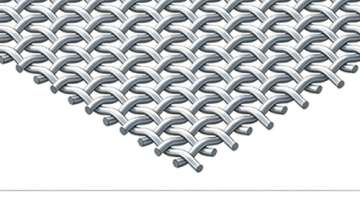
A Metal Woven Screen is not just two numbers on a purchase order; the crimp style decides whether the strength you paid for actually stays where you put it, because plain weave can shift under pounding rock while double crimp and lock crimp pre-form the wires so the intersections refuse to skate under load. On coarse decks this matters more than buyers expect: a 6 mm wire in a weak crimp can let the aperture breathe like a cheap accordion, so the “50 mm screen” becomes a 54–58 mm screen by Friday and the asphalt plant starts complaining about top-size. Support-bar pitch is the other silent partner—wide spans let even a heavy Metal Woven Screen drum between supports, the wires flex in the wrong plane, fatigue cracks start at the crown, and the panel fails not because the wire was too thin but because the frame asked the panel to be both a screen and a bridge. Flat-top crimp earns its keep on sharp-edged basalt and recycled concrete by presenting a smoother wear face, while lock crimp is the workhorse when the deck sees high G and slabby feed that tries to jack the wires apart.
Deck Position, Feed Shape, and the Art of Leaving Capacity on Table
The same plant often ruins its own balance by putting one mindset on every deck: heavy wire everywhere “because we had breakage once,” or big apertures everywhere “because we need tons.” A top Metal Woven Screen scalping run-of-mine rock should lean strength-first—larger aperture, heavier wire, lock crimp, reinforced hooks—because its job is to protect the crusher, not to make a pretty gradation curve. The middle deck is the negotiating table: enough open area to keep the circuit flowing, enough wire to resist sliding abrasion from angular crushed stone, usually something like 10–50 mm apertures with 3–6 mm wire depending on tonnage and rock hardness. The bottom coarse deck, if the plant insists on calling 10–20 mm “coarse,” has to protect accuracy, so the wire cannot balloon even though the impact is lower—here a slightly lighter wire with tight aperture tolerance beats a brute-force heavy panel that bleeds open area and lets near-size material ride to the wrong pile.
Key Application Factors to Consider
Several practical factors determine the optimal balance for your specific coarse material screening task. First is feed material characteristics. The size, shape, and abrasiveness dictate the required wire thickness and durability. Second is screening machine dynamics. The type of screen and its vibration parameters create specific stress patterns the wire woven mesh must withstand. Third is the target separation cut point. This defines the minimum aperture size, but the chosen wire diameter must still be robust enough for the application's impact level.
Strategic Design Approaches
Achieving the right balance involves strategic choices in materials and construction. Material selection is critical. High-carbon or high-tensile steel wires offer superior strength and wear resistance, potentially allowing for the use of slightly thinner wires to achieve the target aperture size without compromising lifespan. Weave pattern selection also contributes. Lock crimp and double crimp weaves provide excellent wire locking and stability, preventing aperture distortion under load. For extreme impact conditions, features like a reinforced edge design can fortify the perimeter of the woven metal screen, a common failure point—without affecting the central screening area's performance.
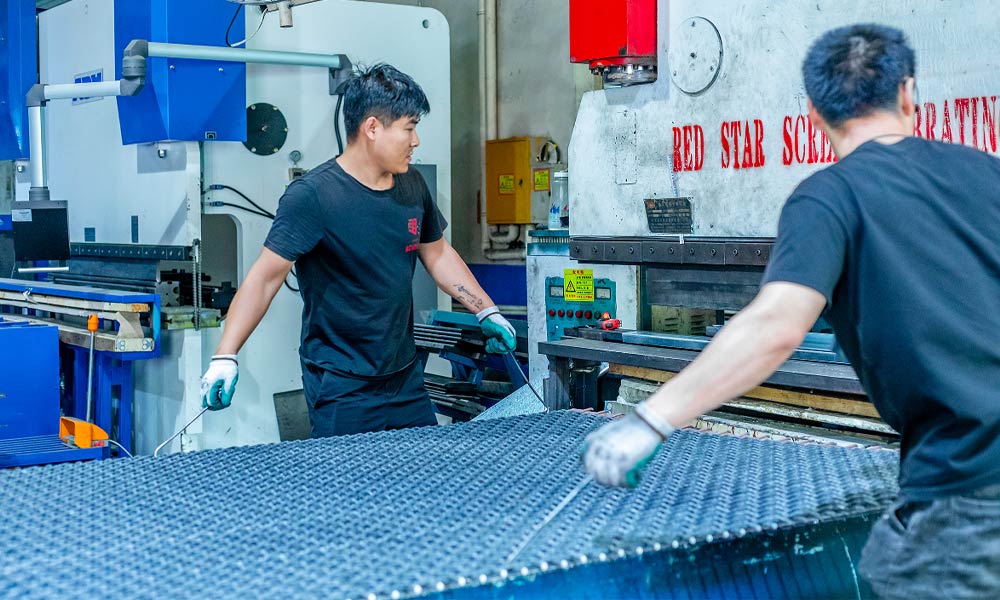
Balancing aperture size and strength is a calculated engineering decision, not a guess. Selecting the right screen requires a comprehensive analysis of the material, screening equipment, and process requirements; the ideal choice is a screen with high hardness and a robust woven structure that strikes the best balance between these factors, thereby enhancing screening efficiency and extending service life. This precise balance minimizes downtime and reduces the labor and operational costs associated with screen replacement, ensuring the efficient operation of the entire production line.