Anti-Clogging Design for Potash Extraction Using Welded Mining Screens
In potash mining, maintaining screening efficiency is a constant fight against clogging. The sticky, often damp nature of potash ore, combined with fine clays, leads to severe blinding of standard screen decks, drastically reducing throughput and increasing downtime. Implementing a specialized anti-clogging design for welded mining screens is therefore a critical operational necessity, not an optional upgrade, to ensure continuous production and lower operating costs.
Understanding the Clogging Mechanism in Potash
Effective design starts with understanding why potash blinds screens. The primary culprits are moisture and fines. Potash particles absorb moisture, becoming adhesive and forming agglomerates that bridge across screen openings. Concurrently, clay and fine particles pack into apertures, creating a near-solid layer. An anti-clogging design of welded mining mesh must actively combat both adhesion and packing by promoting particle movement and preventing material buildup on the wires.
Why Potash Blinds a Plain Metal Woven Screen So Fast
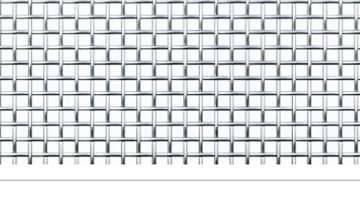
A plain Metal Woven Screen relies on crimped wires holding each other by friction and mechanical interlock, which is great for impact absorption but dangerous in salty slurry, because every wire crossing is a tiny crevice where moist potash dust can settle, dissolve, and then crystallize as the deck heats from vibration or the surrounding air shifts humidity. Once a few salt needles bridge the crossing, the aperture stops being an aperture and becomes a trap: near-size granules land on the crust, more brine wicks into the pile, and the effective open area collapses while the nominal mesh size on the invoice still says “3 mm.” Potash is worse than clay in one sneaky way—clay smears, potash fuses, so a deck that merely looks dirty after a shift has often already lost its true cut point. Welded screens do not magically repeal chemistry, but they remove the mechanical wiggle room: with resistance-welded intersections there is less relative wire movement, fewer micro-crevices at the joint, and a flatter, more controllable surface where a V-slot or elongated opening can present the particle with an exit instead of a ledge.
V-Wire, Slotted Bars, and the Geometry That Refuses to Let Salt Settle
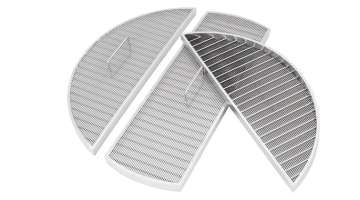
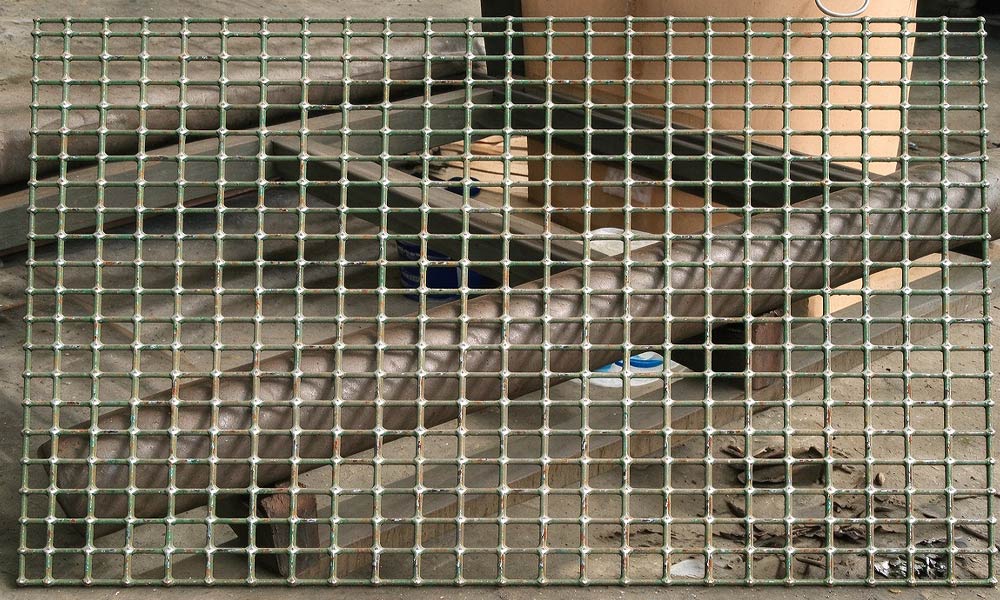
The real anti-clogging trick in welded mining screens is not the weld itself but the profile that gets welded, because a V-shaped wedge wire presents a wide top and a narrow root so a particle that enters the slot meets less resistance going through and has no flat shelf to lodge on coming back out. A Metal Woven Screen with square holes gives potash four corners and a stable bridge; a welded slotted panel gives the brine film a moving, tapered channel where fine salt either passes, reports to oversize, or gets knocked loose by the deck’s vibration instead of cementing into place. Support-rod spacing and bar orientation matter just as much—too-wide support pitch lets the welded panel drum, local slurry pockets form, and caking restarts even with perfect V-wire; too-tight support kills open area and turns a potash sizing deck into a dewatering board that the circuit never asked for. Stainless 316L is the usual hero here because potash brine is corrosive as well as sticky, and a welded panel made from the wrong carbon steel may stay rigid while quietly pitting at the welds until a whole row of slots drifts out of tolerance.
Zoned Decks, Brine Management, and Why the Screen Still Needs the Circuit
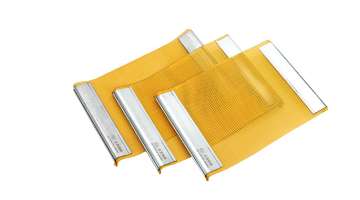
A welded mining screen will not save a potash plant that dumps saturated, deslimed, recycled brine straight onto the fine deck and calls it “feed,” because anti-clogging design is half deck and half discipline: control brine carryover, keep the feed end from becoming a impact zone that pulverizes crystals into clog-prone dust, vent the housing so humidity does not condense on the cold panel, and use water sprays or brine rinse where the process permits instead of letting salt dry on the wire. Many potash circuits now run zoned media—welded V-wire or slotted stainless on the wet, brine-heavy sections where rigidity and smooth slot walls dominate, and a flexible or self-cleaning Metal Woven Screen variant on sections where near-size material needs wire movement to avoid pegging.That hybrid thinking beats the fundamentalist approach of “welded everywhere” or “woven everywhere,” because potash extraction is not one problem: the scalp end fights lumps and impact, the middle deck fights moisture and near-size, and the fine deck fights crystallization and grade drift.
Core Design Features to Prevent Blinding
Specialized welded mining screens incorporate key features to tackle potash clogging. The foundation is self-cleaning aperture geometry. Using a tapered, wedge-wire profile creates a slot wider at the top than the bottom. This design, combined with vibration, encourages particles to travel downward and through the opening, preventing them from getting lodged. Secondly, optimized open area and wire spacing is crucial. The design must balance sufficient open area for throughput with spacing that minimizes the chance of multiple particles bridging and starting a blind.
Material and Surface Innovations
Material choice and surface treatment are vital. Using corrosion-resistant stainless steel withstands the aggressive brine in potash circuits. More impactful is applying a low-friction surface treatment. A specialized polymer coating or a highly polished finish drastically reduces the adhesion of sticky potash particles to the welded screen, making it much harder for material to initiate the blinding process.
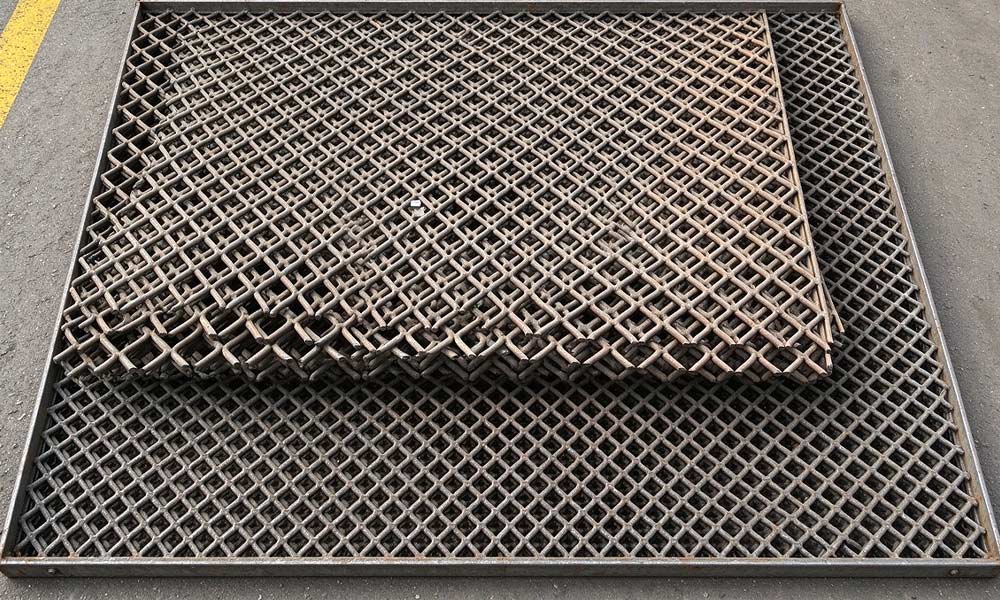
Synergy with Vibratory Equipment
An anti-clogging screen must work in perfect harmony with the vibratory equipment. This involves ensuring the screen deck is uniformly tensioned to transmit vibration effectively across the entire panel, eliminating dead spots where material can accumulate. Furthermore, selecting the correct vibration parameters is key. A combination of high amplitude and relatively low frequency is often most effective, providing the aggressive "bouncing" action needed to dislodge sticky particles and keep apertures clear.
Effective anti-clogging design of welded screen mesh is a holistic system. It combines intelligent aperture geometry, specialized materials, and precise mechanical integration to create a self-cleaning screening surface. For potash processors, investing in this tailored approach translates directly to sustained efficiency, higher product quality, and a major reduction in the costly downtime associated with screen blinding, ensuring a more reliable and profitable operation.