Analysis of the Wear and Corrosion Resistance of Wedge Wire Screens in the Zinc Ore Beneficiation Process
The zinc ore beneficiation process subjects screening equipment to a harsh combination of abrasive ore particles and often chemically active slurry. Wedge wire screens must therefore demonstrate robust wear and corrosion resistance to maintain performance and longevity. A failure in either aspect leads to inaccurate sizing, increased downtime, and higher operational costs, making an analysis of these factors critical for screen selection and process reliability.
The Dual Challenge: Abrasion and Chemical Attack
Screen failure in zinc processing typically results from two interacting mechanisms. Wear occurs through abrasion, as hard minerals like quartz and pyrite continuously scour the screen surface, gradually eroding the wire profile and altering slot dimensions. Concurrently, corrosion attacks the metal chemically. Process water, often adjusted to acidic pH levels and containing dissolved salts and sulfides, can cause pitting, general surface degradation, or galvanic corrosion. This synergistic effect means a material resistant to only one threat will underperform, necessitating a balanced solution.
Why Profile Wire Is Both a Blessing and a Liability
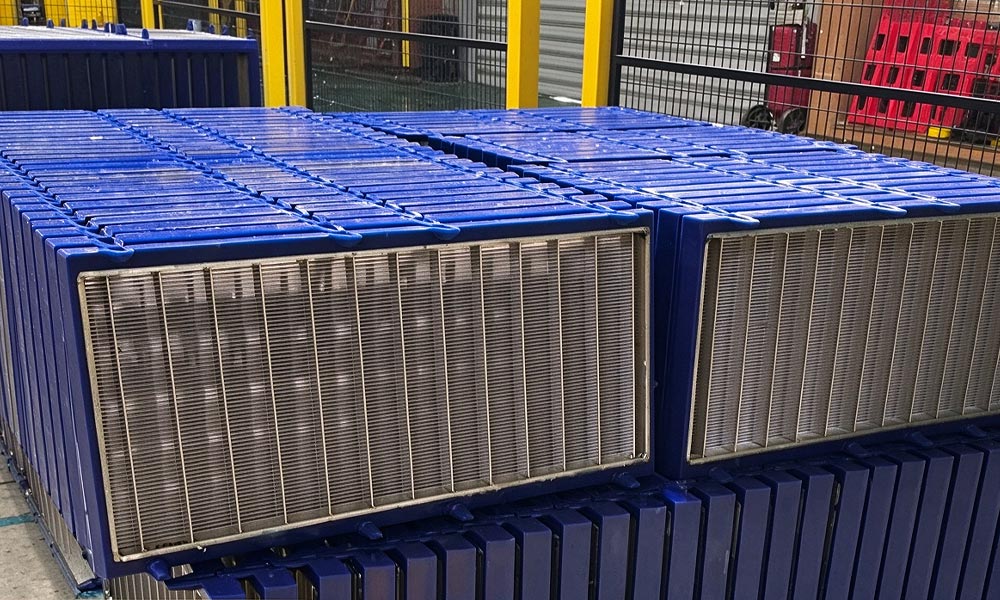
The genius of a Wedge Wire Mesh in mineral duty is the triangular or trapezoidal profile that gives a continuous, smooth leading face, so particles slide instead of wedging and the effective open area stays honest even when the feed is sticky or near-sized. In zinc ore screening, that geometry pays rent every shift: the slurry moves along the slot, coarse silica and barite fractions skim across the crown, and the panel blinds far less than a square-opening woven cloth would in the same pulp. The catch is that profile wire has a thin attack front—once abrasive gangue starts lapping at the crown, the wear is localized but relentless, and unlike round wire that loses diameter symmetrically, a wedge profile can change its hydraulic shape, altering both slot width and dewatering behavior without looking “broken” to a casual inspector. Zinc circuits with high quartz, magnetite carryover, or recycled tailings recirculation are the worst case, because the same hard particles get pumped past the screen again and again, turning a sizing surface into a grinding wheel fed by its own plant.
Sulfates, Chlorides, and the Air-Water Line Problem
If abrasion is the bruise, corrosion is the infection, and zinc ore pulps are unusually good at hosting it because the process water is rarely neutral, innocent tap water. Flotation circuits run with pH modifiers, sulfide collectors, sulfate-rich gangue reactions, and in many operations a chloride contribution from groundwater, seawater intrusion, or reagent impurities, so the Wedge Wire Mesh lives inside an electrochemical soup rather than a friendly wash deck. The most damaging zone is the air-water interface along the screen frame, where the metal wets and dries continuously: oxygen concentrates there, capillary moisture traps reagent residues, and crevice corrosion starts at the junction between profile wire and support rod. Stainless grades help, but “304 versus 316L” is a child’s version of the problem—what matters is pitting resistance equivalent number behavior under zinc pulp, weld cleanliness, passivation quality, and whether the support rods were ground smooth or left with crevices that act like tiny corrosion batteries. Galvanic effects also sneak in when a carbon steel frame meets a stainless Wedge Wire Mesh, or when worn areas expose a different microstructure at the weld root, and in a zinc plant those subtle couplings can shorten screen life more than the obvious scrubbing from the ore itself.
Engineering the Screen for Survival
Surviving a zinc beneficiation screen house is less about buying the “toughest” panel and more about removing the places where wear and corrosion shake hands, because a smart Wedge Wire Mesh specification attacks both modes at once. Material choice starts with the pulp chemistry report, not the supplier’s favorite alloy: high chloride favors molybdenum-bearing stainless or duplex grades, abrasive silica-heavy streams favor harder, thicker profile wires or wear-capped crowns, and mixed duties often justify a composite approach where the working face is wear-engineered while the frame and supports resist crevice corrosion. Slot width and open area have to be tuned so the bed does not ride too deep—an overloaded wedge wire panel keeps abrasive slurry pinned against the crown, which is like sanding the screen with its own product, while a correctly stratified bed lets fines escape and reduces dwell time on the wearing surface.
Strategic Material Selection for Combined Resistance
Material choice is the primary defense. For many applications, 316 stainless steel wedge wire screen serves as a reliable baseline, offering good corrosion resistance due to its molybdenum content, which helps withstand chlorides and mild acids. In areas of extreme abrasion, such as primary screening, high-carbon steel with a hardened wear surface provides superior wear resistance, but is vulnerable to corrosion unless the slurry pH is carefully controlled. For the most demanding combined environments—highly abrasive and corrosive—duplex stainless steels offer an optimal balance, combining high strength and exceptional resistance to chloride-induced stress corrosion cracking.
Optimizing Longevity Through Design and Operation
Screen design and operational practices significantly extend service life. A wedge metal panel with a thicker wear face on the wire profile inherently resists abrasion longer. Proper slot orientation and deck slope promote efficient material travel, reducing localized wear. Operationally, avoiding feed overload minimizes impact damage is necessary. Crucially, preventing material buildup through regular, effective cleaning is essential, as compacted fines create a corrosive microenvironment that accelerates pitting under deposits, a common failure point.
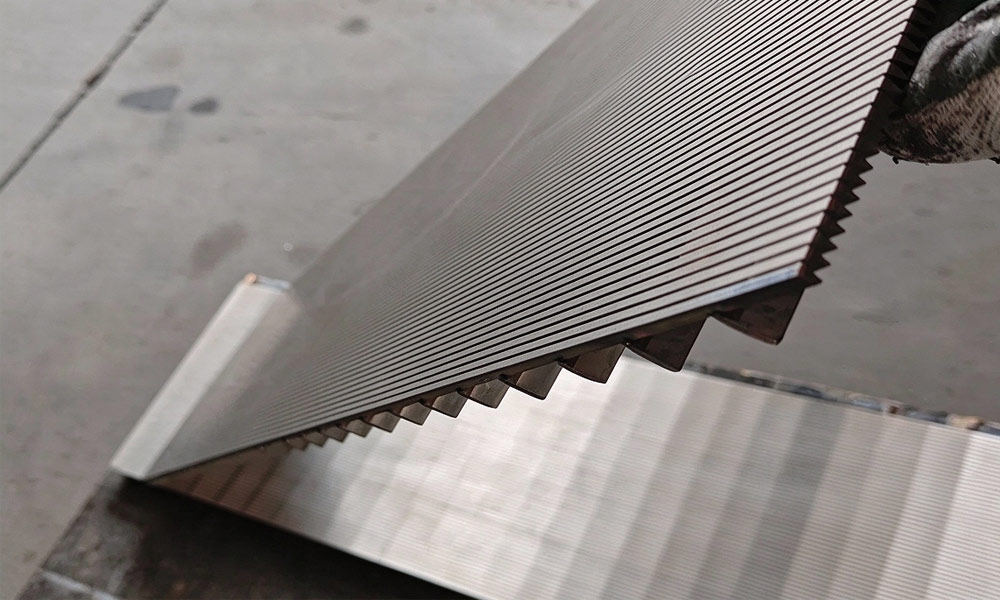
Choosing wedge wire screens that can handle wear and corrosion in zinc ore beneficiation isn’t just smart, it is crucial. You want to pick the right material, whether is 316 stainless, hardened steel, or a duplex alloy, depending on how tough and chemically harsh each process stage gets. When you get this right and back it up with solid design and maintenance, you keep sizing accurate, cut down on annoying breakdowns where screens need replacing, and protect both performance and your bottom line across the whole beneficiation circuit. Contact our screening specialists to select wedge wire screen materials tailored for your zinc ore beneficiation slurry conditions.