Selection Scheme of High-Strength Woven Wire Screens for Chrome Ore Screening
Screening chrome ore demands equipment that can endure high density, sharp particles, and heavy loads. A focused selection scheme for a high-strength woven wire screen is essential to prevent premature failure from tearing, deformation, or breakage, thereby ensuring operational safety, efficiency, and cost-effectiveness throughout the processing circuit.
Reading the Chrome Ore Stream Before Touching Mesh Specification
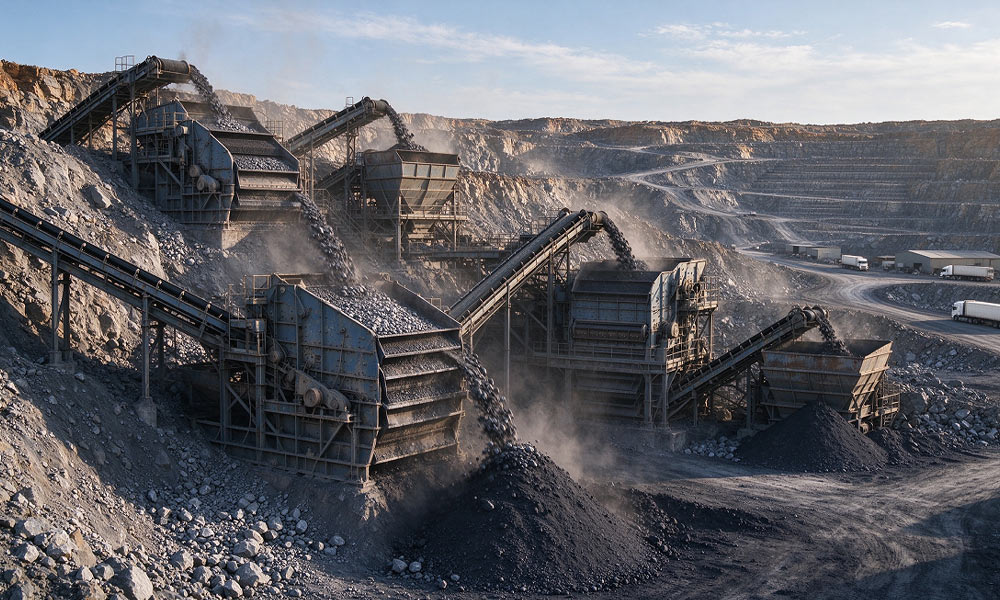
Before anyone quotes a High Strength Woven Screen, the ore itself has to be interrogated like a suspect with money and attitude: is it run-of-mine lumpy chromite straight from a jaw discharge, or is it a reclaimed, milled, and deslimed product heading into gravity concentration? Lumpy feed punishes the panel with impact and edge loading, while fine chromite concentrate punishes it with abrasion, pegging, and blinding once moisture and slimes show up. Specific gravity matters more here than in most screening jobs, because chrome ore is heavy and each particle carries more kinetic energy than an equally sized granite chip, so the wire is not just separating material—it is catching falling anvils all shift long. Plants that skip this step end up with a mesh that survives the fines section but blows out at the feed lip, or a heavy panel that wears forever but strangles throughput because the open area was sacrificed for toughness. A usable selection scheme starts with the particle size distribution curve, the crush stage, the deck position, the vibration type, and the dreaded “what happens when it rains” conversation, because chrome circuits in tropical or coastal sites rarely run as dry as the feasibility study promised.
Metallurgy and Crimp Architecture
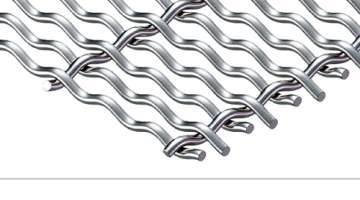
Calling a product a High Strength Woven Screen means nothing unless the wire chemistry, temper, and weave geometry all point the same direction, and in chrome ore the devil lives in those details. Carbon steel with the wrong hardness will abrade fast even if it feels tough; oil-tempered or high-carbon spring-quality wire resists deformation better but can be brittle at clamp edges; stainless and specialty alloys resist corrosion from process water and reagents but must be paired with the right wire diameter so they do not deflect under heavy lumpy feed. The crimp is where strength becomes structural: a plain weave might grade beautifully in a lab, but at a chrome crusher discharge the crossings can walk, so lock-crimp, double-crimp, or flat-top constructions are often the ones that keep the panel from loosening into a saggy net. Wire diameter is the quiet lever—go too thin and the high-strength claim is cosmetic, go too thick and the open area collapses, so the scheme has to balance beam strength against the square centimeters of hole the process actually needs. A good supplier will also talk about selvage, edge wire, hook strip, and tensioning method, because a heroic mesh terminated badly will still rip out of the frame the first time a tramp lump lands sideways.
Support Spacing Behind Long Service Life
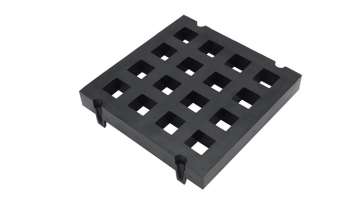
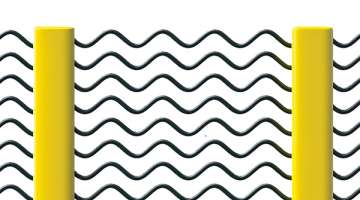
Even the most expensive High Strength Woven Screen will underperform if the deck around it was designed by someone thinking about aggregate, not chromite, because chrome ore demands a layout that manages energy before the working mesh ever sees it. A reinforced impact zone, scalping grid, or sacrificial wear bar upstream can steal the worst lumps away from the fine panel, letting the high-strength mesh do sizing instead of acting as a punching bag. Support bars or stringers must match the mesh pitch and load path; too wide a span and the panel drums, fatigues, and loses aperture accuracy, too tight a span and you have replaced woven open area with structural steel the process never asked for. Tensioning is where many chrome plants quietly lose money—under-tensioned panels rub at crossings and self-destruct, over-tensioned panels stress the frame and crack at hooks, while correctly tensioned panels sing along with the vibrator and shed material instead of hugging it.
Defining High-Strength for the Task
For chrome ore screening, high-strength woven wire screen is a multi-faceted requirement. It primarily means exceptional tensile strength to withstand the high tension of the deck system and the weight of the ore bed. It equally requires high impact resistance to absorb the force of dense, sharp ore particles without developing fatigue cracks. Finally, it necessitates structural rigidity to prevent the screen from deforming under load, which would distort aperture sizes and ruin screening accuracy. A successful selection must address all three aspects.
Choosing the Right Material and Weave
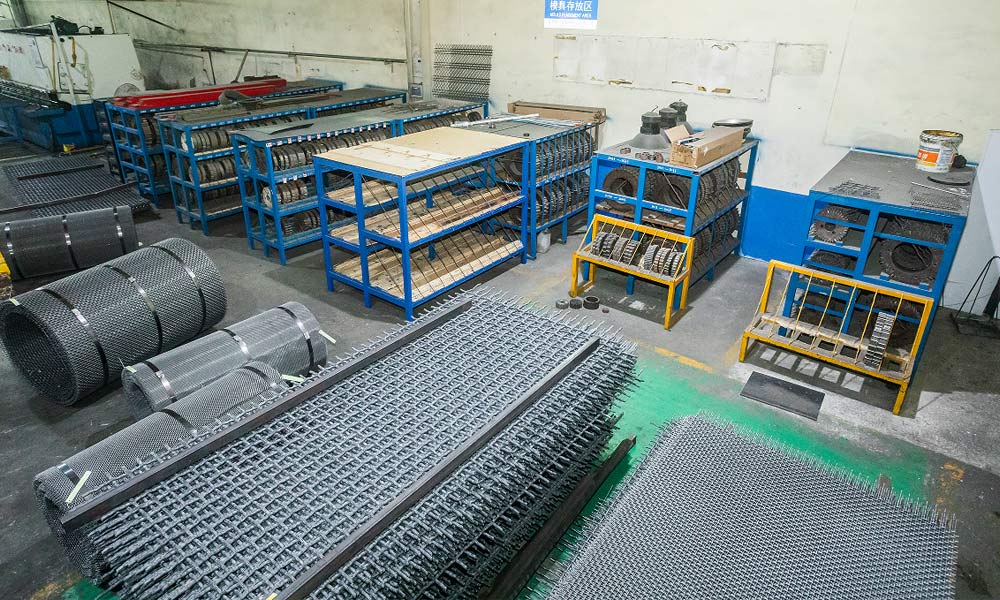
The core of a high-strength woven wire screen lies in its material and construction. High-carbon steel wire is the standard, offering an excellent balance of strength and cost for most chrome ore duties. For the most severe impact applications, such as scalping large lump ore, manganese steel wire is superior due to its work-hardening property, becoming tougher with use. The weave pattern is critical for stability; a double or triple crimp weave locks wires securely, preventing movement and distortion under heavy, shifting loads. A design using heavier warp wires than shute wires concentrates strength where the main tension and abrasion occur, effectively extending screen life.
Implementing for Maximum Life
A robust screen must be correctly integrated. The scheme must enforce proper, uniform tensioning during installation to minimize harmful flexing. Opting for a modular or panelized screen system is highly recommended for chrome ore applications, as it allows swift replacement of only the worn sections, drastically cutting downtime. Additionally, while focusing on strength, abrasion resistance cannot be overlooked. The selected wire material of woven metal mesh must have sufficient hardness to resist the cutting wear from chrome ore’s sharp edges, preventing premature thinning and loss of strength.
Implementing this selection scheme ensures you choose a woven metal screen built to last in a chrome ore environment. By systematically evaluating material (high-carbon or manganese steel), construction (robust crimp, heavy warp design), and integration (proper tension, modularity), you secure a screen that delivers reliable high-strength performance. This approach maximizes service life, maintains screening accuracy, and provides the best return on investment by reducing unplanned stoppages and replacement frequency. Get in touch with our engineers to tailor high-strength woven screen specifications for your chromite processing plant.