Selection of Material and Precision for Wedge Wire Screen in Lithium Salt Lake Brine Filtration
In the critical process of extracting lithium from salt lake brine, the wedge wire metal screen is a key filtration component. Its performance directly affects purity, efficiency, and uptime. Therefore, the selection of material and manufacturing precision are fundamental decisions that determine the screen's ability to withstand a harsh, corrosive environment while delivering consistent and accurate filtration.
Material Selection: The Foundation of Corrosion Resistance
The primary challenge is the brine's aggressive chemistry, rich in chlorides, sulfates, and magnesium. Standard steels corrode rapidly. 316L stainless steel is the baseline choice, offering good general corrosion resistance due to its molybdenum content. For more challenging brines with higher chloride levels or elevated temperatures, 904L stainless steel wedge wire mesh is superior. Its higher nickel, chromium, and molybdenum content provides exceptional resistance to pitting and crevice corrosion. While more expensive, 904L often delivers a lower total cost by vastly extending screen life and minimizing contamination risk from corrosion products.
Brine Worlds and Zinc Pulp: Two Fluids, One Screen Philosophy
A salt lake brine Wedge Wire Mesh is not separating “ore” in the rocky sense; it is protecting nanofiltration membranes, polishing pre-coat filters, or holding resin and adsorbent beds steady while lithium-rich brine moves through at low pressure and high salinity. The particles are tiny, the viscosity changes with temperature, and the smallest slot deviation means either losing lithium-bearing fines or letting scaling salts bridge the opening and choke the whole train. By contrast, the zinc ore screen lives in a noisier, meaner stream: crushed gangue, recirculated tailings, sulfide froth, and acidic-to-neutral pulp that never sits still, so the same Wedge Wire Mesh concept must now survive impact energy and abrasive sliding while still keeping the gravity or dewatering cut point tight. What links them is stratification of priorities—brine duty says “precision and chemistry first, abrasion almost nowhere,” zinc duty says “abrasion and corrosion together, but precision still pays the bills downstream.” A supplier who copies a zinc screen into a lithium project, or vice versa, has not understood that wedge wire is not one product but a construction system bent to fit the fluid.
Material Choice: From Duplex Stainless to Welding Hygiene in Zinc
In lithium salt lake service, the brine is a concentrated electrolyte with chloride levels that would make a 304 stainless Wedge Wire Mesh develop pitting before the commissioning team leaves site, so the material conversation quickly moves to 316L, 2205 duplex, 2507 super duplex, or even higher-alloy specialties when magnesium-rich brines and seasonal pH swings enter the picture. Precision here is not only slot width but surface finish: a rough wedge crown seeds scale crystals, and once a calcium carbonate or carnallite scale layer nucleates, backwash cycles get shorter and lithium grade suffers. Zinc circuits are less obsessed with micron precision but far less forgiving on hidden defects—crevice corrosion at the wire-to-rod junction, intergranular attack near poorly passivated welds, and galvanic coupling with carbon steel frames can retire a panel even when the profile wire still looks thick. The right zinc Wedge Wire Mesh often pairs a wear-capable duplex or 316L body with immaculate weld hygiene, correct support-rod pitch, and frame isolation, because in that environment corrosion does not wait for the wire to wear out—it attacks the joints the buyer never photographed.
Slot Precision and Profile Geometry
Everyone loves to specify a number: 50 micron, 100 micron, 300 micron. But a Wedge Wire Mesh does not filter like a membrane, it classifies like a shaped throat, and the real opening under flow is a function of profile apex angle, wire height, support spacing, and whether the bed of fines rides on top or washes through. In lithium brine filtration, specifying too tight a slot to “catch everything” usually backfires—head loss climbs, scaling accelerates, and the operator ends up chemically cleaning so often that alloy choice stops mattering. A better scheme sets the slot just fine enough to protect the next stage, pairs it with a profile that sheds scale, and designs the header lateral or candle screen so brine velocity stays in the sweet spot. In zinc beneficiation, precision is expressed differently: maybe 0.5 mm dewatering slots on a sieve bend, maybe 1 mm classification on a repulp screen, but the principle is identical—slot width must match particle distribution under vibration, not the lab sieve result. Overspecify fineness and the zinc screen blinds, underspecify and the gravity table or flotation cell inherits garbage; either way the plant pays for a screening mistake made on a spreadsheet.
Precision: Defining Filtration Accuracy and Flow
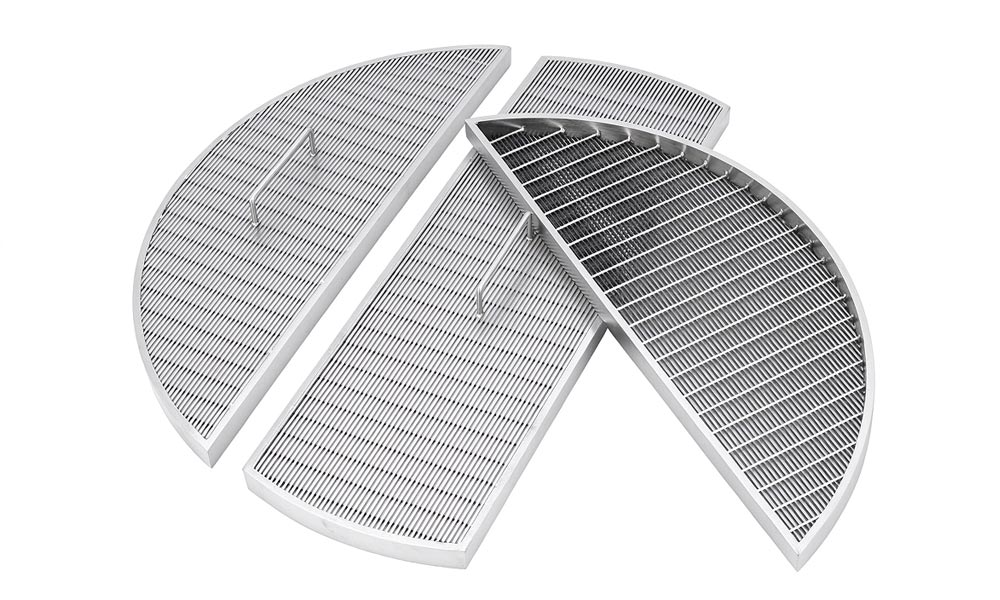
Precision refers to the exacting tolerances in the construction of wedge wire screen, specifically the slot width, wire profile consistency, and weld uniformity. For lithium brine, slot widths are typically narrow to remove fine clays and precipitates. High precision ensures every slot is identical, preventing oversized particles from bypassing the filter and contaminating downstream processes. Moreover, a precisely manufactured screen has a smoother surface, which promotes better cake release, reduces blinding, and maintains optimal flow rates throughout the filtration cycle.
The Synergy for Optimal Performance
Material and precision must work together. A premium 904L screen with poor precision will fail to deliver clean filtration. Conversely, a highly precise screen made from an unsuitable material will corrode, losing its dimensional accuracy. The optimal wedge wire metal screen combines a corrosion-resistant alloy with precision manufacturing—using laser-cut or drawn wires and automated welding. This ensures the screen maintains its specified slot width and structural integrity over long service in a hostile environment, providing reliable and consistent separation.
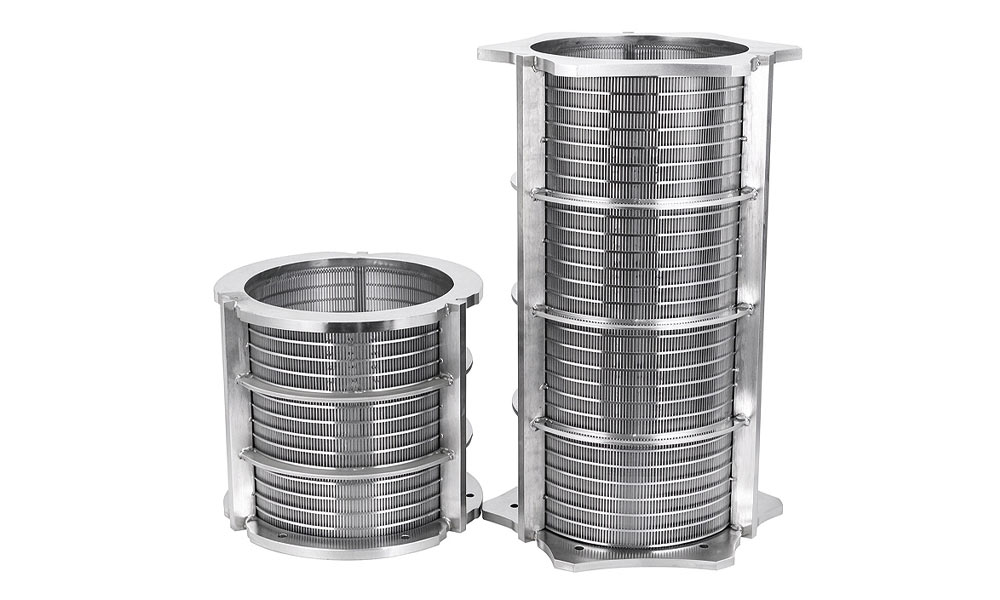
The careful selection of material and precision for wedge metal mesh is a strategic investment in the reliability of the entire lithium salt lake brine filtration process. The right material combats corrosion, while high precision guarantees filtration accuracy. This combination minimizes downtime for replacements, reduces contamination risk, and ensures stable operation, directly supporting the consistent production of high-purity lithium. Reach out to our engineers to customize wedge wire screen material and slot tolerance for your salt lake lithium extraction project.