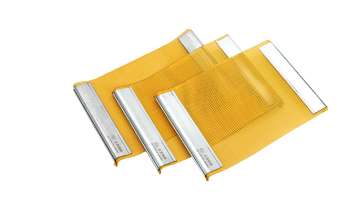
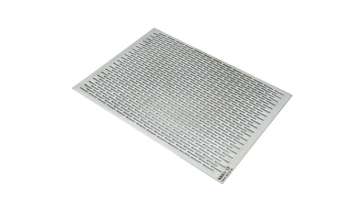
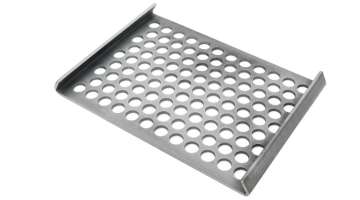
Application of Rubber Screen Plates in Chromium Ore Beneficiation: Impact and Corrosion Resistance
For chromium ore beneficiation operations processing hard, sharp, often chemically abrasive raw ore, traditional woven metal screen media usually wears through in just a few weeks, tearing easily under heavy lump impact and corroding quickly when exposed to acidic or salty process slurries. Many processing teams told us they struggled with constant unplanned screen deck shutdowns, spending huge amounts of labor and cost on frequent replacements that still could not keep up with the ore’s harsh operating conditions. Deploying properly formulated Rubber Screens in Chromium Ore processing circuits solves both of these core pain points, delivering far longer service life and far more stable screening performance than standard metal media.
High-Impact Absorption Performance for Coarse Lump Feeds
The first major operational benefit comes from the rubber material’s natural high elasticity, which absorbs the heavy shock of falling large chromium ore lumps that would easily dent, deform or punch holes straight through rigid metal mesh panels. This drastically reduces sudden unexpected panel breakage events, and lets Rubber Screens in Chromium Ore coarse sizing sections deliver 3 to 4 times longer usable service life than standard woven metal screens, even when handling large, sharp ore lumps fed directly from primary crushing.
Why Chromite Beats Up Metal Decks
Chromite is dense, hard, and slabby in the coarse fraction, which means the feed-end of a scalping or pre-screen deck takes repeated falling-body impact that rigid mesh was never designed to forgive. A woven manganese or stainless deck can size beautifully, but the first 300 mm lump off the primary crusher does not care about aperture accuracy—it dents the wire, stretches the hook, and opens a local pocket where fines start misclassifying. Then comes the slurry: chromite circuits often run wet screening, scrubbing, and gravity or heavy-media separation, and the process water carries dissolved salts plus oxidation products that can promote acidic conditions as sulfides oxidize. Steel responds to that environment with rust, pitting, and under-deposit corrosion; once the surface is pitted, abrasion accelerates because the ore finds grooves to bite into. Rubber Screens in Chromium Ore change the failure mode because the elastomer flexes instead of denting, and a properly compounded rubber does not rely on a protective oxide film the way steel does. The panel still wears, but it wears gradually across the working face instead of failing catastrophically at one torn intersection, which is exactly what a plant manager wants at 2 a.m.
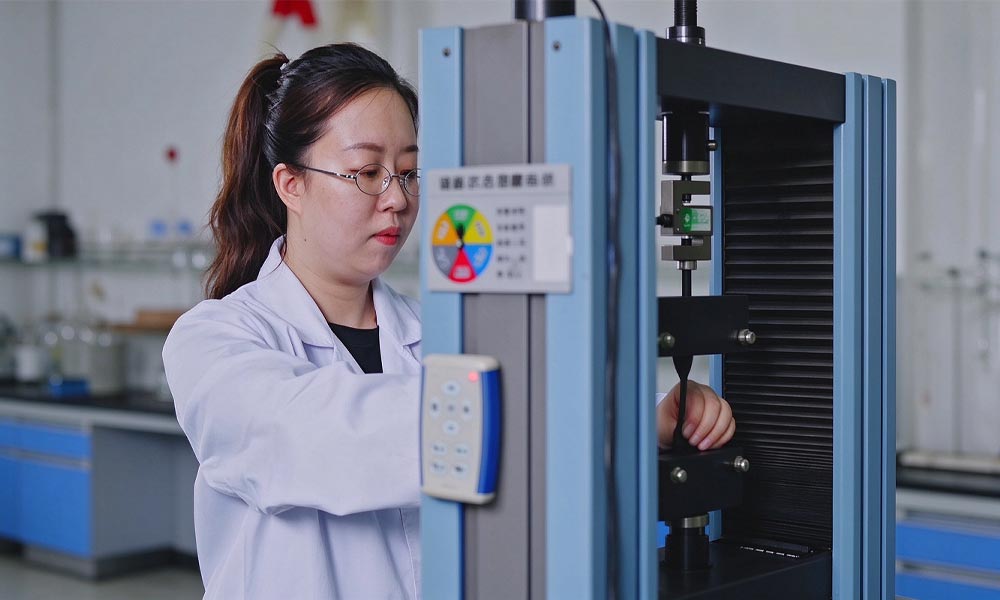
Impact Cushioning Where the Lumps Land
The feed end of a chromite screen is a different machine from the discharge end, and good rubber design treats them that way. At the impact zone you want rebound and tear resistance more than you want maximum hardness: natural rubber or NR/BR blends soak up the shock of falling lump chromite, reduce panel punch-through, and protect the support bars and screen box from the kind of hammering that eventually cracks welded frames. Further down the deck, where material is smaller and sliding abrasion dominates, a harder compound earns its keep by resisting cutting and holding aperture shape. That is why serious suppliers talk about dual-durometer or zone-compounded panels rather than one Shore number for the whole plate. Rubber Screens in Chromium Ore scalping duties often pair a softer impact nose with a firmer mid-and-discharge zone, so the panel absorbs the lump without turning to mush where the tonnage actually slides. Ignore that distinction and you get the classic complaint: “rubber is either too soft and chunks out, or too hard and pegs like steel”—which usually means the buyer specified one number for two completely different wear mechanisms.
Slurry Chemistry and Corrosion Resistance
Corrosion in chromite beneficiation is sneaky because it is rarely one acid doing one thing. Process water can be near-neutral one month and drift with reagent addition, scrubber carryover, sulfate formation from sulfide oxidation, or saline make-up water the mine started using when the fresh bore ran low. Bare steel hates that variability; rubber mostly does not, provided the compound is chosen for the exposure. Natural rubber is excellent for impact and wet abrasion but is not the hero in oily or strongly oxidizing duty. Neoprene handles weathering, ozone, and many chemical environments better; nitrile shrugs off oils and hydrocarbon-based reagents; EPDM likes heat, weather, and broader chemical resistance. Rubber Screens in Chromium Ore that see conditioner or flotation-circuit recirculation water should be specified by chemical profile, not by color or price. A plant that simply says “send rubber, 60 Shore” may receive a compound that survives abrasion for a season and then swells, hardens, or cracks because nobody mentioned the chloride load or the pH dip. Corrosion resistance in rubber is really compound compatibility—get that wrong and the panel still “corrodes,” just in rubber language: blooming, softening, micro-cracking, loss of rebound.
Special Formulated Rubber for Slurry Corrosion Resistance
The second key advantage comes from custom compounded rubber formulations that are engineered to resist chemical attack from the acidic process slurries, saline process water and various beneficiation reagents commonly used in chromium ore processing circuits. Unlike bare metal screens that develop rust, pitting and accelerated wear after only a short time of exposure, these specially engineered panels show almost no signs of chemical degradation even after months of continuous contact with harsh process fluids, making Rubber Screens in Chromium Ore fine sizing and dewatering stages far more reliable and low-maintenance.
Reduced Noise and More Consistent Classification Stability
The third underrated practical benefit is that rubber’s natural vibration damping property cuts down the high-frequency metal-on-metal impact noise that fills most chromium ore screening sections by more than 20 decibels, creating a far safer and more comfortable working environment for on-site crews. Unlike rigid metal panels that stretch, warp and create uneven apertures as they wear, rubber screens wear slowly and evenly across their full surface, so your classification accuracy stays consistent for far longer, reducing misplaced material loss and improving overall chromium recovery rate across the whole beneficiation circuit when you use Rubber Screens in Chromium Ore processing lines.
Switching to properly engineered rubber screen plates for your chromium ore beneficiation circuit will drastically cut down on unplanned downtime, reduce your long-term screen media replacement costs, and create a far more stable, low-maintenance screening operation. If you share details of your circuit’s typical feed size range, process slurry pH level and daily processing capacity, our technical team can put together a fully customized material formulation and installation recommendation tailored exactly to your site’s unique operating conditions.