High Tensile Woven Wire Mesh: Benefits for Heavy-Duty Mining Screening
If you’ve ever spent a full 12-hour shift on a hard rock mine’s primary screening deck, watching your crew scramble to patch a completely torn screen panel that gave way under the repeated impact of 1-ton+ sharp granite boulders, you know exactly how much unnecessary downtime, wasted labor and lost ore processing capacity this seemingly trivial consumable failure costs your operation every single month. Many mine maintenance supervisors I’ve worked alongside over the years shared that they used to treat frequent screen breakage as an unavoidable “normal cost” of running a high-volume hard rock mining operation, never realizing that a properly engineered high tensile woven structure could eliminate 90% of these preventable failures completely. A well-calibrated high tensile woven mesh is the unsung workhorse that sits right at the front of your entire mineral processing circuit, absorbing the full brunt of heavy ore impact and delivering far more reliable performance than ordinary low-carbon steel screens.
Extreme Impact Resistance
What really sets this mesh apart isn’t just a technical number—it’s the way it stands up to punishment. Its tensile strength hits between 800 and 1040 MPa, about 30% higher than regular carbon steel mesh using the same wire thickness. That means it shrugs off the kinds of abuse that rip other screens to shreds. Drop a boulder weighing over a ton from three meters up? This mesh just flexes and keeps going. If you tried that with low-carbon steel, you’d punch right through the screen before lunch and spend the rest of your shift swapping it out.But it’s not just tough—it’s clever, too. The balance in its mechanical properties gives it a kind of stubborn toughness. Instead of snapping like brittle glass when hit by a rogue hunk of rock, this mesh absorbs the shock, rolls with it, and saves you from surprise breakdowns and frantic, mid-shift repairs.
Tensile Strength Means Fatigue Resistance
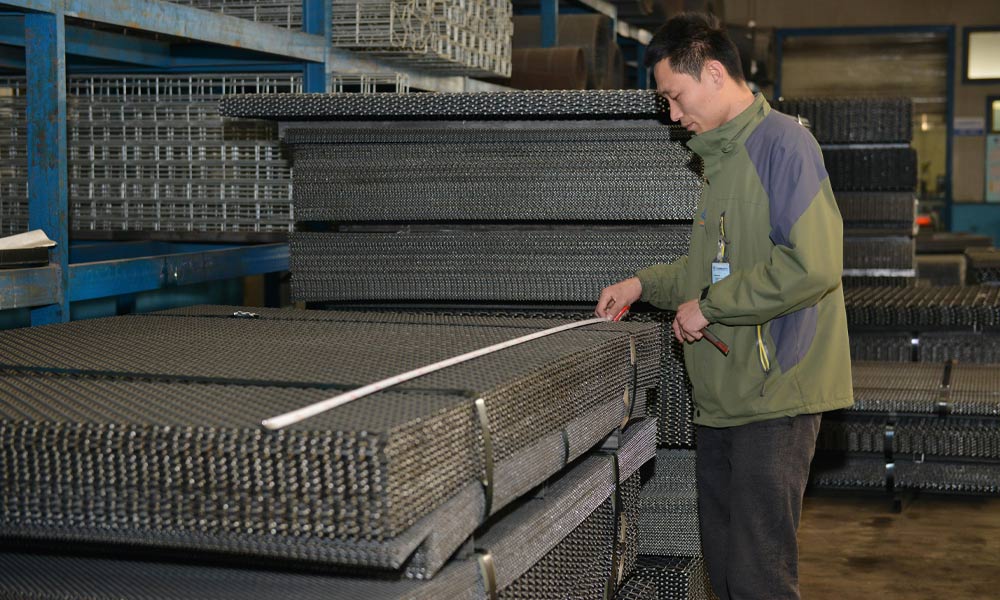
People see “high tensile” and think, okay, that wire won’t break right away. But in real life, it’s not the first hit that kills a screen. It’s the relentless beating—impact after impact, millions of them—that wears everything down. Cheap mesh made from low-carbon steel gets hard and brittle right at the support bar, where no one notices, and then snaps. You end up with a panel that looks fine except for that one spot you can’t see.High tensile mesh is different. It’s got that spring-steel feel—high strength, yes, but also a bit of give, so it bounces back every time something hits it. Instead of building up stress until it finally snaps in frustration, it just keeps working. You see the benefit in tough applications like iron ore, granite, basalt, or copper screening, where fatigue resistance decides whether your screen lasts all week or fails before the weekend even starts.
Extended Wear Service Life
The second key long-term benefit that drastically reduces your total screen replacement frequency is the optimized quenching and tempering heat treatment process applied to the high tensile alloy wire, which delivers a perfect balance of high surface hardness and deep core toughness. The surface hardness of a properly treated high tensile woven mesh can reach HRC50 or higher, making it 3 to 4 times more abrasion resistant than ordinary mild steel, even under the continuous 24/7 scouring of sharp high-hardness iron ore, gold ore or aggregate particles. Field data from multiple large-scale hard rock mines shows that these screens can reliably operate for 3 to 6 months of continuous heavy-duty screening, compared to just 2 to 4 weeks for standard low-carbon steel screens used in identical operating conditions, cutting your total annual screen consumption by more than 70% right out of the gate.
Stable Aperture Consistency
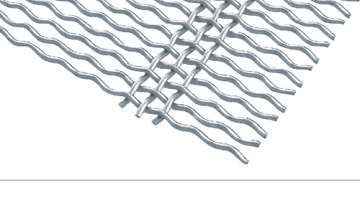
The third critical performance advantage that most mining teams overlook is the lock-crimp interlocking weaving structure that pairs perfectly with the high tensile wire material, locking every single wire firmly in its designated position to prevent any lateral shifting even under millions of cycles of high-frequency heavy load vibration. Unlike ordinary woven wire screens where soft low-carbon steel wires easily slide out of place under continuous heavy ore impact, creating uneven apertures that let oversize particles slip through or block qualified fine material, the rigid interlocked structure of a high-quality high tensile woven mesh maintains its original aperture geometry completely unchanged across its entire service life. This consistent aperture stability keeps your classification accuracy steadily above 95% for months on end, eliminating the common problem of fluctuating screened product size that forces your downstream crushing and grinding circuit to run far less efficiently than its design capacity.
Reduced Downtime and Labor Costs
The fourth high-impact operational benefit that delivers direct bottom-line value to your entire mining operation is the drastic reduction in unplanned downtime and maintenance labor that comes with far fewer screen replacement events. Since a well-installed high tensile woven mesh lasts 3 to 4 times longer than an ordinary screen, your maintenance crew spends 75% less total time on the screening deck performing screen swaps, freeing them up to focus on other critical preventive maintenance tasks that keep your entire processing line running more reliably. The far lower risk of sudden catastrophic screen tear failures also eliminates the unexpected 2 to 4 hour emergency shutdowns that used to hit your production schedule without warning, helping your mine hit its daily and monthly ore processing targets far more consistently, with far less unplanned overtime labor spent on last-minute emergency repairs.
Following these targeted structural and material performance benefits, it becomes clear that upgrading to high tensile woven mesh is one of the most cost-effective, high-return improvements you can make for any heavy-duty mining screening circuit, delivering dramatic gains in uptime, processing efficiency and total long-term operational cost savings.