How to Prevent Woven Mesh Breakage in Aggregate Screening Operations
If you’ve ever stood beside a sand and gravel processing screening deck mid-shift, watching your team spend 4+ hours swapping out a completely torn woven wire mesh that gave way after just 10 days of continuous operation under the sharp scouring of granite and basalt aggregate, you know exactly how much unnecessary downtime, wasted labor and lost qualified finished sand product this seemingly trivial consumable failure costs your operation every single month. Many aggregate plant operations supervisors I’ve talked to over the years shared that they used to treat frequent mesh breakage as an unavoidable “normal cost” of running a high-volume aggregate processing line, never realizing that a targeted, multi-layered preventive strategy could eliminate 90% of these preventable failures completely. Mastering how to prevent woven mesh breakage is one of the highest-return operational improvements you can implement, as it directly boosts your plant’s uptime, cuts spare part costs and keeps your finished product quality consistently meeting customer specifications.
Match Wire Material to Your Local Aggregate Hardness
The first thing you should do to stop woven mesh from breaking is pick the right wire material and heat treatment that actually matches the Mohs hardness, abrasiveness, and the usual maximum particle size of the aggregate you process—not just grab the cheapest mild steel mesh you can find. If you’re handling hard stuff like granite, basalt, or quartz with a Mohs hardness over 6, go with fully quenched 65Mn high-tensile spring steel wire. This wire reaches up to HRC55 surface hardness and shrugs off the constant pounding from 100kg (and heavier) rocks falling from 2–3 meters without bending or snapping ahead of time. But if you’re running softer aggregates like limestone or river gravel, high-carbon steel works well. It gives you tough abrasion resistance without the price tag of stainless steel, which doesn’t add any real benefit in those cases. Just don’t skimp with mild steel that’ll wear out in two weeks. If you match the mesh material to the job this way, you’re already doubling or tripling how long your mesh lasts.
Optimize Tensioning and Installation Workflow
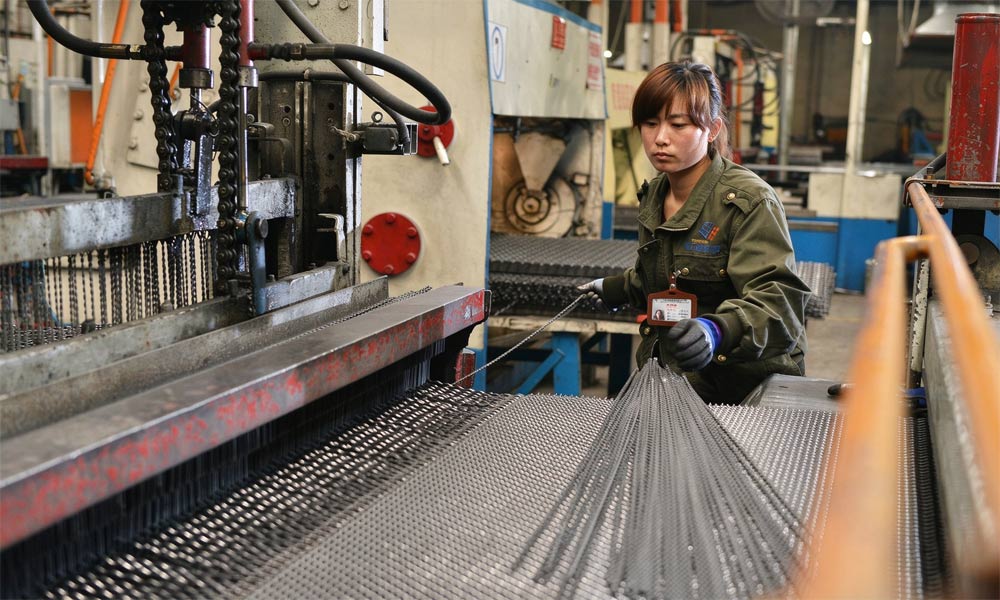
The second critical operational step to prevent woven mesh breakage is implementing a standardized, foolproof tensioning and installation workflow that eliminates human error, which is the root cause of more than 40% of all premature mesh breakage incidents. You start by laying the new mesh panel perfectly flat across the support deck, making sure there is no sideways offset or localized folding, then hand-tighten all tensioning bolts in a strict diagonal cross sequence before using a calibrated torque wrench to bring every bolt up to the exact torque value specified by the mesh manufacturer. You must never tighten one side of the mesh all the way before touching the other, as this will pull the mesh off-center and create uneven tension distribution that leaves localized slack spots where the mesh repeatedly slaps against the support frame under high-frequency vibration, rapidly causing fatigue fracture. After installation, run the screen unloaded for 30 minutes, then shut down the unit to re-torque all bolts to top up any lost preload caused by the initial slight creep deformation of the new wire material, as this simple post-installation step will drastically reduce the risk of unexpected slack-induced breakage in the first 24 hours of operation.
Add Targeted Impact Protection at the Feed End
The third often-overlooked preventive measure to prevent woven mesh breakage is installing a set of modular impact bars or a thick rubber buffer mat directly under the feed point, where 70% of all mesh breakage incidents occur due to the concentrated high-force impact of incoming raw aggregate. These impact protection components absorb 60% to 70% of the direct impact force from falling boulders before it ever reaches the mesh surface, eliminating the localized stress concentration points that would otherwise punch straight through the wire in a matter of days. You should also install a simple material distribution baffle at the feed hopper outlet that spreads the incoming raw aggregate evenly across the full width of the screen deck, instead of letting all the material pour down onto a single narrow 200mm wide strip of the mesh, which would cause that localized section to wear through 3 to 4 times faster than the rest of the panel. This low-cost, easy-to-install modification delivers an immediate and dramatic improvement to overall mesh service life, with almost no extra operational effort required from your team.
Implement Tiered Daily Inspection and Maintenance
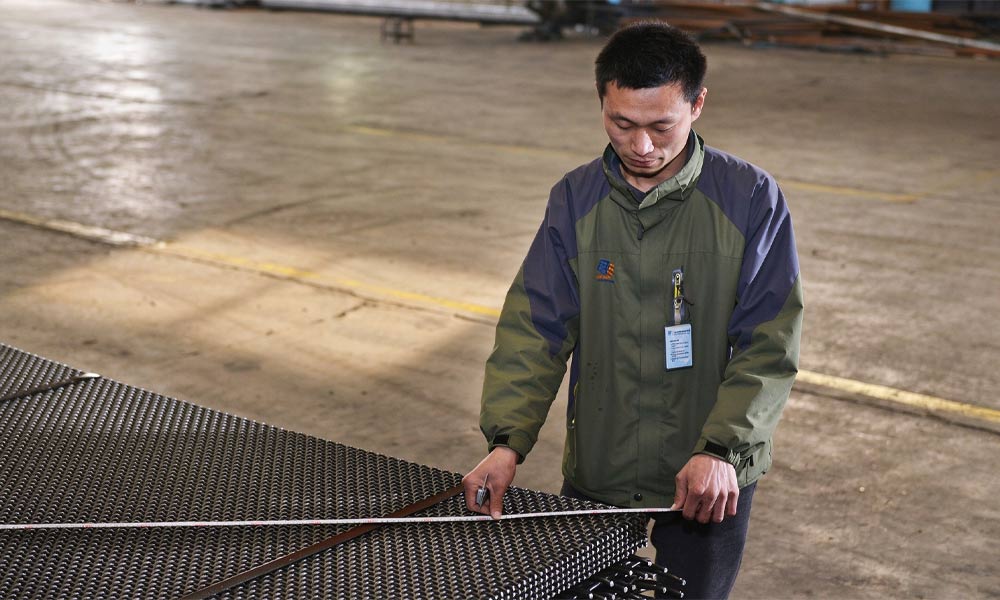
If you want long-term results, set up a simple inspection routine—daily, weekly, and monthly—so you catch problems early, before they turn into disaster. For the daily check, have your crew walk by the running screen and listen for weird thudding or flapping noises. That’s a dead giveaway that a tension bolt has come loose and the mesh is starting to flap around. Leave that alone and the mesh is going to break—fast. On the weekly check, wipe down the mesh and look closely for early signs of surface wear or tiny cracks. Mark any rough spots or cracks with paint, so you can track them and plan a mesh swap during scheduled maintenance instead of being hit by a sudden failure in the middle of a shift. For the monthly deep check, look under the mesh at the support bars. Tighten any loose bolts and swap out bars with sharp burrs, since those will eat away at the underside and cause breakage you can’t even see. Stick with this regular routine and you’ll catch more than 90% of failure risks before they take you by surprise—and you can all but eliminate unplanned mesh breakages.
Following these targeted material selection, standardized installation, impact protection and routine inspection rules will drastically reduce your total mesh replacement frequency, cut your aggregate plant’s unplanned downtime caused by mesh breakage by more than 70%, and keep your entire screening line running at stable full capacity far more consistently.