Woven Metal Screens for Limestone Quarries: Tackling Dust & Abrasive Wear
In limestone quarry operations, woven metal screens endure a relentless two-front assault. The abrasive nature of crushed stone causes continuous mechanical wear, while the fine, pervasive dust generated creates separate operational headaches. This dual challenge of dust and wear dictates screen life, maintenance costs, and product quality, making its management essential for efficient, cost-effective screening.
Abrasive Wear: The Constant Mechanical Erosion
The primary challenge is abrasive wear. Limestone contains silica and other hard minerals that act like sandpaper on woven wire screen wires. This constant friction gradually wears down the wire diameter, leading to aperture enlargement and wire fatigue. As apertures grow, the screen's cut point shifts, allowing oversized material to contaminate the product. More critically, thinning wires become stress points, increasing the risk of sudden fatigue failure and screen breakage. High feed rates and the sharp edges of freshly crushed stone accelerate this process.
Dust: The Quiet Thief of Open Area
Limestone produces a ridiculous amount of sub-75-micron material during primary and secondary crushing, and that dust does not behave like rock. It floats into the deck on airflow, lands on the wire crowns, and the instant relative humidity crosses roughly 60 percent it drinks moisture from the air and forms little calcium-carbonate bridges across the mesh. Those bridges harden under vibration and bed pressure, and within an hour a perfectly good Woven Wire Screen can lose 40 to 70 percent of its effective open area without a single wire breaking. Operators call it blinding, but it is really adhesion plus compression plus static charge: the fines stick, the stroke cannot shake them loose, the bed gets thicker, stratification collapses, and suddenly the screen is “running fine” while pushing half the product into the wrong stockpile. Carbon steel makes it worse because its pitted surface gives the dust something to grab; stainless helps a little because it is smoother, but stainless still blinds if the feed is wet enough.
Wear: When the Aperture Forgets Its Size
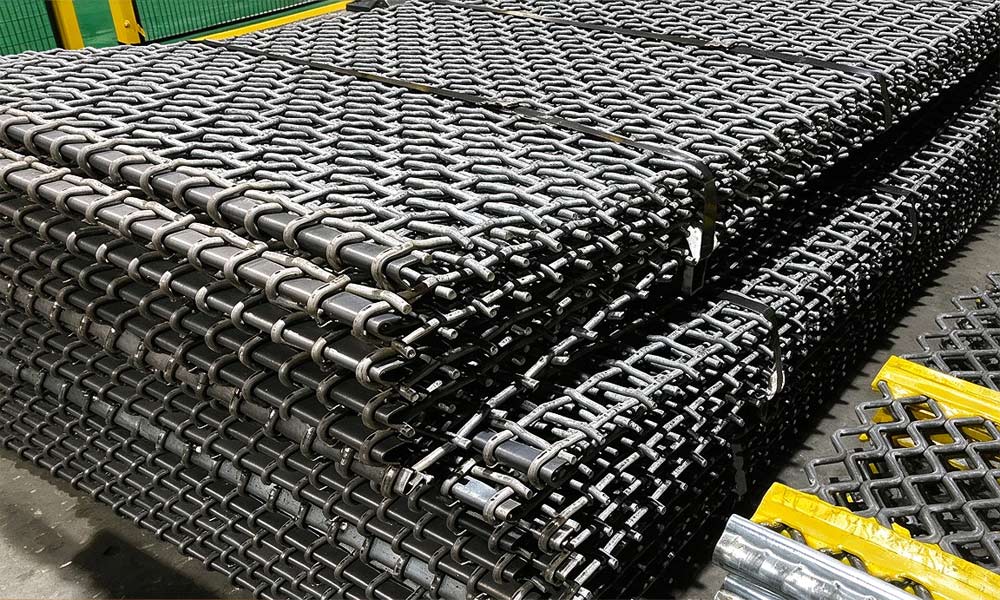
While the dust is closing the top of the mesh, the bottom of the operation is quietly opening it. Limestone may be Mohs 3, but quarry feed is never pure limestone—there is flint, there is silica vein, there is weathered shard, there is the re-handle load from the hopper wall, and all of it slides and tumbles across the wires at speed. Every tonne rubs the crown of the wire, knocks the crimp intersection, and micro-pits the surface until the cross-section shrinks and the panel sags under bed load. A Woven Wire Screen does not usually fail by snapping in the middle; it fails by losing its geometry—wire diameter drops, square openings stretch into diamonds, near-size rock starts passing, and the “10 mm” product slowly becomes “12 mm if nobody is looking.” Feed-end wear is the worst, because that is where slabby limestone lands first and the impact fatigue work-hardens the metal until it turns brittle and snaps at the hook. Support-bar flexing and under-tensioning accelerate the mess: a loose panel drums, the underside of the wire grinds against the bucker bar, and the mesh dies from underneath while the top still looks photographable. By the time somebody measures aperture drift, the crusher circuit has already been making off-spec aggregate for a shift.
Living With Both: Zoned Media and Honest Tuning
The plants that survive limestone dust-and-wear torture stop expecting one mesh to be a hero. The feed end of a deck is an impact and abrasion zone, so a heavy high-carbon or shaped-wire Woven Wire Screen, a punch plate, or a thick polyurethane/rubber module takes the beating while the precision work moves downstream. The middle and bottom decks, where fines and moisture do the damage, get self-cleaning wire, slotted apertures, harp/piano wire, or tapered polyurethane where open-area loss would hurt throughput. A Woven Wire Screen still earns its place in dry limestone sizing because nothing else matches its open area and cut sharpness per dollar, but it has to be specified like a process tool: wire diameter balanced against open area, crimp style chosen for anti-slip rather than looks, stainless or galvanized surface matched to moisture, tension set from center outward, and feed spread across the whole deck so one corner does not become a wear canyon. Dust control is not separate from wear control—light mist sprays, enclosures, controlled feeder speed, and a scalping deck upstream all keep the fines load down, which keeps the mesh cleaner, which keeps the bed thinner, which keeps the wires from being sandpapered by a soupy carpet of limestone slime.
Dust Accumulation: The Insidious Efficiency Killer
Simultaneously, limestone dust presents a persistent challenge. This fine powder readily accumulates on and within the wire weaving screen deck, especially in humid conditions. It can form a hard, cement-like crust that physically blocks apertures, drastically reducing screening efficiency and throughput. Furthermore, a layer of dust acts as an abrasive paste, trapping hard particles against the wire and accelerating wear. Dust also poses health risks for workers and can damage downstream equipment.
Strategic Screen Selection for Enhanced Durability
Combating this dual challenge begins with strategic screen selection. Opt for woven metal screens made from higher-carbon steel or abrasion-resistant alloys like AR400 to improve wear life. Screens with a larger wire diameter provide more material to wear away before failure. Additionally, consider screen designs that promote material movement, such as a slight crown or pretensioned decks, which can help mitigate dust accumulation by encouraging material stratification and self-cleaning.
Operational and Proactive Maintenance Practices
Beyond hardware, operational adjustments are key. Installing controlled water spray bars can suppress dust at the source, though careful management is needed to avoid creating a slurry. Regular, scheduled cleaning using compressed air or mechanical vibrators is essential to prevent dust buildup and blinding. Implementing a proactive inspection schedule to monitor wire thickness and aperture size allows for planned replacement before catastrophic failure, transforming maintenance from a reactive cost to a predictable operational input.
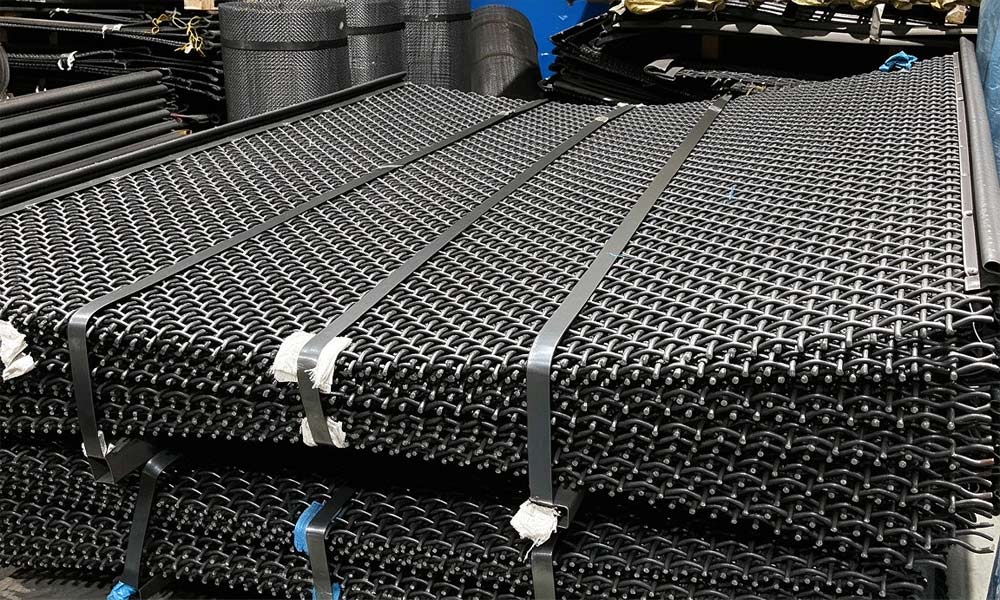
Effectively managing the dual challenge of dust and wear requires a holistic approach. Investing in durable screen materials and designs addresses wear, while diligent housekeeping and dust control combat efficiency loss. By integrating these strategies, quarry operators can extend life of the metal weaving screen, maintain product quality, and optimize the cost of ownership for their screening.