Screen Tensioning Hook Types: Applicable Scenarios for Straight Hooks, Curved Hooks, and Spiral Hooks
Selecting the correct screen tensioning hook is a critical yet often overlooked detail that directly impacts screen panel life and screening efficiency. This small component transfers the deck's vibration energy to the panel, keeping it taut. The wrong choice can lead to premature failure, uneven wear, and unplanned downtime. This guide compares the three main types—straight hooks, curved hooks, and spiral hooks—explaining their design principles and ideal applications to help you optimize your operation.
Straight Hooks: The Versatile Workhorse for General Duty
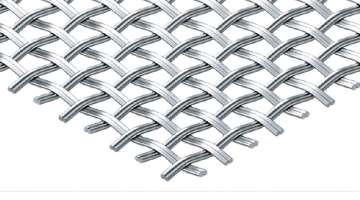
The straight hook is the most common and versatile type. Its simple, straight shank design allows for easy installation and removal, making it a maintenance favorite. It applies a direct, vertical pulling force, providing uniform tension across the panel's edge. This makes the straight screen tensioning hook ideal for most standard screening applications with moderate to heavy loads, such as processing aggregates or coal, where consistent tension and straightforward serviceability are the primary requirements. Its reliability has cemented its status as the industry standard.
Straight Hooks: The Everyday Workhorse
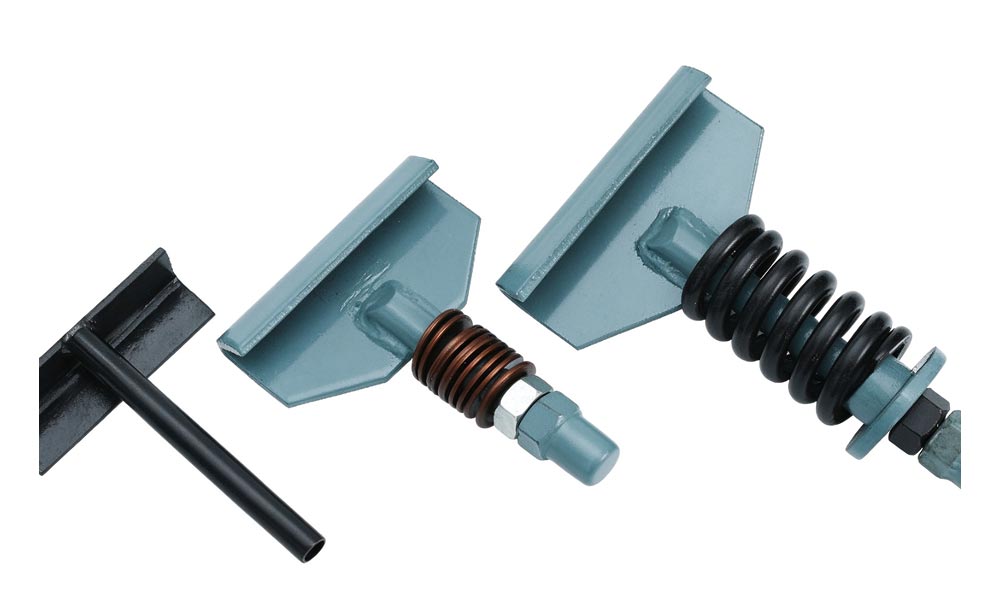
The straight Screen Tensioning Hook is exactly what it sounds like: a formed edge with a mostly linear shank that seats into the tension rail and gets pulled by direct tension, usually from the side walls or the deck ends depending on the machine. There is no trick to it, and that is the point. For aggregates, coal, limestone, dry sand, and a thousand "normal" screening jobs, the straight hook gives uniform pull, easy installation, fast changeout, and a failure mode that is easy to read: too loose means flapping, too tight means wire fatigue, but the hook itself rarely does anything sneaky. Maintenance crews like it because they are not fighting a helical geometry with a pry bar at midnight; procurement likes it because the tooling is standard and the price is sane. A straight hook shines where vibration is moderate, the material is not actively trying to walk the panel sideways, and the deck rails are in good shape. The moment the duty gets nasty—high-frequency fine screening, sticky ore, heavy impact at the feed lip—the straight hook starts to show its limit, because it holds by tension alone and has nothing extra to resist rotational creep once the cloth tries to twist under load.
Curved Hooks: Grip for High Vibration and Fine Cuts
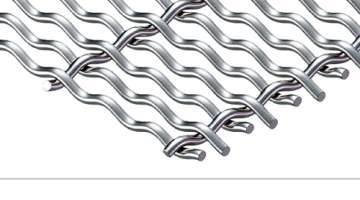
A curved Screen Tensioning Hook bends the shank inward or into a C/U-style profile so the edge bead locks mechanically against the rail instead of relying only on pull force. That small curve changes the whole behavior of the panel: when the screen box shakes harder, the hook presses rather than relaxes, the panel resists "walking," and the aperture stays put in duties where a millimeter of movement ruins the separation. Fine sand, metallic ores, dewatering screens, and precision classification decks are where curved hooks earn their keep, because fine mesh has less wire mass, less inertia, and a much shorter fuse—if the edge moves, the cut point moves, and suddenly the undersize is not undersize anymore. Curved hooks also help on slightly worn rails, where a straight hook would rattle in the gap but a curved profile still finds its seat and bites. The trade is changeout time: curved hooks want care during fitting, the rail profile has to match the hook radius, and a panel forced in with a sledgehammer will fail no matter how good the geometry is. Think of the curved hook as the "I care about screening accuracy" option—not the cheapest, not the toughest, but the one that keeps a fine cut fine.
Spiral Hooks: Maximum Lock for Brutal Duty
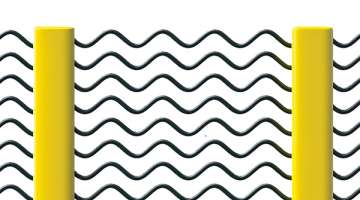
The spiral Screen Tensioning Hook is the one you specify when the deck is violent and the penalty for pull-out is measured in bent frames and lost shifts. The shank is twisted into a helical form, so tensioning does not just pull the panel flat—it induces a rotational lock that fights both pull-out and horizontal creep at the same time. High-frequency screens, heavy scalping zones, slabby run-of-mine rock, abrasive iron ore, sticky zinc or copper slurry, and any circuit where the feed end gets hammered all day are the natural homes for spiral hooks. They are harder to make, harder to fit, and harder to pretend you understand if you skipped the drawing, but the holding power is in another league: the panel edge cannot simply slide out of the rail because the spiral literally resists the direction the machine is shaking it. Plants that run spiral hooks usually pair them with reinforced edge beads, steel inserts, and a disciplined torque procedure, because the hook is only as good as the edge it grips. If a straight hook would "probably hold," use it; if a straight hook would definitely not survive the first ugly Tuesday, the spiral hook is the adult in the room.
Curved Hooks: Designed for Stability in High-Vibration and Fine Screening
The curved hook features a pronounced inward bend along its shank. This design is functional: the curve creates a mechanical locking action that presses the panel's edge bead firmly against the hook body and deck rail. This superior grip is essential in high-vibration scenarios or when processing fine, slippery materials like sand or metallic ores, where panels are prone to shifting or “walking.” The curved screen tensioning hook excels at preventing panel creep, ensuring the screen cloth remains perfectly aligned under consistent tension, which is crucial for maintaining accurate separation in precision screening tasks.
Spiral Hooks: Maximum Security for Extreme and High-Impact Conditions
For the most demanding applications, the spiral hook offers the highest level of security. Its shank is twisted into a helical shape. When tensioned, this spiral design induces a rotational force that aggressively locks the panel's edge bead in place, providing exceptional resistance to both pull-out and horizontal movement. The spiral screen tensioning hook is the preferred choice for extreme conditions: high-frequency screens, heavy impact zones, or applications involving very abrasive or sticky materials. While slightly more involved to install, its unmatched holding power is justified where panel failure would be catastrophic.
Choosing the right screen tensioning hook balances performance needs with practical maintenance. For general duty, the straight hook is reliable. For high-vibration or fine material applications, upgrade to the curved hook for enhanced grip. For extreme, high-impact environments, the spiral hook provides maximum security. Consulting with your screen or panel supplier can help match the hook type to your specific material, machine dynamics, and operational goals, ensuring optimal screen life and performance.