Matching Principle of the Excitation Frequency of a Vibrating Screen with the Natural Frequency of a Woven Screen
Many mineral processing and aggregate production sites have faced the frustrating issue that a brand new Woven Metal Screen still suffers from premature wire breakage, severe mesh deformation and fast fatigue failure even when it is made from high‑quality steel and installed correctly, and in most cases the root cause is not material defect or installation error, but the poor frequency matching between the vibrating screen’s excitation force and the inherent natural vibration property of the Woven Metal Screen. When these two frequencies fall too close to each other, the screen panel will enter an unintended resonance state that amplifies vibration stress far beyond the designed load limit, drastically shortening the service life of the screen and causing unstable screening performance that drags down overall plant throughput. Mastering this matching principle is one of the most cost‑effective ways to extend screen service life and maintain consistent long‑term screening efficiency.
What the Natural Frequency of a Woven Wire Screen Really Depends On
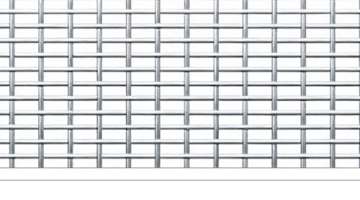
The natural frequency of a Woven Wire Screen is not printed on the roll like the mesh count. It moves with wire diameter, aperture size, weave type, panel span, support-bar pitch, edge clamp condition, and—most importantly—tension. A tighter panel rings higher, a slack panel flaps lower, and a panel that has stretched after the first shift may sit right inside the danger band even though the drawing says otherwise. On site, the old trick still beats pure theory: after tensioning, tap the panel with a rubber mallet and listen. A crisp, drum-like response means the membrane is alive and controlled; a dull thud near a support bar means a gap, a soft spot, or uneven pull. The Woven Wire Screen should be treated like a guitar string that also has to survive rock—its pitch is a process variable, not a curiosity. Ignore that pitch and the exciter will eventually find it, usually during a hot commissioning run when nobody wants to stop the plant.
Keeping Excitation Out of the Resonance Zone
The operating rule used by reliability crews is blunt: keep the forced excitation frequency clearly away from the measured natural frequency of the screen media and the screen structure. Many plants aim for the working speed to sit roughly 15–25 percent above or below the dominant natural modes, because once those curves overlap, amplitude can climb several times beyond design and the Woven Wire Screen takes alternating load it was never meant to store. VFD-driven screens make this manageable—ramp through the resonance zone quickly on start-up and coast-down, log the FFT spectrum, and watch for a spike at 1× running speed that does not belong there. A screen that shakes violently only during shutdown is telling you it lingers in a mode it should never dwell in. Adjusting pulley ratio, eccentric mass, spring stiffness, or deck tension changes the picture, but the Woven Wire Screen itself must also be re-tensioned after the first 4–8 hours, because a panel that was safe at 16 Hz can become a resonance problem at 16 Hz once the crimp settles and the hook strip relaxes.
Tension, Support Bars, and Why the Mesh Remembers Everything
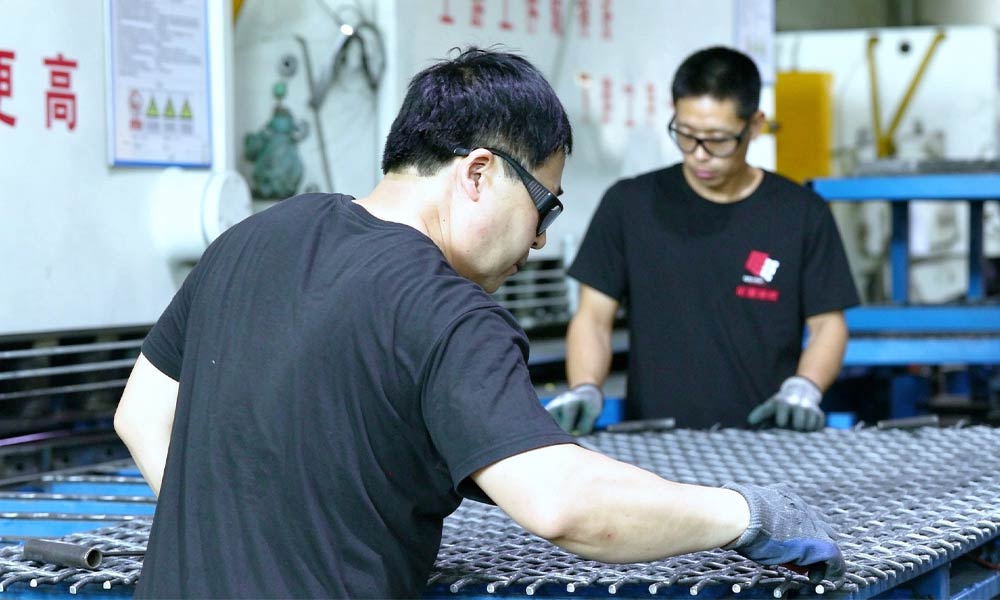
Frequency matching is not separate from installation—it is the same conversation. A Woven Wire Screen that sags between supports bellies under the bed, strikes the crown bar or channel rubber thousands of times per minute, and each strike pumps energy into exactly the mode that shortens life. Correct practice is symmetrical tensioning from the center outward, equal increments on both sides, full seating on every support bar, fresh capping rubber, and a re-torque pass after the panel has worked out its initial stretch. Support-bar spacing also sets the panel’s stiffness: widen the span and the natural frequency drops; tighten the span and the mesh rings higher but the deck load rises. The Woven Wire Screen rewards plants that treat tension as a controlled prestress, not a “pull it tight until it looks right” chore. When tension, support geometry, and exciter speed are all documented, frequency problems stop being ghosts and become numbers on a report.
Natural Frequency Determination for Woven Metal Screen
The natural frequency of a Woven Metal Screen is not a fixed universal value, but changes with the wire diameter, mesh aperture size, deck tension level and the installation span between the supporting cross beams on the vibrating screen deck, and even small differences in tension force during installation can shift this value by a noticeable margin. Most experienced site engineers will carry out a simple on‑site test after tensioning a new Woven Metal Screen, gently tapping different sections of the deck and recording the vibration response, to get a real measured natural frequency value instead of relying entirely on theoretical calculation data that often does not match actual working conditions.
Excitation Frequency Adjustment and On‑site Matching
Once the actual natural frequency of the installed Woven Metal Screen is confirmed, the core matching principle is to set the vibrating screen’s working excitation frequency 15% to 25% away from the measured natural frequency value, to avoid the dangerous resonance zone that will generate excessive alternating stress on the screen wires. Most modern vibrating screens allow easy adjustment of the motor speed and eccentric block configuration to fine‑tune excitation frequency, and after proper matching, the Woven Metal Screen will operate under stable, low‑stress conditions that eliminate unnecessary fatigue damage and maintain consistent material movement across the entire deck.
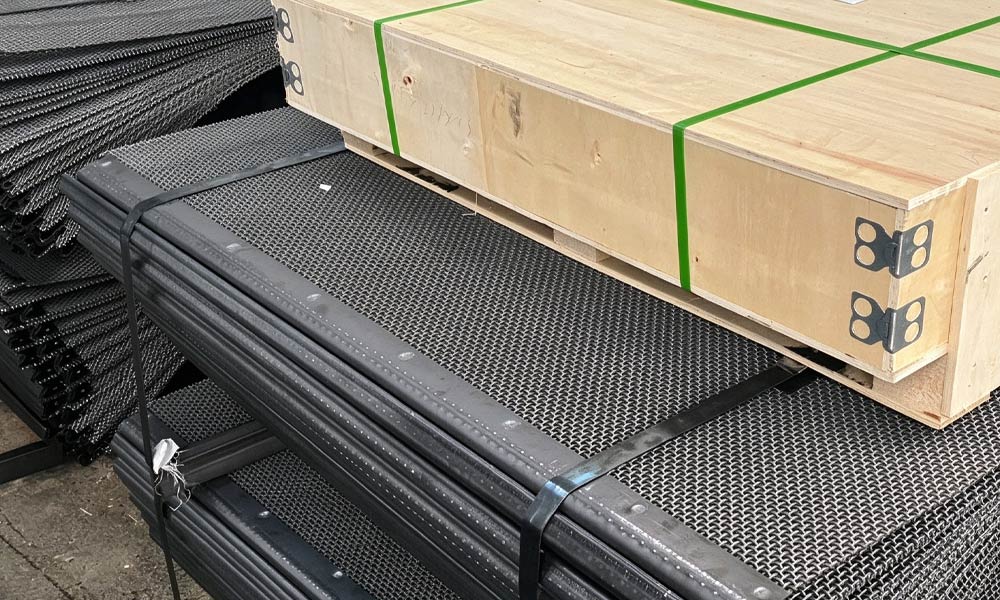
Proper frequency matching between the vibrating screen and the Woven Metal Screen can easily double the average service life of the screen panel while keeping screening efficiency at a consistently high level, without requiring extra investment in expensive upgraded materials. If you are still facing frequent premature screen breakage and unstable screening performance on your production line, our technical team can guide you through the full on‑site frequency testing and adjustment process, helping you achieve the optimal matching state for your specific equipment setup.