Common Inspection Items for Third-Party Inspections of Exported Woven Screens
For mineral processing equipment suppliers and international trade teams shipping Woven Wire Screens to overseas mining, quarry and aggregate clients, a poorly prepared third‑party inspection can easily lead to costly shipment delays, rejected cargo, extra rework costs and even long‑term damage to the supplier’s reputation in the global market. Many teams that skip thorough pre‑inspection preparation end up facing unexpected issues that could have been fixed days before the third‑party inspector arrives, and most of these problems are not related to complex custom design requirements, but come from missing basic quality checks that are standard across all international third‑party inspection protocols for Woven Wire Screens. Getting familiar with these common mandatory inspection items ahead of time helps export teams pass every audit smoothly, meet client quality expectations and avoid unnecessary disputes that slow down the entire international supply chain.
Dimensional and Specification Verification
The first and most heavily weighted inspection item for exported Woven Wire Screens is full dimensional and specification verification, where inspectors will randomly sample multiple points across every single panel to confirm that the actual mesh count, aperture opening size, wire diameter and overall panel dimensions fully match the values written in the contract and client’s technical drawing. Inspectors will also cross‑check the material certification documents to confirm the steel or alloy grade of the Woven Wire Screens meets the agreed standard, as mismatched material is one of the most common reasons that overseas clients reject entire shipments of screening products.
Material Identity and Alloy Verification
The first thing a good inspector refuses to trust is the label. A woven wire screen marked 316L can look identical to 304 under warehouse lights, and a galvanized carbon screen can masquerade as something fancier if nobody checks chemistry. Positive Material Identification with a handheld XRF is the baseline: nickel, chromium, molybdenum, carbon-equivalent, and any copper or manganese anomaly get recorded on site. For critical filtration or marine duty, the inspector compares the reading to the mill test certificate and to the ordered UNS or EN grade, not to a salesman’s nod. Alloy substitution is the quiet killer—304 instead of 316L may survive a warehouse but pit out in chloride slurry within a season. A third-party report that names the measured elements, the standard basis, the heat or lot number, and the pass/fail verdict turns “looks stainless” into evidence the buyer can wave at a bank, a customs officer, or a supplier’s legal desk.
Dimensional Truth: Mesh Count, Wire, and Aperture
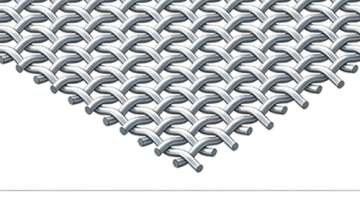
Dimensions are where catalogue mesh and exported mesh quietly divorce. The inspector lays the woven wire screen flat, avoids the distorted cut edge—usually the first 25 mm where shearing or slitting stresses the wires—and measures warp and weft count over a defined length, wire diameter with a calibrated micrometer, and aperture with an optical comparator or image-measurement system. ISO 9044 and ASTM E2016 give the grammar: average aperture, single maximum aperture, standard deviation, open-area calculation, and weave-specific tolerances. A square plain-weave panel is easy to lie about; a Dutch weave with 24 × 110 count and a “micron rating” printed on the crate is where buyers get burned, because mesh count alone says almost nothing about retention. The inspector’s value is repetition with discipline: head, middle, and tail of the roll; several points across the width; warp separate from weft; nominal versus measured written in the same row. When the average looks fine but one local gap is 18% oversize, the plant’s oversize-in-fines problem was already visible on the inspection sheet—if somebody bothered to read it.
Weave Integrity, Flatness, and the Things Cameras Miss
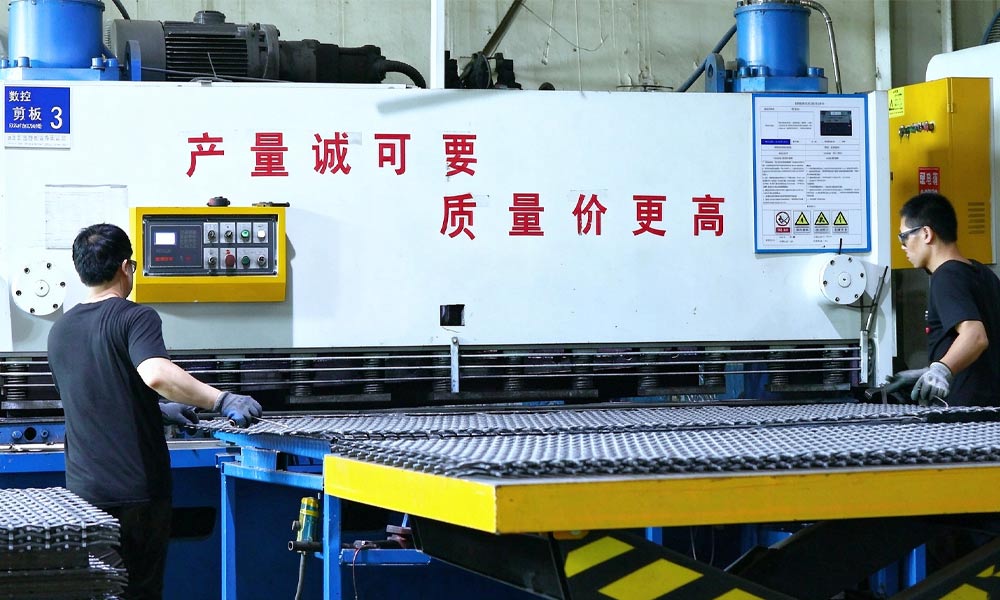
A dimension can be in tolerance and the screen still be garbage. The third-party walk-through checks the stuff robots hate: skipped picks, displaced intersections, loose crimps, broken wires, oil from drawing lubricant, rust blooms from bad storage, edge curl that will not seat in the frame, and a roll that waves like a flag because calendering was skipped or the take-up tension wandered. On a woven wire screen for food or pharma, surface cleanliness and passivation records matter more than people expect; on a mining scalping panel, firmness of the crimp and freedom from soft spots matter more than a shiny face. Flatness is not vanity—an unflat panel traps slurry, wears unevenly, and fights the tensioning system until the deck shakes itself into a bearing failure. A seasoned inspector carries a straightedge, a black backdrop, raking light, and the approved sample from the pre-production run; the comparison is brutal and fair, because the bulk lot is judged against the master, not against the supplier’s Instagram.
Packing, Marks, Documents, and the Customs Trap
The last inspection layer is the one first-time exporters underestimate. Mesh can be perfect and still rejected at destination because the wooden crate lacked ISPM-15 marking, the HS code on the packing list did not match the commercial invoice, the coil OD exceeded the container door, or the lot number on the roll label had no counterpart in the mill cert. A third-party inspector for an exported woven wire screen confirms roll count, piece count, width and length, edge protection, moisture barrier, desiccant, pallet condition, strap integrity, container stuffing pattern, and the holy trinity of documents: commercial invoice, packing list, and certificate of conformity matched to EN 10204 3.1 or the buyer’s required grade. They photograph the seal, record the container number, and note “loaded under rain” or “wooden skid cracked on arrival” because those sentences decide who pays the claim. Paperwork is not bureaucracy—it is the difference between “cleared at port” and “sit on the quay accruing demurrage while two departments argue about a missing CoC.”
Surface Quality and Structural Performance Check
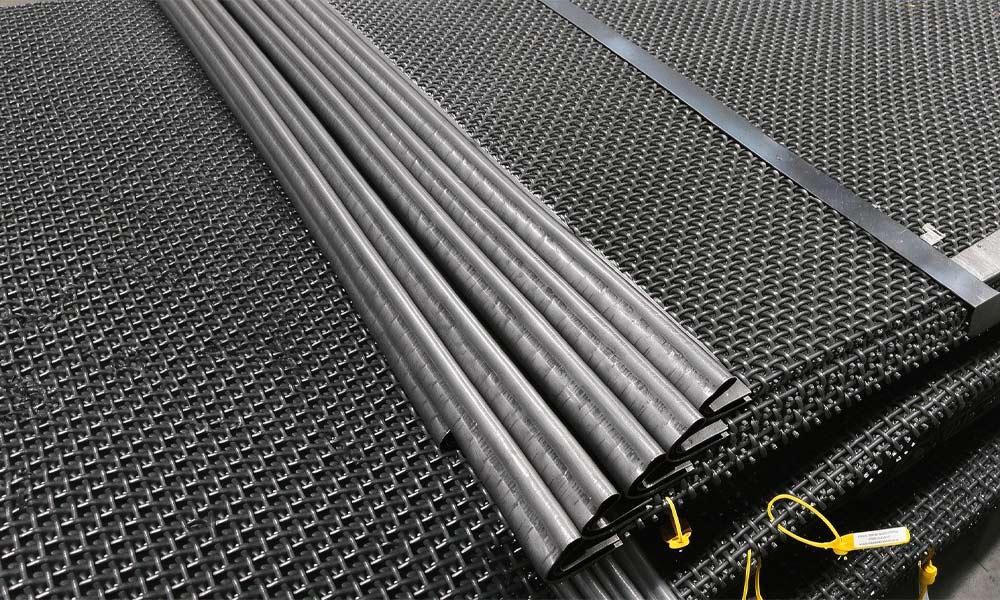
The second core inspection item covers surface quality and structural performance, where inspectors examine every section of the Woven Wire Screens for broken wires, loose mesh areas, uneven weaving joints, sharp burrs and improper edge finishing that could cause safety risks or early product failure in actual working conditions. They will also carry out a simple tension test on finished panels to confirm the structural integrity of the weaving structure, ensuring the Woven Wire Screens can withstand the installation tension and on‑site operating load without developing permanent deformation or unexpected tearing.
Fully preparing for these standard third‑party inspection items for exported Woven Wire Screens does not just help you pass the audit on the first attempt, it also builds long‑term trust with your overseas clients and reduces the risk of after‑sales quality disputes after shipment arrives at the destination port. If you need a full pre‑inspection checklist tailored to your specific product range and target market’s third‑party audit standards, our team can provide you with a complete, actionable guide to help you get your export shipment ready for inspection with zero unexpected issues.