Anti-clogging Design and Selection Recommendations for Metal Woven Screens Handling Cohesive Materials such as Bauxite
Screening cohesive materials such as bauxite poses a significant challenge due to material adhesion and aperture blinding, which drastically reduces efficiency. For metal woven screens, implementing a proactive anti-clogging design is essential to maintain throughput and separation accuracy. This article provides key selection recommendations, focusing on screen construction, surface enhancements, and system integration to prevent buildup and ensure reliable operation when handling sticky ores and similar materials.
Core Anti-clogging Screen Design Features
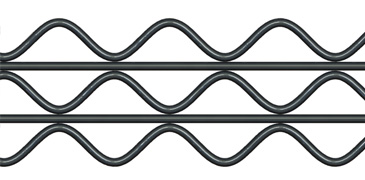
The primary defense against clogging lies in the physical construction of woven wire screen. Selecting a flat top weave is crucial, as it creates a smooth, continuous surface without recesses where particles can accumulate, unlike standard weaves. Pair this with smooth, polished wires—often achieved through electropolishing—to minimize the surface roughness that sticky fines adhere to. For particularly problematic applications, consider screens with a slightly tapered wire profile at the aperture edge, which can help prevent particles from jamming at the opening. These foundational design choices directly address the mechanics of how cohesive materials stick and bridge.
Why Bauxite Clogs Where You Least Expect It
Most people picture blinding as fines plugging the holes, but with bauxite the failure usually starts higher up, on the wire crown, where moist gibbsite and iron-rich clay smear across the top surface and form a tacky ridge that bridges several apertures at once. A standard square-opening Woven Wire Screen gives material four flat-ish contact ledges at every crossing, and when the feed carries even eight or ten percent surface moisture plus fine clay, those ledges become glue points that never get cleaned by normal vibration. The particle does not need to be smaller than the hole to cause trouble; it only needs to be sticky enough to touch two wires and stay there while the next granule lands on top of it. Once that first crust forms, airflow through the bed drops, the material bed rides on the deck instead of stratifying, and the screen stops acting like a sizer and starts acting like a conveyor with holes in the wrong places. Plants that run washed-and-restacked bauxite, dried nodulized ore, or high-clay ROM feed will see completely different clogging patterns, which is why a screen that works in one bauxite circuit can look useless fifty meters away in the same plant.
Opening Geometry, Crimp Style, and the Material
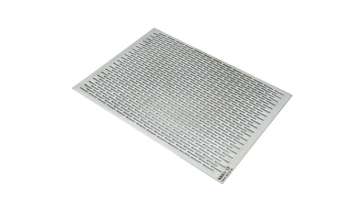
Anti-clogging is less about fighting the material and more about removing the traps, and that is where opening shape and crimp profile earn their money. A conventional plain-weave Woven Wire Screen is cheap and accurate, but in cohesive service the crossings sit proud of the wire body and create exactly the little shelves sticky bauxite loves; moving to a flatter-top weave, an elongated slot, or a tuned crimp that reduces crown height can dramatically cut the number of contact points where paste builds. Slotted openings help because elongated particles and clay strings align with the long axis and slide rather than bridge, while lock-crimp or wedge-supported constructions keep those openings from walking shut when a heavy bauxite slug hits the deck.
Enhanced Solutions: Coatings and System Integration
When basic design needs reinforcement, additional measures can be integrated. Applying a specialized non-stick coating to the screen wires creates a low-friction surface that significantly reduces material adhesion. For continuous, heavy-duty operations, integrating mechanical cleaning systems—such as rubber bouncing balls or brush strips installed beneath the screen deck—provides constant, gentle impact to dislodge clinging particles. Furthermore, pairing the screen with suitable high-frequency vibrating equipment leverages the equipment's intense, rapid motion as a powerful inherent cleaning force, provided the woven metal screen is robust enough to withstand the dynamics.
Selection and Operational Recommendations
Effective screening of bauxite requires a holistic approach. Begin the selection process by prioritizing screens with the intrinsic anti-clogging design features mentioned. Evaluate the necessity and cost-benefit of adding coatings or cleaning systems based on your material's specific moisture content and clay fraction. Operationally, if feasible, explore pre-treatment options like feed drying or scrubbing to reduce the inherent cohesiveness before the material reaches the screen. Remember, the goal is to create conditions where particles are encouraged to pass through or bounce off, rather than stick and build up.
Feed Prep, Deck Sequencing, and Support Details
Even a beautifully designed Woven Wire Screen will clog if the plant feeds it like dry limestone, because bauxite screening is a system sport and the deck is only one player on the field. High moisture is manageable when the feed is de-rimmed, scalped of sticky fines upstream, and presented as a stratified stream rather than a wet pancake dumped off a conveyor nose; a light grizzly or coarse scalper ahead of the main deck can pull the worst plastic clay out before it ever reaches the fine screen. Deck sequencing matters just as much—too steep and fines bounce over the deck, too flat and the bed thickens and smears, so slope, stroke, and feed rate have to be tuned together with the mesh rather than set once and forgotten.
Combating clogging in metal woven screens processing cohesive materials is about proactive integration. By selecting a screen with the right design, considering enhanced surface treatments, and ensuring it is well-matched to your vibrating equipment and overall process flow, you can develop a robust solution. These recommendations aim to minimize downtime for manual cleaning, maximize screening availability, and ensure a consistent, high-quality product stream from your operation. Contact our technical team to get tailored anti-clogging woven screen solutions for your bauxite screening circuit.