Procurement Strategies: Minimum Order Quantities and Container Consolidation for Woven Metal Mesh
For industrial procurement teams that regularly source Woven Metal Mesh from overseas manufacturers, balancing minimum order quantity requirements and executing smart container consolidation is one of the most practical ways to cut down total procurement costs, reduce unnecessary inventory waste and keep supply chains running smoothly without unexpected delays. Many small to mid‑sized operations struggle with this balance, either ordering far more Woven Metal Mesh than they actually need just to meet the supplier’s MOQ, or paying steep premium shipping fees for small LCL parcels that drive up total unit cost drastically. Building a clear, actionable procurement strategy that covers both minimum order quantity planning and container consolidation helps teams avoid these common pitfalls, getting the exact volume of parts they need at the lowest possible total landed cost.
Reading the MOQ Like a Production Planner
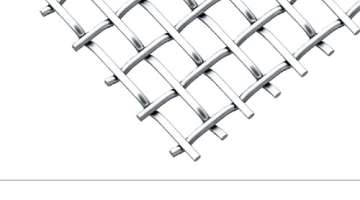
The first move is to stop treating MOQ as a wall and start treating it as a cost-recovery number. A standard 304 plain weave roll may carry a tiny minimum because the loom already runs it daily; a 316L 5-micron Dutch weave with a special reed and a third-party mill cert is a different beast, because wire drawing, loom threading, and inspection all reset. Woven Metal Mesh suppliers usually quote MOQ three ways: square meters for rolls, pieces for cut panels, and container-load for project mesh such as gabions, fencing, or architectural façade panels. A rolling 3–6 month usage forecast changes the conversation completely—instead of “I need 80 m² now,” you tell the factory “I consume 1,200 m² across six specs per quarter,” and suddenly the supplier can pool your plain weaves, twills, and coarse scalping panels into one production window that clears the overall minimum without forcing 500 m² of a size you will not use until next year. Regular repeat buyers also unlock value-added consolidation: combine stainless filtration mesh, galvanized screen panels, and replacement panels for different decks into one PO, meet the supplier’s order-value floor, and avoid the trap of hitting a brutal per-spec minimum on every single item.
Consolidation Is a Weight-and-Cube Puzzle
Container consolidation only saves money if someone actually does the math. A 20GP gives you around 28–33 m³ and roughly 28 t gross, while a 40HQ gives you more height and cube for volumetric panel loads; with Woven Metal Mesh the binding constraint is often cube and panel footprint, not weight. Rolls stack one way, framed panels stack another, and small wear components love the dead space between pallets if the packing plan is drawn by an engineer instead of a forklift driver in a hurry. A good consolidation program mixes heavy-density items—bolts, rubber buffers, steel support bars, small woven discs—with bulky but light mesh panels so the container is not 40% empty air and not 110% overweight. Buyers who consolidate Woven Metal Mesh with complementary screening consumables typically cut per-unit freight by a meaningful chunk versus LCL, because one customs entry, one inland haul, one terminal handling, and one seal beat ten fragmented shipments that each carry a handler’s markup and a damage risk from extra touches. The trick is a consolidation hub or supplier warehouse with 30–60 days of free storage, so production from three factories lands, gets inspected, and leaves in one sealed box instead of three half-empty carts.
Commercial Terms That Make the Strategy Real
None of this works if the commercial frame is sloppy. Woven Metal Mesh procurement should name the Incoterm before the price means anything: EXW hides inland cost, FOB Tianjin/Qingdao/Guangzhou tells you the factory’s job ends at the port, CIF/CFR buries freight and insurance inside the quote, and DDP sounds convenient until the supplier pads the duty buffer and owns your customs relationship. Payment should match risk: 30% deposit, balance against pre-shipment inspection and bill of lading copy for a known factory; letter of credit or platform escrow for a first-time vendor. MOQ concessions should be traded, not begged—“I will give you a 6-month framework agreement and consolidated monthly releases” buys a lower trial minimum far faster than “please, just 30 m².” Packing lists must carry net/gross weight, roll length, panel count, HS code, alloy, mesh count, wire diameter, and lot number, because a consolidated container with one mislabeled mesh grade is a customs delay and a site rejection waiting to happen. The buyer who wins is the one who treats Woven Metal Mesh like a scheduled commodity with a load plan, not a supermarket basket filled whenever the maintenance supervisor panics.
Flexible Minimum Order Quantity Planning
The first core part of this strategy is to work closely with your supplier to map out a rolling 3 to 6 month usage forecast for every specification of Woven Metal Mesh your operation uses, instead of placing random small orders whenever you run low on stock. Most reliable suppliers will offer far more flexible MOQ terms for regular repeat clients who share a clear long‑term usage plan, allowing you to combine different mesh specifications, material grades and aperture sizes into one single order that meets the overall minimum order value, instead of forcing you to hit a strict per‑spec MOQ for every individual type of Woven Metal Mesh you need.
Cost‑Effective Container Consolidation Execution
Once you have aligned your order volume to meet reasonable MOQ requirements, smart container consolidation lets you combine your Woven Metal Mesh order with other complementary screening parts, wear components or industrial supplies that your site needs, to fill a full 20ft or 40ft shipping container without wasting space on unnecessary extra inventory. This approach eliminates the high LCL shipping premium, cuts per‑unit freight cost by 40% to 60% in most cases, and also reduces the risk of cargo damage that often happens when loose small shipments are handled multiple times during the international shipping process.
A well‑structured procurement strategy that combines flexible MOQ negotiation and targeted container consolidation helps you drastically reduce the total landed cost of every batch of Woven Metal Mesh you import, while avoiding overstocked slow‑moving inventory that ties up unnecessary working capital. If you need a custom procurement plan tailored to your site’s monthly usage volume, common mesh specifications and regular accessory orders, our team can help you to maximize your cost savings without creating excess stock.