Customization of Woven Wire Mesh with Non-Standard Apertures: A Full Process from Drawings to Mass
For industrial operations that cannot find off‑the‑shelf panels to match their unique screening, filtration or separation requirements, Woven Wire Mesh Customization for non‑standard apertures is the most reliable way to get parts that perfectly fit their existing equipment and specific working conditions. Many teams that have never gone through this process worry that custom work will lead to long delays, unexpected dimensional errors or final products that do not match their actual requirements, because they do not clearly understand every key step that turns a simple technical drawing into a consistent, high‑quality mass production batch. A clear, well‑managed full workflow for Woven Wire Mesh Customization eliminates almost all these avoidable risks, helping clients get exactly the non‑standard mesh they need without unnecessary delays or quality issues.
Drawing Confirmation and Prototype Development Stage
The first critical step of Woven Wire Mesh Customization is detailed cross‑verification between the client’s technical team and the manufacturer’s engineering department, where every dimension, aperture shape, wire diameter, material grade and edge processing detail on the drawings is reviewed and confirmed, to make sure no small miscommunication leads to a final product that does not fit the client’s application. After all technical details are locked in, the manufacturer produces a small physical prototype of the non‑standard mesh, which the client can inspect, test on their actual equipment and confirm meets every performance requirement before full production begins, ensuring the entire Woven Wire Mesh Customization process moves forward on the same shared set of clear specifications.
Drawing Review and the Reality Check
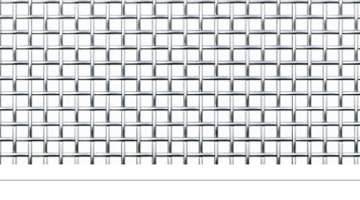
Everything begins with the drawing, but the drawing is rarely the truth. A purchaser sends a PDF with “aperture 2.5 mm” and forgets that warp and weft wires spring back after the reed beats them home, wire diameter carries its own tolerance, and crimp style changes the clear opening by half a millimeter without anyone touching the hole. A competent Woven Mesh Customization engineer reads the drawing like a process document, not a wish list: target aperture in warp and weft, wire diameter and tolerance, material grade, weave type—plain, twill, Dutch, double-twilled, pre-crimped—panel length and width, edge fold or hook strip, tension direction, temperature, slurry chemistry, and the particle size distribution the mesh is supposed to keep on one side. Then comes the uncomfortable but valuable part: manufacturability feedback. Maybe 0.05 mm slots in stainless are weaveable but fragile; maybe the requested open area cannot survive the deck G-force; maybe a tapered slot or rectangular opening solves the blinding problem better than chasing a perfect square. The factory that stays silent and quotes anyway is the factory that will ship beautiful non-conforming mesh. The factory worth keeping tells you where physics bites before the loom is threaded.
Loom Setup, Prototype, and the First Physical Truth
Once the spec is locked, the work moves from paper to loom. Warp wires are creeled, tensioned, and wound onto the beam; heddle frames and the reed are selected for the pitch the customer asked for; weft wire spools are matched to diameter and temper. Non-standard apertures usually mean a non-standard reed step, adjusted harness timing, and a loom parameter set that is not the shop’s daily default, so setup is billable time even when tooling is “standard.” A serious Woven Mesh Customization run produces a prototype panel or swatch first: small enough to be cheap, large enough to measure aperture, flatness, wire crush, edge closure, and open-area percentage. The buyer should not just look at it—they should put it on the actual machine or test rig, run the real slurry, count retained microns, check blinding after two hours, and confirm the panel seats in the frame without shimming. Approval here is the contract. If the prototype reads 3.18 mm average aperture with ±0.06 mm spread and the plant signs it, the bulk order is no longer “about 3 mm”; it is a documented physical standard that QA can defend when the purchasing manager asks why panel 4,200 looks like panel 1.
Mass Production, Gauging, and Lot Memory
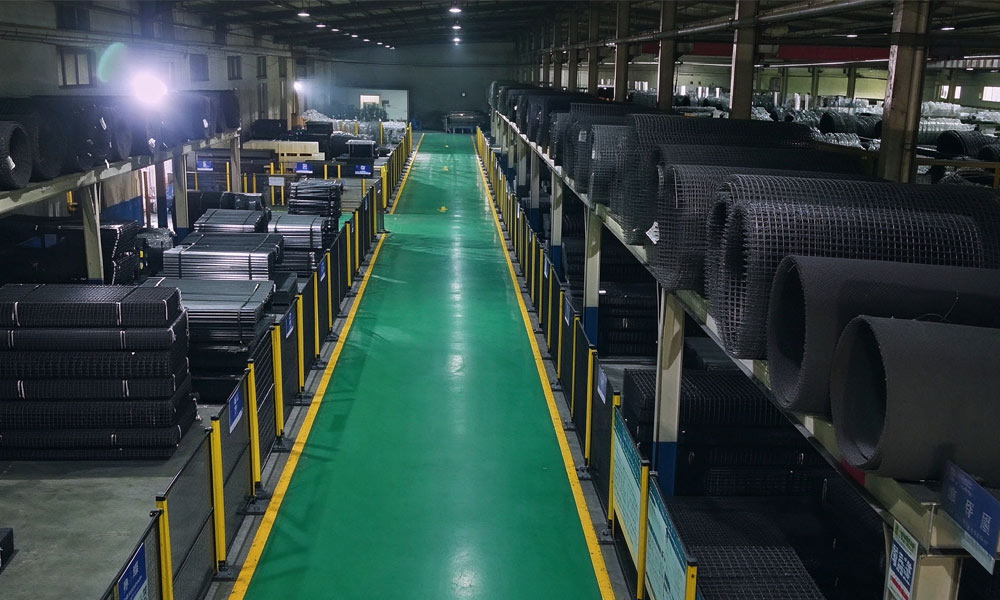
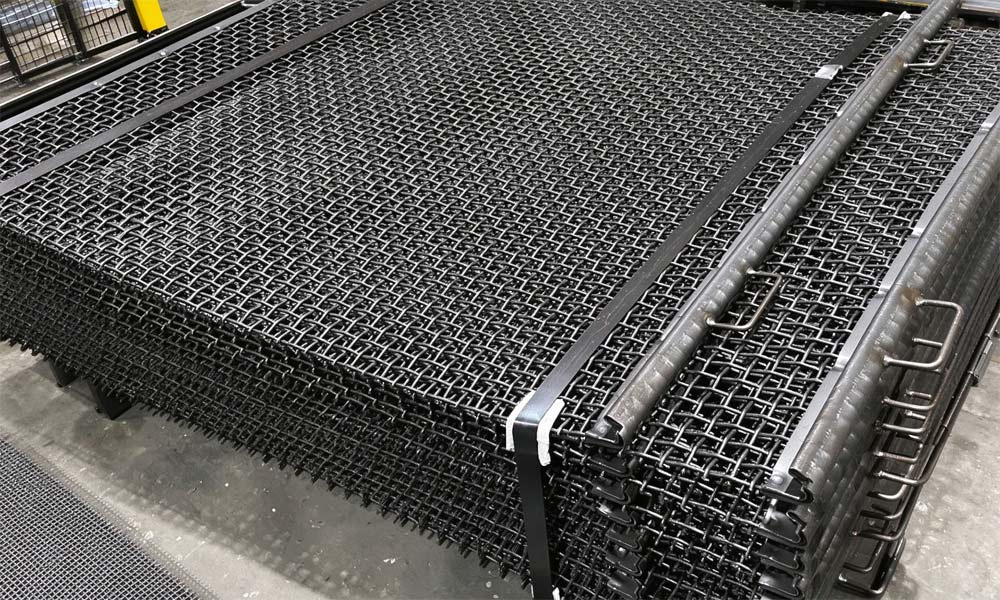
Mass production is where most custom programs quietly rot. The loom is re-threaded, an operator changes shift, wire from a different heat arrives, and suddenly the aperture drifts because nobody re-zeroed tension or re-checked the reed. Good Woven Mesh Customization manufacturing does three things that buyers never see but always pay for. First, it freezes the approved sample as the master: same wire batch or certified substitute, same reed, same beat-up pressure, same take-up ratio. Second, it runs in-process gauging—optical aperture measurement, wire-diameter micrometer checks, mesh-count counting per 25 mm, diagonal and flatness checks, and surface defect logs at set intervals rather than only at the end. Third, it keeps lot memory: each roll or panel carries a lot number tied to wire mill cert, loom number, operator shift, reed ID, and inspection record, so a field failure in month four can be traced backward instead of argued about. Tolerances should be written in the PO—ASTM E2016 / ISO 9044 style aperture bands for filtration mesh, tighter private specs for battery, pharma, or aerospace feeds—because “looks the same” is not a quality system. Packaging closes the loop: anti-rust film, edge protectors, desiccant for export, barcode labels, and a mill cert in the box so the mesh arrives looking like the sample and proving it.
Mass Production and Final Quality Control Stage
Once the prototype receives formal client approval, the mass production process for non‑standard aperture mesh follows a strictly controlled workflow, with dedicated weaving looms, tension calibration tools and inspection stations set up specifically for this custom order, to guarantee that every panel maintains consistent aperture size, uniform wire tension and perfect dimensional accuracy across the full batch. Before the finished goods are packed for delivery, every single panel goes through a full dimensional check, aperture count verification and surface quality inspection, to make sure no defective pieces slip through and the entire batch fully meets all the requirements agreed on at the start of the Woven Wire Mesh Customization project.
A transparent, fully documented full process for non‑standard aperture Woven Wire Mesh Customization removes all the uncertainty that usually comes with custom industrial part sourcing, helping operations get perfectly matched parts that improve their process performance far beyond what standard off‑the‑shelf products can deliver. If you have a non‑standard mesh requirement and need a clear, timeline‑guaranteed customization workflow tailored to your exact application, our engineering team can walk you through every step and deliver a final product that fully matches all your technical specifications.