Export Lead Times for Woven Metal Mesh: Managing the Timeline from Order Placement to Container Loading
For international buyers of woven metal screens, mastering the export lead time—the total duration from order confirmation to container loading—is crucial for maintaining project schedules and inventory. This timeline is a composite of manufacturing, quality assurance, documentation, and logistics stages. Proactive management of each phase prevents costly delays and ensures a reliable supply of these critical screening components to your operations.
Breaking Down the Timeline Components
The export lead time for woven metal screens begins with production, encompassing raw material procurement, weaving, cutting, and finishing. This is followed by rigorous quality inspection to verify specifications. Next, the export preparation phase involves generating commercial documents and physically preparing the goods for shipment through packaging and palletizing. The final stage is pre-carriage and loading, which includes inland transport to the port and securing the container for ocean freight.
What Actually Eats the Days
The romantic version of the timeline is "weave, pack, ship." The real timeline for Woven Wire Mesh usually runs inquiry confirmation, drawing or spec sign-off, raw wire procurement, loom scheduling, weaving, descaling or annealing if needed, surface treatment (galvanizing, PVC coating, pickling-passivation, black oxide), slitting or sheeting, inspection, rework if the aperture is off, wooden case or pallet building, customs documentation, booking with the forwarder, terminal appointment, and finally container loading. Each step sounds small until it queues behind someone else's order: a 304 stainless coarse mesh might weave in three days, but if the mill just took a 40,000 m² architectural order, your loom slot slips a week. Galvanizing is the classic bottleneck—a hot-dip line running construction gabion mesh ahead of yours can push a Woven Wire Mesh export job back five to eight working days without anybody picking up the phone. Even documentation bites: a wrong HS code, a missing mill test certificate, or a certificate of origin that does not match the commercial invoice can stall customs clearance at the destination port for longer than the entire manufacturing cycle took.
Rolling vs Custom: Two Totally Different Clocks
A buyer who treats all Woven Wire Mesh as one product will never forecast lead time correctly, because stock roll and custom-weave live on different planets. Stock or near-stock mesh—common 304/316 grades, popular mesh counts like 10×10, 20×20, 40×40, standard 1 m / 1.2 m / 1.5 m widths—can often be slit, inspected, and stuffed into a consolidating container within 5 to 10 working days if the warehouse actually holds the inventory and the forwarder has a weekly FCL slot. Custom mesh is where the clock resets: unusual aperture ratio, Monel or Hastelloy wire, ultra-fine Dutch weave, calibrated sieve cloth, large panels for vibrating screens, or mesh with a tolerance the loom has to be re-threaded for—those jobs commonly run 25 to 45 working days before they even reach the packing area, and 55 to 70 calendar days door-to-port is not unusual for first-time custom specifications. A Woven Wire Mesh exporter who quotes 15 days on a custom duplex stainless filter cloth is either lying, planning to subcontract to a shop you have never audited, or forgetting the surface-treatment queue; none of those outcomes help the buyer's project schedule.
Booking the Container Before the Mesh Exists
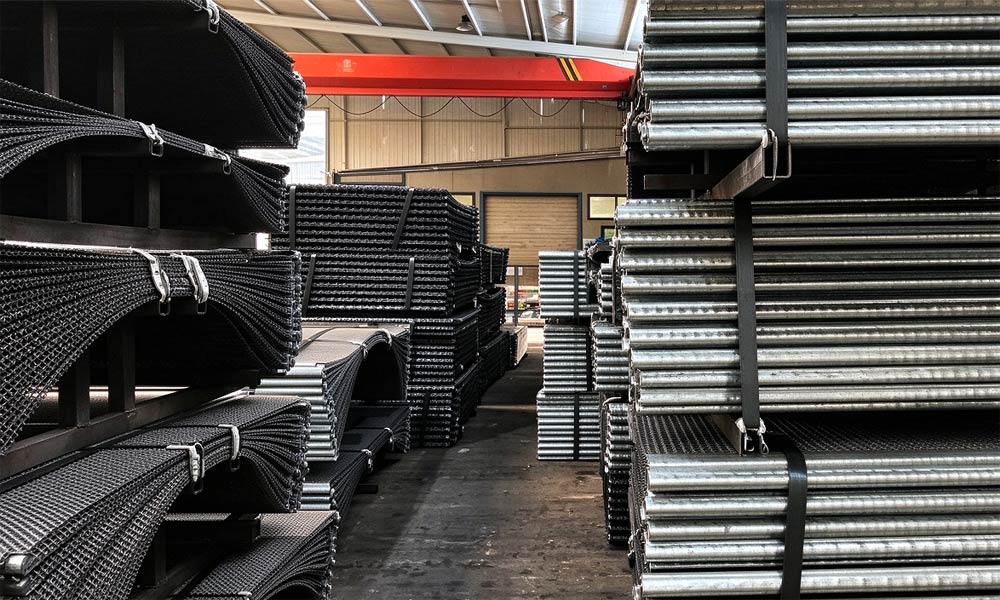
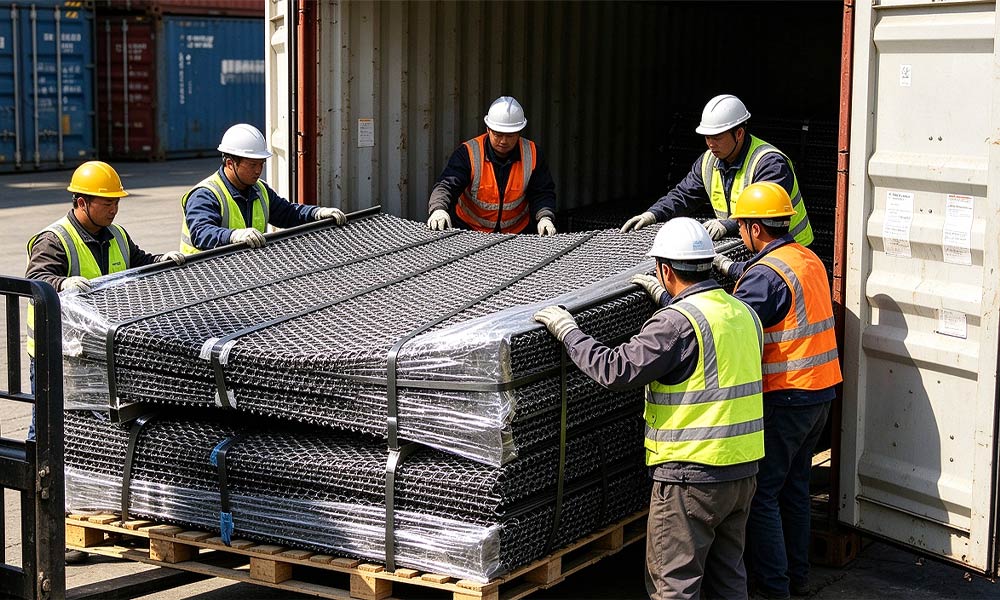
The amateur move is to wait until the Woven Wire Mesh is packed, then call a freight forwarder and ask "when is the next boat." The professional move is to book intent early: confirm the estimated ready date with the mill, lock a soft container booking window with the forwarder, pre-arrange the wooden case dimensions, and agree on the load port before production finishes. Mesh rolls are awkward—long, narrow, easily crushed, sensitive to moisture if the wrapping fails—so stuffing them into a shared LCL with fertilizer bags and steel coils is how you collect a claim instead of a happy customer. A clean Woven Wire Mesh export load is planned backward: container size chosen from roll diameter and case length, inner wrapping in moisture-proof paper or PE, outer crate or steel-strapped pallet rated for forklift abuse, desiccant added for humid routes, and the stuffing plan drawn so the heaviest crates sit over the kingpin and the rolls are not stacked on their faces. When the ready date moves—because it will—the forwarder already knows, the terminal appointment slides instead of collapsing, and the buyer hears about the delay while there is still time to tell the end user the truth.
Implementing Proactive Management Strategies
Effective control requires active collaboration. Upon the order of woven metal screens confirmed, request a detailed schedule breakdown from your supplier and establish regular progress updates at key milestones, such as after material sourcing and post-inspection. Openly discuss potential bottlenecks like material shortages, documentation delays, or port congestion. Incorporating a buffer of 5-10% into your overall project timeline is a wise practice to absorb minor, unforeseen disruptions without impacting your production schedule.
Ensuring Clarity Through Documentation
Precise contractual agreements are essential. Ensure your Purchase Order and the supplier’s Proforma Invoice clearly state the agreed “Ready for Shipment” date. A mutual understanding of the chosen Incoterms rule is equally vital, as it defines the point where responsibility and risk transfer from seller to buyer, clarifying who manages each leg of the international shipment.
By understanding the sequence of export activities, maintaining clear communication, and ensuring contractual precision, you can transform the lead time for woven metal screens from a source of uncertainty into a managed variable. This disciplined approach minimizes supply chain risk and safeguards your project timelines.