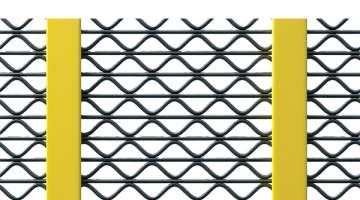
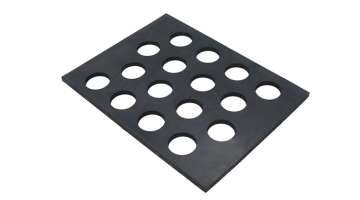
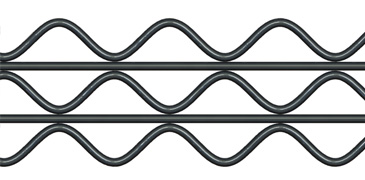
Effective Aperture Ratio of Self-Cleaning Screens and Wire Woven Screens
On paper, a 10 mm self-cleaning panel and a 10 mm woven panel look like the same hole, but the moment real ore hits the deck the illusion falls apart, because what matters is never the nominal aperture—it is the effective open area that survives moisture, near-size fines, and a full shift of vibration. Self-Cleaning Screens and Wire Woven Screens are built on opposite philosophies: one treats the surface as a rigid gate, the other as a living, breathing filter that refuses to stay plugged. Understanding the gap between their effective aperture ratios is the difference between buying a screen that screens and one that just occupies the deck.
The Nominal vs Effective Aperture Gap in Wire Woven Screens
A square Wire Woven Screen is honest only when it is dry and clean, because its open area is locked into the math of aperture divided by aperture-plus-wire-diameter, and any blinding immediately eats that percentage from the inside out. In dry aggregate the nominal open area might read 60–70%, but the moment clay fines wedge at the crimp crossings the effective area quietly drops to 40% or less, and the operator rarely sees it happening until the oversize pile starts carrying saleable fines. The rigid warp-and-weft intersection is stable for sizing, yet it is also the perfect ledge for damp near-size particles to settle, bridge, and bake into a cake that turns a precise sieve into a sliding board. That is the quiet tax of woven mesh: excellent accuracy on a spec sheet, fading efficiency in a wet pit.
How Self-Cleaning Screens Keep the Aperture Breathing
A Self-Cleaning Screens design stops treating the opening as fixed real estate and instead lets each wire or poly strip move on its own micro-frequency, so the aperture narrows and widens thousands of times per minute. Because the near-size particle never gets a static corner to lodge in, the effective open area stays far closer to the nominal value—field data shows self-cleaning media holding 75–88% usable open area versus 50–65% for a blinded woven deck under the same damp feed. The lateral wire travel, often around 0.8–1.2 mm, snaps the capillary tension of the water film that normally glues fines together, which means the bed keeps stratifying instead of skating on top of a clogged surface. In practice the panel is not "cleaner" by luck; it is mechanically refusing to let the clog form in the first place.
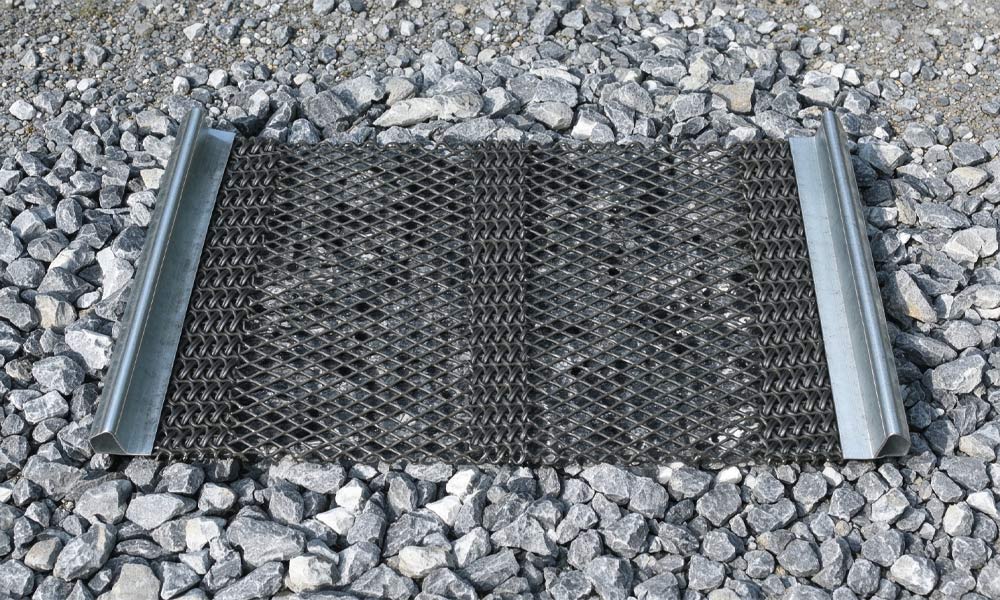
Screening Efficiency Is Decided by Stratification, Not Just Hole Size
Screening efficiency measures how cleanly the cut point holds across the whole material bed, and here the two media behave very differently, because Wire Woven Screens rely entirely on the machine stroke to do the shaking while the mesh itself stays passive. When the feed is free-flowing and dry, that is fine—fines drop fast and the square opening gives a sharp, repeatable cut. But with sticky or near-size-dominant ore, the passive surface lets the bed stack, so efficiency bleeds away even though every hole is still technically the right size. Self-Cleaning Screens flip that dynamic: the independent motion keeps tossing particles, the near-size fraction keeps getting re-presented to the aperture, and the cut stays tight enough that recirculating load drops and downstream crushers stop choking on material that should have left the deck earlier.
When Each One Actually Wins on a Real Plant
The choice is not "better vs worse"—it is duty-matched, because a Wire Woven Screen is still the smarter buy for dry, cubical, low-moisture aggregate where aperture precision and low panel cost beat anti-blinding features the plant does not need. Self-Cleaning Screens earn their higher upfront price the moment moisture climbs above roughly 5–8%, clay shows up, or the feed is loaded with elongated and near-size particles that would peg a square mesh within minutes. Plants that track cost per ton rather than price per square meter usually find the self-cleaning deck pays back in reduced downtime, less manual scraping, steadier gradation, and lower recirculation—sometimes inside a few weeks of a wet-season run.
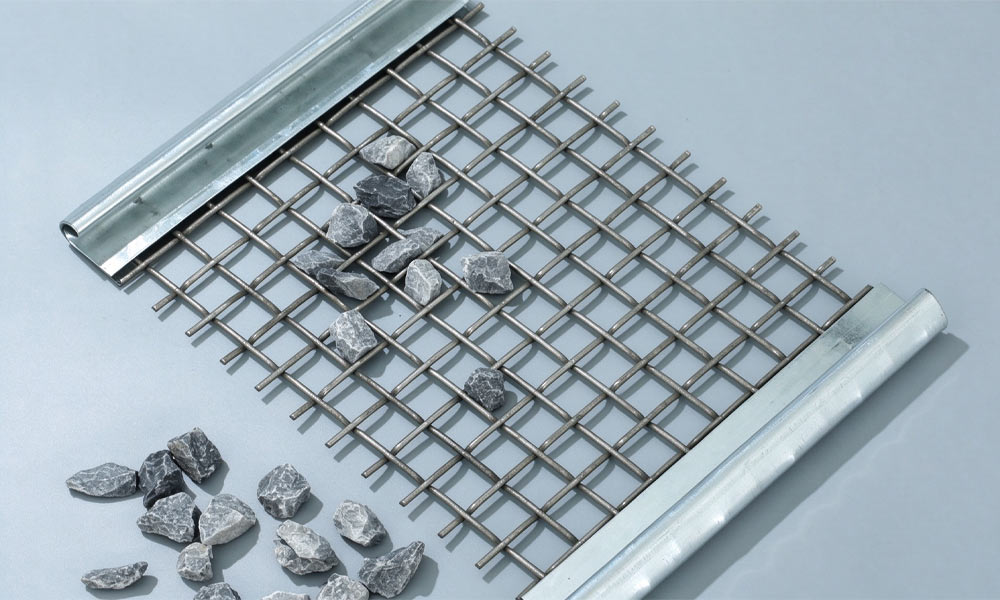
Comparing Self-Cleaning Screens and Wire Woven Screens only makes sense when you put your real feed on the table: moisture, clay content, near-size percentage, particle shape, and how often you currently stop to knock the deck clean. If the screen stays dry and the cut must be exact, woven mesh is lean and dependable; if the deck blinds weekly and the efficiency curve collapses in the rain, self-cleaning media is not a luxury, it is the fix. Send us your aperture, feed gradation, moisture range, and current blinding pattern, and we will model the effective open area and throughput for both options—so you choose the deck by tons screened, not by the prettiest quote.