Triangle Self Cleaning Screen: V‑Shaped Aperture to Beat Wet Blinding
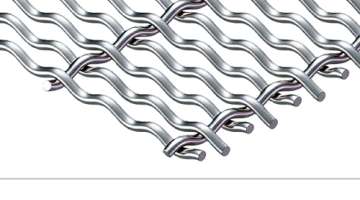
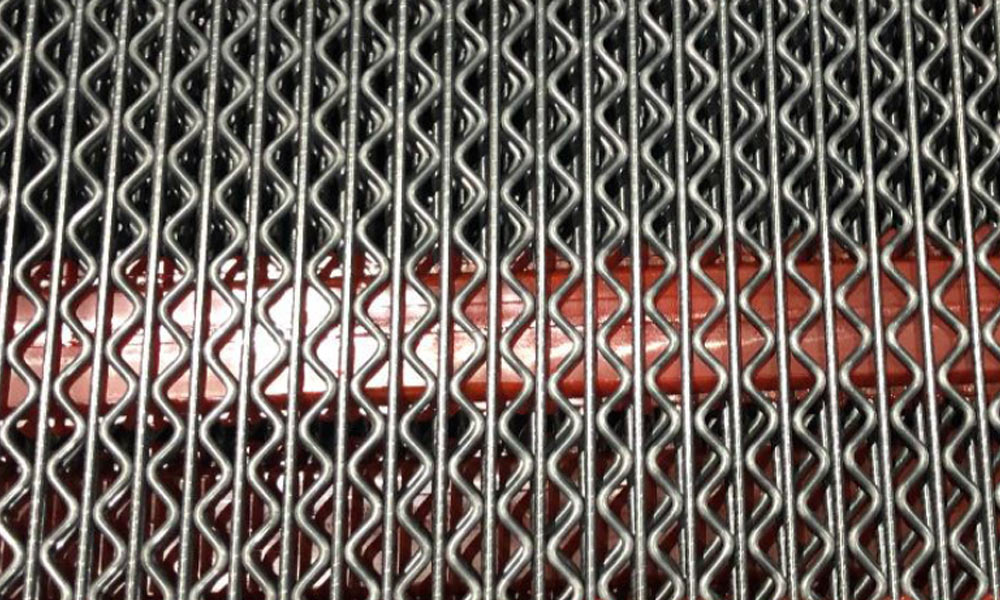
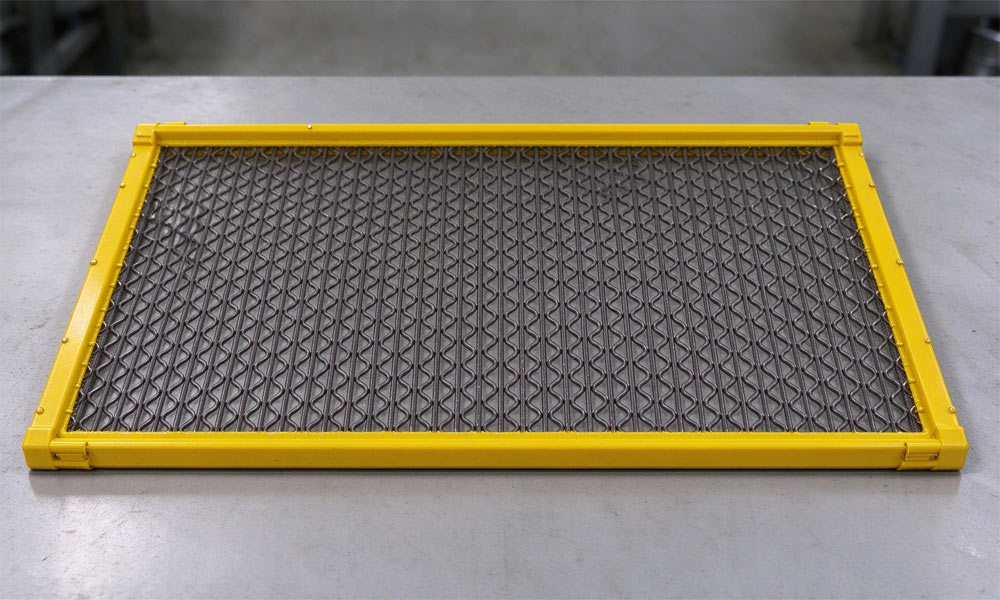
Most screening problems in wet or sticky plants do not start with the aperture size—they start with the hole refusing to stay open, and that is exactly where a Triangle Self Cleaning Screen stops being a niche product and becomes the only sane option. Built from alternating crimped and straight wires that form sharp V-shaped openings, this mesh is designed to keep moving when ordinary square weave would already be caked shut. It is not a universal upgrade for every deck, but on the right feed it quietly fixes blinding issues that no amount of hammering or wash water could solve.
Why the Triangle Geometry Wins Against Blinding
The biggest quiet advantage of a Triangle Self Cleaning Screen is that the opening is never a flat pocket where fines can rest, because the V-profile forces the wire edges to stay in motion and the near-size particle gets ejected before a bridge can form. With one crimped wire and one straight wire vibrating out of phase, the aperture breathes several thousand times a minute, so damp clay, manufactured sand, and moist fine ore slide off instead of welding themselves to the deck. Compared with a conventional square mesh at the same wire diameter, the triangular layout also recovers more effective open area under real running conditions, which is why plants see steadier throughput and far fewer stoppages for manual cleaning once the panel is properly tensioned.
The Trade-Offs You Should Not Pretend Do Not Exist
A Triangle Self Cleaning Screen is not free of compromises, and the main one is cut-point accuracy, because triangular holes let some elongated or near-size particles sneak through more easily than a tight square or diamond weave. On fine separations where the spec is strict, that softness in sizing can show up as a slightly wider gradation band, and the panel can also run noisier than polyurethane media while demanding careful tensioning so the independent wires do not over-flex and fatigue at the spacers. It is brilliant at keeping the deck alive, but if your business model depends on laboratory-tight cut precision, you trade a little accuracy for a lot of uptime—a fair deal in most quarry and mineral circuits, a bad deal in some graded-product contracts.
Reading Your Feed Before You Pick the Pattern
Choosing correctly starts with naming the failure, not reading a catalog number, because a Triangle Self Cleaning Screen earns its place only when the dominant problem is blinding, pegging, or sticky near-size material rather than pure capacity. Wet manufactured sand, clay-bearing aggregate, damp fine ore, and high-fines feeds are its home turf; dry free-flowing cubical rock with a tight spec is better served by diamond or even rigid woven mesh. As a rule of thumb, target a slightly larger nominal triangle aperture than the square-cut size you want—often around ten to fifteen percent up—since the V-shape passes material a little more generously, and pair that with high-carbon spring steel or stainless wire depending on abrasion and wash-water corrosion.
Installation Details That Decide If It Actually Works
Even the right Triangle Self Cleaning Screen will underperform if the deck fights it, so tension must land in the manufacturer’s window: too loose and the wires slap the support bars and break early, too tight and the self-cleaning micro-motion dies completely. Feed impact should be softened with a wear plate or rubber liner at the landing zone, support bars and crown rubbers kept in good shape, and hook style matched exactly to the screen’s end- or side-tension system. Most “bad triangle mesh” complaints in the field trace back to one of those three things, not the geometry itself, which is why the panel should be re-checked and lightly re-tensioned after the first shift once the wires settle.
A Triangle Self Cleaning Screen is a tool for unblocking a struggling fine deck, not a default replacement for every square mesh in the plant, and the win comes from matching its breathing V-aperture to feed that actually clogs. If your lower deck blinds weekly, your fines keep riding into oversize, and your crew is scraping mesh with a bar at two in the morning, triangle media is worth a serious trial; if your feed is dry and your cut must be razor-sharp, look at diamond or woven instead. Send us your material moisture, particle-size curve, deck position, and current blinding pattern, and we will spec the wire grade, aperture, and tension setup that turns the panel from a consumable into a quiet workhorse.