Welded Steel Gratings: Manufacturing Process, Load-Bearing Limits, and Global Standards
Pressure-welded steel gratings are used in a wide range of settings—from industrial plants and power stations to modern pedestrian bridges—but how are they manufactured? How do engineers ensure they can safely withstand heavy loads? And what global standards apply to them?
Manufacturing Process of Pressure-Welded Steel Gratings
The manufacturing process begins with two sets of steel bars: load-bearing flat bars and cross bars. During the pressure-welding process, a machine applies high pressure to force the cross bars into pre-cut notches in the load-bearing flat bars. This process fuses the bars into a single, solid panel with no weak points. Once welded, the grating is cut to the required dimensions and undergoes surface treatment to prevent rust. Because they lack loose bolts or joints, pressure-welded gratings are more durable than riveted gratings.
Load-Bearing Capacity of Pressure-Welded Steel Gratings
The load-bearing capacity of pressure-welded steel gratings can be calculated using specific formulas. Key factors include the dimensions, spacing, and span of the load-bearing flat bars. The formula for calculating load capacity is: Maximum Safe Load = Section Modulus of Load-Bearing Bar × Steel Yield Strength/ Span × Safety Factor. In practice, manufacturers provide load capacity charts based on these calculations. For example, a pressure-welded grating with a bar height of 30 mm and a spacing of 30 mm might safely support a load of 500 kg/m² over a 1-meter span.
Key International Standards
The global market primarily adheres to two standards: ISO 14122-2, which covers safety requirements for walkways and platforms—including specifications for pressure-welded gratings—and ANSI/NAAMM MBG 531. Widely used in North America, ANSI/NAAMM MBG 531 details requirements for grating dimensions, materials, and load-bearing tests. These standards ensure that the pressure-welded steel gratings meet minimum requirements for strength, deflection, and slip resistance.
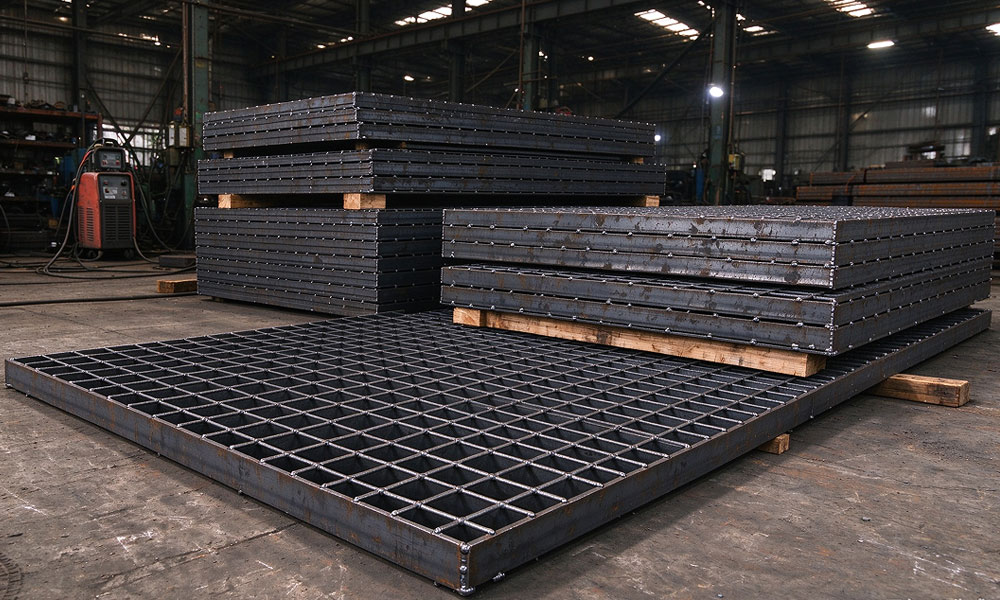
Pressure-welded steel gratings are reliable industrial components, but their performance depends on proper manufacturing processes, precise load calculations, and strict adherence to relevant standards. Whether constructing factory floors or public walkways, understanding these basics helps in selecting the right pressure-welded steel gratings and avoiding wasted costs.