Heavy-Duty Rubber Screens for Iron Ore Screening
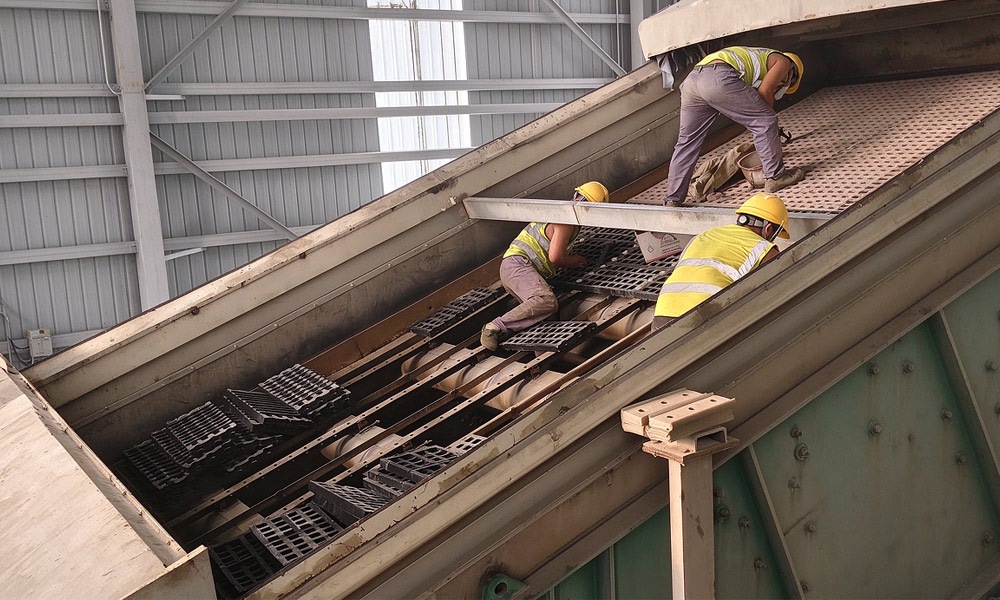
Screening iron ore is brutal work. Unlike sand or gravel, iron ore comes in jagged chunks that can weigh tens of kilograms—and they land hard on the screen deck. Standard steel or light-duty screens often buckle under the punishment, leading to torn panels, bent frames, and constant shutdowns. That’s where heavy-duty rubber screen earn their keep. Let’s look at how they perform when the big rocks start flying.
Absorbing Impact Without Breaking
The biggest threat on a primary iron ore screen isn’t abrasion—it’s impact. When a 50kg lump of hematite or magnetite slams onto the deck from several feet up, the force can dent steel and shatter brittle materials. Heavy-duty rubber panels act like a giant shock absorber. Instead of resisting the blow rigidly, the thick rubber compresses and flexes, dissipating the kinetic energy safely. This prevents stress fractures in the screen structure and keeps the panels intact shift after shift.
Standing Up to Abrasion and Sharp Edges
Iron ore is notoriously abrasive and often has razor-sharp edges from blasting and crushing. While rubber is softer than steel, heavy-duty formulations are engineered for toughness. They resist tearing and cutting, even when sharp ore tumbles across the surface. Additionally, rubber doesn’t rust, which is a major advantage in the wet, iron-rich slurry common in ore processing. While steel panels corrode and weaken, rubber maintains its integrity.
Reducing Blinding and Noise
Beyond durability, heavy-duty rubber panels improve operational efficiency. Their natural flexing action helps dislodge trapped particles, reducing pegging and blinding in the screen apertures—a common headache with wet, sticky iron ore. They also dramatically cut noise levels. In an industry where hearing protection is mandatory, the sound-dampening quality of rubber creates a safer, more compliant workplace.
Where They Fit Best
Heavy-duty rubber panels are ideal for the top deck of vibrating screens, where the largest, heaviest material lands. They are less suited for fine screening at the bottom deck, where polyurethane or stainless-steel meshes offer better precision. For most iron ore operations, the sweet spot is using rubber to survive the initial impact, then switching to other media for final sizing.
In the punishing world of iron ore screening, heavy-duty rubber panels prove their value by absorbing massive impacts, resisting abrasion and corrosion, and lowering noise. While they won’t replace every type of screen media, they are the undisputed champion for the top deck, where survival matters most. Investing in the right heavy-duty rubber panels means fewer emergency stops, longer service intervals, and a healthier bottom line.