Impact-Resistant Structural Design of Welded Rod Bar Screens for Vibrating Equipment
The structural design of welded rod-bar screen decks for vibrating feeders is a critical engineering challenge when handling large, heavy, and abrasive feed. A weak design leads to premature failure, costly downtime, and safety risks. True impact resistance requires a holistic approach that integrates material science, structural engineering, and a deep understanding of dynamic loads to create a deck that endures the punishing environment of a vibrating feeder for years.
Analyzing the Dynamic Load Environment
Design begins with understanding the dynamic load environment. Unlike static screens, a deck on a bar screen vibrating feeder faces a complex mix of forces: direct impact from falling material, cyclic stresses from vibration, and abrasive wear. Engineers must calculate the kinetic energy of the largest feed lumps and model stress distribution under both impact and continuous vibration. This analysis sets the performance benchmarks for the entire structure.
Bar Section, Material Temper, and Why Hardness Is a Trap
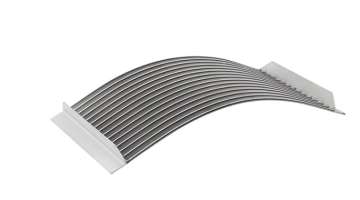
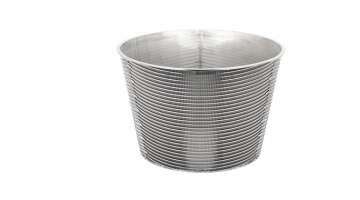
The first instinct in coarse duty is to ask for the hardest bar available, as if AR500 or quenched manganese were a magic spell against breakage, but a Welded Rod Bar Screen lives or dies on the conversation between surface hardness and core toughness. A high-carbon abrasion plate resists scratching yet can chip under a slab rock dropped from a loader height, while manganese steel dents, work-hardens, and laughs at repeated impact but machines and welds like a stubborn relative. Round bars, square bars, tapered grizzly bars, and trapezoidal profile bars each change the stress picture: a tapered top lets near-size material shed instead of wedging, a taller profile bar carries more bending moment between supports, and a fat round bar spreads contact stress but steals open area the plant was counting on for throughput. The smart specification pairs a wear-faced or abrasion-resistant working surface with a tougher substrate, then tunes bar diameter to the largest recurring lump rather than the largest lump ever recorded—because designing for the one boulder that shows up twice a year usually produces a deck so heavy and closed-in that the circuit chokes on its own fines. A Welded Rod Bar Screen should bend the energy, spread the energy, and wear slowly, not shatter cleanly and make the metallurgist look clairvoyant.
Weld Node, Support Pitch, and the Load Path
Most rod bar screens do not fail in the middle of the span; they fail at the node where the bar meets the cross member, because that is where residual welding stress, microstructure change, and the jump from flexible bar to frozen joint all arrive at the same point. A Welded Rod Bar Screen can have beautiful bars and still crack if the weld is harder than the parent metal but too brittle for cyclic pounding, so fusion depth, heat-affected-zone toughness, and post-weld stress relief matter more than the salesman’s “full penetration” sticker. Support pitch is the quieter killer: widen the cross-rail spacing to gain open area and the bars start drumming between supports, fatigue cracks walk inward from the weld toe, and a deck that looked indestructible in the quotation becomes a rattling sieve by month three. Tighten the pitch and you stabilize the bars but strangle the gap, push material bed depth up, and turn a scalping deck into a conveyer belt with holes. The real structural design balances bar moment of inertia against support-rail spacing, then adds wear caps, impact plates, or a blind feed lip at the landing zone so the first impact never hits the working aperture at all.
Feed Buffering and Designing the Deck for the Worst Landing Spot
The most elegant Welded Rod Bar Screen in the world will still die young if the chute dumps slabby ore straight onto the fine end with no buffering, because impact resistance is half deck and half civics—somebody has to decide where the rock lands. Heavy-duty duties solve this with zoning: a blind or capped impact nose at the feed end, thicker bars in the first 600–900 mm, then a slightly lighter bar section further down where the material has already given up its kinetic attitude and is just trying to stratify. Wear liners, replaceable cap strips, and bolt-on impact rails let the plant renew the abused zone without scrapping the whole cassette, which is the difference between a screen room that plans maintenance and one that waits for the bang.
Core Principles for a Robust Design
Several key principles underpin a durable, impact-resistant screen deck. First is strategic material selection. High-strength, abrasion-resistant steels are chosen based on the specific impact and wear profile. Second is intelligent reinforcement. The support grid of longitudinal and transverse bars must be designed with calculated spacing and profiles to absorb and distribute impact energy, preventing localized stress concentrations. Third is robust welding and fabrication. Using full-penetration welds and proper techniques ensures joints are as strong as the base metal, preventing crack initiation at these critical points.
Integrating Support and Mounting
The deck's strength is dependent on its connection to the vibrating feeder. The support structure and mounting system are vital. The deck must be securely fastened to the feeder’s frame with high-grade bolts and proper clamps. Mounting must allow for thermal expansion without inducing stress. Furthermore, the feeder's underlying support beams must be rigid to minimize deflection, providing a stable foundation that prevents excessive flexing and fatigue.
Innovations for Extended Service Life
Modern designs incorporate innovations to boost longevity. Modular panel designs allow for localized replacement of worn sections, cutting downtime and cost. Bolt-on or weld-on wear liners can be added at high-impact zones like the feed point. Implementing structural health monitoring, such as periodic ultrasonic inspection of welds, enables predictive maintenance, allowing issues to be addressed before they cause failure.
Designing an impact-resistant welded rod-bar screen deck is a proactive investment in operational uptime. By embracing a comprehensive design philosophy that accounts for dynamic loads, material properties, and intelligent reinforcement, engineers create decks that thrive in harsh conditions. The result is reduced maintenance, maximized equipment availability, and a safer, more predictable processing operation.