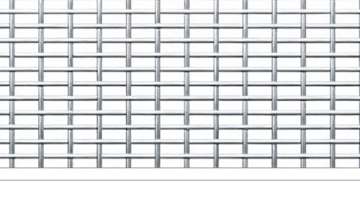
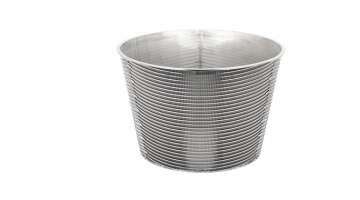
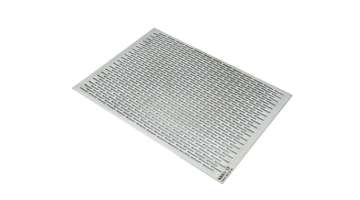
Anti-Corrosion Treatment for Wedge Wire Screens: Comparison Between Stainless Steel and Coating Process
For factories operating in harsh environments, proper maintenance of screens can significantly extend their service life; protecting wedge wire screens from corrosion is particularly important. There are two primary protective approaches: using corrosion-resistant materials or applying a protective coating to the carbon steel surface of the screen. Each method has its own advantages, as well as differences in cost and suitability for specific applications. This article compares and analyzes these two methods to help you select the most cost-effective solution based on your specific operating conditions.
Material and Corrosion Resistance
The core difference is in the protection mechanism. Stainless steel screens offer inherent, through-and-through corrosion resistance. Their protective chromium oxide layer self-heals if scratched, providing durable defense against a wide range of chemicals, chlorides, and varying pH levels. Coated screens rely on a barrier layer applied over carbon steel. This barrier is effective only while intact; if breached by damage or wear, the underlying steel becomes vulnerable to rapid localized corrosion.
Stainless Steel: Protection That Lives in the Metal, Not on It
The quiet advantage of a stainless Wedge Wire Screen is that corrosion resistance is not a finish, it is the material itself, so 304L handles fresh water and dry industrial duty, 316L earns its keep where chlorides, brackish water, food-CIP chemicals, or mild acid effluent appear, and duplex 2205 or super duplex 2507 step in when seawater, desalination reject, or aggressive mining brine would pit ordinary stainless in months.Molybdenum in 316L improves resistance to chloride pitting, while duplex grades roughly double the yield strength of 316L and push pitting-resistance equivalent numbers high enough for offshore and seawater service, which matters because a wedge wire screen is not just a filter—it is a welded structural surface carrying vibration, pressure, and hydraulic load.The trade-off is honest: stainless costs more up front, and specifying super duplex “just to be safe” can waste budget if the water is merely rainy rather than oceanic. But in combined corrosive-plus-abrasive duty—mine tailings, chemical effluent, seawater intake—stainless wins because the slot edge can wear a little and still be stainless, whereas a coated carbon-steel wire can wear through the coating and expose steel that was never corrosion-resistant to begin with.A Wedge Wire Screen built from the correct stainless grade also keeps its slot tolerance better over time, which is why filtration people care about corrosion less as “rust” and more as the opening drifted and now the product is off-spec.
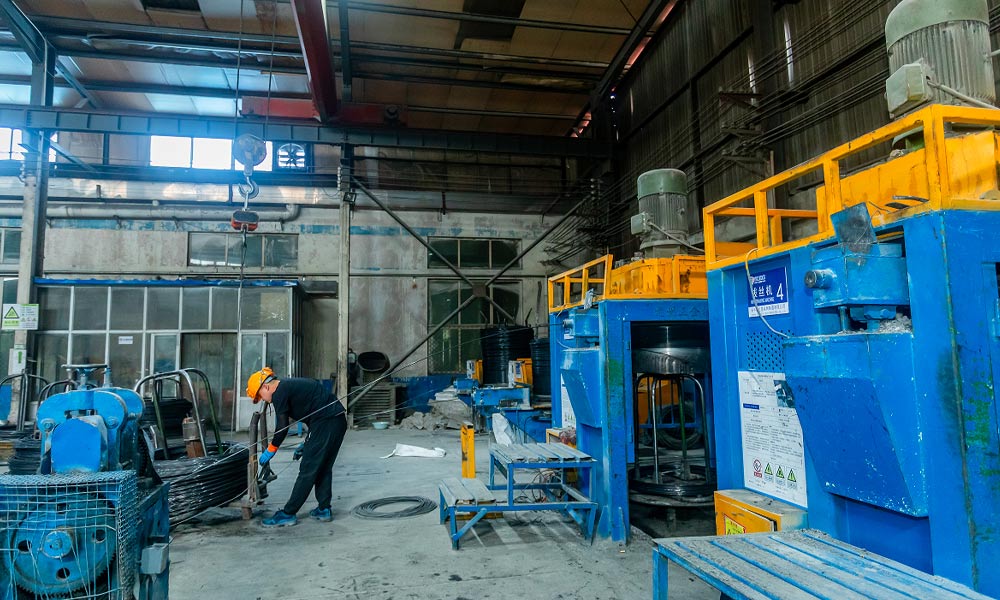
Coating Process: Cheap Barrier Protection With a Weak Spot
Coatings are not a scam; they are a different contract with the plant, because a carbon-steel Wedge Wire Screen with epoxy, polyurethane, PVC, powder coat, or hot-dip galvanizing can be far cheaper than solid stainless and still survive mild chemical duty, indoor water service, architectural screens, or aggregate dewatering where corrosion is real but abrasion is low.Epoxy and polyurethane barriers block moisture and chemicals, galvanizing adds a sacrificial zinc layer that tolerates scratches better than paint, and powder coating gives a clean, UV-stable finish for less aggressive atmospheres, so for large structural screen frames or budget-constrained circuits the coating route is often the sane commercial choice.The catch is that coatings protect by separation, not by composition: once the V-wire crown is scoured by silica, the coating blisters from hot caustic, or a slab of ore opens a hairline at the weld, the underlying carbon steel starts pitting exactly where flow is fastest. A Wedge Wire Screen that relies on coating also complicates slot geometry—coating thickness steals open area, builds up at wire crossings, and turns the “finished slot” into a moving target unless the supplier quotes finished aperture after coating, not bare-wire aperture.Coatings shine when abrasion is low, inspection is disciplined, and someone owns the repair plan; they disappoint when the sales drawing shows “corrosion protected” but the deck sees acidic slurry, backwash pulses, and 6 mm quartz fines all day.
Stainless Base Metal Plus Surface Treatment Beats False Either
The mature way to specify a Wedge Wire Screen is not stainless-versus-coating but stainless base plus the right surface treatment, because passivation, electropolishing, hard-chrome, tungsten carbide, and ceramic overlays do completely different jobs than a corrosion-only paint system. Passivation removes free iron and strengthens the passive film on stainless, electropolishing smooths the V-wire surface so fines and biofouling stop nesting in micro-roughness—hugely valuable in food, pharma, and wastewater—while hard-chrome or tungsten-carbide treatments protect the wire crown from abrasion without turning the whole panel into exotic alloy.In mining slurry, a 316L Wedge Wire Screen with electropolished surface and local carbide protection often beats bare super duplex on total value, because corrosion was never the only killer—erosion at the slot throat was. Coatings still have a seat at the table, but usually on support frames, housings, feed boxes, and non-critical structural steel, not on the working V-wire where slot accuracy and wear-through risk dominate.The plants that stop fighting corrosion are the ones that say: stainless where the fluid touches the slot, coating where the structure needs cheap protection, surface treatment where wear and hygiene meet, and no heroic single material expected to survive acid, abrasion, heat, and UV at once.
Performance Under Abrasion and Impact
Abrasion resistance is critical in screening. Stainless steel provides excellent, integral abrasion resistance. It withstands the scouring of abrasive slurries without losing its corrosion protection. Coatings, even tough ones like polyurethane, are susceptible to wear-through from continuous abrasion. High-wear areas like wire edges can expose the steel substrate, leading to premature failure. Therefore, coatings are better suited for corrosive but minimally abrasive environments.
Cost Considerations and Lifecycle Value
The economic analysis must look beyond initial price. Stainless steel screens have a higher upfront material cost but often deliver a longer, more predictable service life with minimal maintenance in severe conditions. Coated screens offer a lower initial capital cost, making them attractive for budgets or milder services. However, their total cost of ownership can rise if frequent repairs, re-coating, or early replacement due to coating failure are needed.
Application and Maintenance Suitability
The choice is dictated by the application's severity. Stainless steel is the preferred choice for combined corrosive and abrasive duty—such as in saltwater, acidic mine drainage, or aggressive chemical processing. It requires little maintenance. Coatings are suitable for specific chemical resistance where abrasion is low, or for protecting large, complex structures where solid stainless steel would be cost-prohibitive. They require regular inspection for damage and a plan for repair.
Select the protection method that matches your specific threats. For harsh, unpredictable, or combined corrosive environments, stainless steel offers reliable, long-term protection with lower lifetime risk. For well-defined, primarily corrosive environments with low abrasion, or where initial cost is critical, a high-quality, properly applied coating can be a cost-effective solution. The goal is to align the protective system's capabilities with your screen's operational reality.