Application of Wedge Wire Cylinder Rotary Screen in Rotary Dewatering Processes
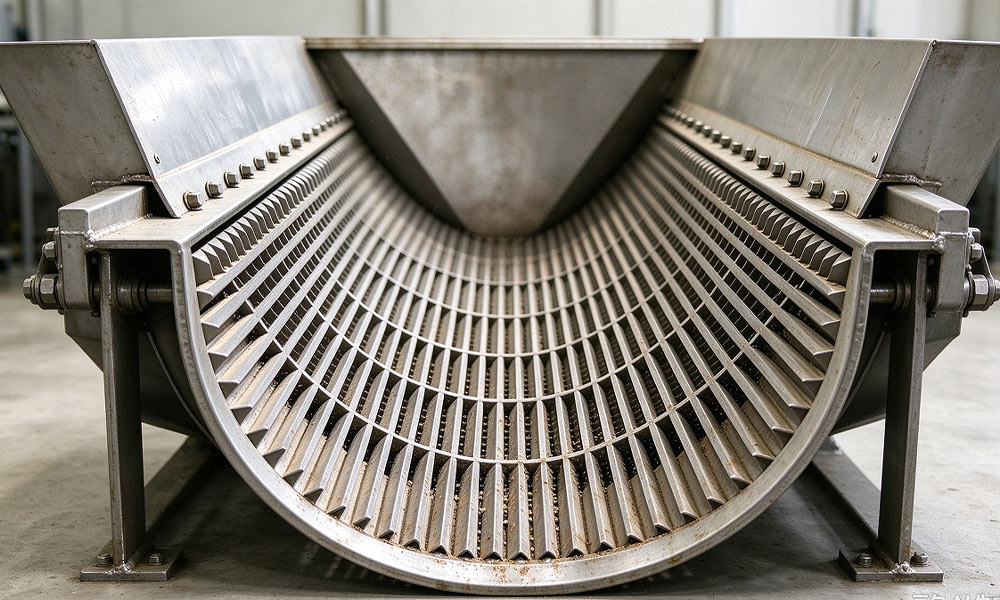
For food processing, mining tailings and industrial wastewater teams tired of frequent slot clogging and short service life from standard perforated rotary dewatering drums, wedge wire Trommel screens are a rugged, low-maintenance upgrade that drastically boosts separation efficiency for even the stickiest high-moisture feed streams. Their unique V-shaped continuous slot design, welded from corrosion-resistant stainless steel, delivers 20-30% higher water drainage speed than traditional mesh screens, while extending continuous runtime by nearly 40% and cutting annual screen replacement costs for most mid-sized processing lines.
What a Rotating Drum Does to Water That a Static Screen Cannot
The physics of rotary dewatering are less about filtration than about time and disturbance, and this is where the wedge wire trommel screen earns its reputation. Water leaves a sludge in roughly three stages: free water drains under gravity almost immediately, interstitial water held in the voids between particles follows if the bed is thin enough, and surface or capillary water clinging to each particle is the hardest fraction of all, resisting gravity entirely once the bed thickens. A static screen handles the first stage well and then stalls, because the retained cake becomes its own filter medium and the drainage path lengthens with every millimetre of accumulation. A rotating drum keeps breaking that cycle: as the cylinder turns, the cake is lifted part way up the wall and then dropped or sheared back down, so the bed stays thin, the drainage path stays short, and fresh particles are continually presented to the slot surface. In industrial service that tumbling action typically lifts discharge dryness by eight to fifteen percentage points over a comparable static unit fed the same slurry, and it does so at drum speeds slow enough — usually between four and twenty revolutions per minute, set by diameter — that energy input stays modest and the screen media sees almost no abrasive wear.
Internal Hardware and the Details That Decide Cake Dryness
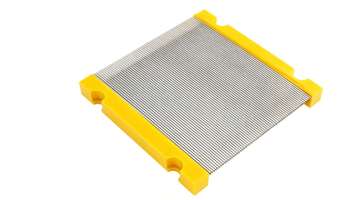
Getting the dryness figure you want depends far more on how the drum is built than on how fast it spins, and a wedge wire trommel screen gives you several independent variables to work with. The media itself is the starting point: because every V-profile wire is resistance welded to every support rod, the slot is continuous along the full circumference and full length of the cylinder rather than a pattern of isolated holes, which is why effective open area commonly sits between 20 and 35 percent while a perforated drum strong enough for the same duty rarely clears 12 percent. That open area is what lets liberated water leave quickly instead of re-wetting the cake on its way out, and the V-profile matters just as much — particles contact the slot at two points and are lifted off by shear instead of being driven into an aperture, so blinding is a slow, manageable process rather than a shift-ending event.
Where Rotary Dewatering Pays Off and How to Specify It
In the field, these drums tend to appear wherever a plant is trying to convert a disposal cost into either a product or a cheaper haul. Pulp and paper mills use a wedge wire trommel screen to recover usable fibre from white water and reject streams, usually at very high hydraulic loads and with almost no interest in dryness beyond what a conveyor will carry. Food processors — potato, beet, vegetable and fruit operations — run them on peel and trimming waste because the separated solids are sold or sent to anaerobic digestion, and every point of dryness directly reduces transport volume. Abattoirs and rendering plants, manure handling on large dairies, digestate separation downstream of biogas reactors, and organics recovery lines at municipal waste facilities all follow the same economics: volume reduction is the product, and the dewatered liquid fraction is far cheaper to treat or recirculate than the original slurry. When you specify, five numbers do most of the work.Give us those, along with a photograph or sketch of the feed point if you have one, and the sizing becomes straightforward.
Core Functional Advantages for Rotary Dewatering Workflows
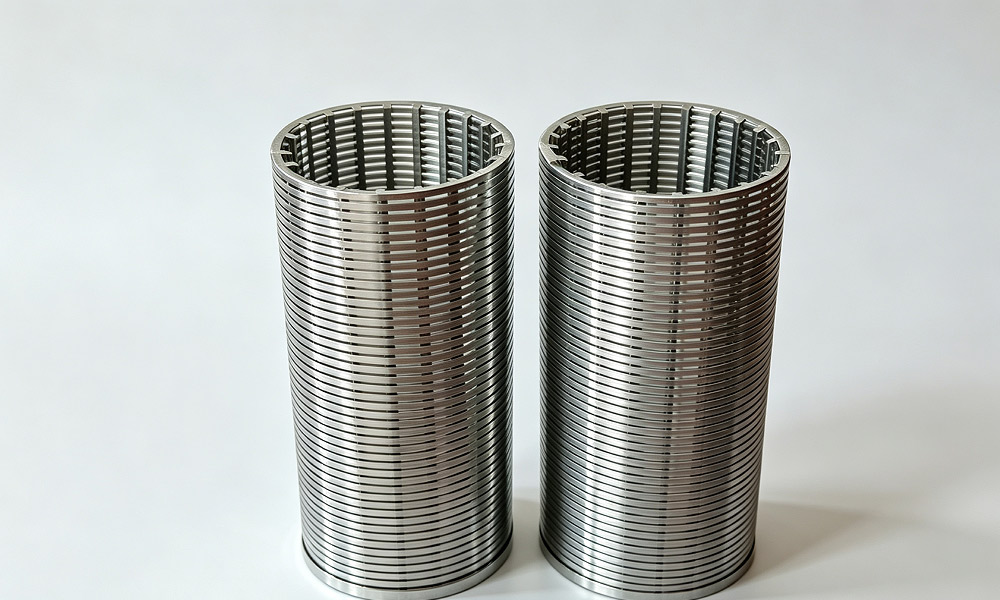
Unlike round-hole perforated drums that trap fine particles deep inside apertures, the tapered V-shaped slots on a wedge wire cylinder rotary screen widen slightly from the outer surface inward, so no stuck solids can block the flow path permanently. The full welded structure at every intersection of the wedge wires and support bars gives the drum far higher mechanical strength, making it resistant to abrasion from sharp ore particles, corrosive food processing byproducts and high-temperature feed streams that would quickly wear out regular carbon steel screens. As the drum spins slowly during operation, the gentle tumbling motion of the feed material also acts as a mild self-cleaning mechanism, scraping off residual buildup on the screen surface without needing extra high-pressure water flushes for most routine operations.
High-Impact Field Use Cases
The most widely application for slotted cylinder rotary screens is in sugar mill raw juice separation, where the tangential feed setup paired with contra-rotating drum motion maximizes shear velocity to separate bagacillo solids from sugarcane juice with minimal head loss, boosting hourly processing capacity by over 30% compared to old flat screen setups. They also perform reliably in livestock manure dewatering, paper pulp fiber recovery and municipal sludge pre-treatment, with customizable slot sizes ranging from 0.2mm to 3.0mm to match exact particle retention requirements for different feed materials.
If you’re fed up with constant unclogging work and inconsistent dewatering results from your current rotary separation setup, our process specialists can help you pick the exact slot aperture, drum length and rotation gradient settings tailored perfectly to your unique feed properties. Reach out today for a free, no-obligation operational assessment to cut your dewatering operating costs and eliminate frequent downtime linked to underperforming screens for good.