Structural Design and Installation Advantages of Self-Supporting Wedge Wire Arc Screens
For mining, pulp and paper, and industrial wastewater teams tired of flimsy bolted arc screens that warp under heavy feed loads and need full frame replacements every 1 to 2 years, self-supporting wedge wire arc screens are a game-changing upgrade that cuts long-term operating costs by nearly 30% for most mid-sized processing lines. Built with no extra heavy mounting frames required, these units deliver consistent non-clog dewatering and fine particle separation, with zero risk of structural sag that throws off feed flow alignment and ruins separation accuracy.
How the Self-Supporting Profile Carries Load Without a Backing Frame
The first thing worth understanding about self-supporting wedge wire arc screens is that the panel is a welded monolith rather than an assembly of parts that depend on one another. Every V-shaped profile wire is resistance welded to every transverse support rod it crosses, so a differential load on the face is transferred into the rods and out to the anchors instead of being absorbed by a gasket line or a bolted perimeter. The rods sit behind the wire surface, out of the flow path, which means nothing obstructs the face and nothing downstream of the slot is exposed to wear. The arc itself does the rest of the work: like a shallow masonry arch turned on its side, curvature converts a bending load into hoop compression, so a panel that would visibly deflect if it were flat holds its shape under debris mats, backwash surges, and the occasional ice or sediment load. In practice we size the support rods so that deflection across a typical one-metre span stays within two or three millimetres at design differential head, and we select the alloy from the water rather than from a catalogue — 316L for most municipal and industrial duties, 2205 duplex where chloride and abrasion arrive together, higher grades or an electropolished finish where the screen sees potable water, food product, or aggressive cleaning chemistry.
Slot Geometry, Open Area, and the Hydraulics That Follow
Structural strength would count for little if it came at the cost of capacity, and this is where wedge wire arc screens separate themselves from perforated plate and woven mesh. Because the slot is continuous along the entire length of every wire, effective open area commonly lands between 25 and 40 percent, where a perforated plate strong enough to survive the same load rarely exceeds 10 or 15 percent. That difference propagates directly into the numbers you care about: capacity is essentially open area multiplied by approach velocity, so a one-square-metre panel at 30 percent open area passing water at a fish-friendly 0.15 metres per second still moves roughly 160 cubic metres per hour, and the same panel at a process velocity of 0.6 metres per second handles several times that. The V-profile also changes how particles behave once they arrive. A particle seats against two contact points rather than being trapped inside an aperture, so flow shear and gravity keep lifting it off the face instead of driving it deeper, which is why these screens resist blinding in a way cylindrical holes never do. Just as importantly, the panel is rigid enough that slot width does not wander under load; a flexible medium changes its effective opening as head builds, and any permit compliance or product specification built on a nominal slot size quietly stops being true.
Installation and Maintenance: Faster In, Easier to Live With
The installation argument for wedge wire arc screens is best appreciated by anyone who has written a shutdown schedule. A self-supporting panel arrives as a finished unit, typically 30 to 50 percent lighter than a framed assembly of equivalent duty, and in most channels and flumes that is the difference between two technicians with a hoist and a full day of rigging, alignment, and welding. Mounting is usually a matter of anchoring to embedded channel or existing steel, shimming to take up the tolerance in an older structure, and sealing the perimeter with a gasket or grout line; because the panel is stiff, it does not need the continuous backing support that a mesh demands, so awkward openings and uneven concrete stop being disqualifying. Maintenance follows the same simplifying logic.
Reinforced Self-Supporting Structural Design Perks
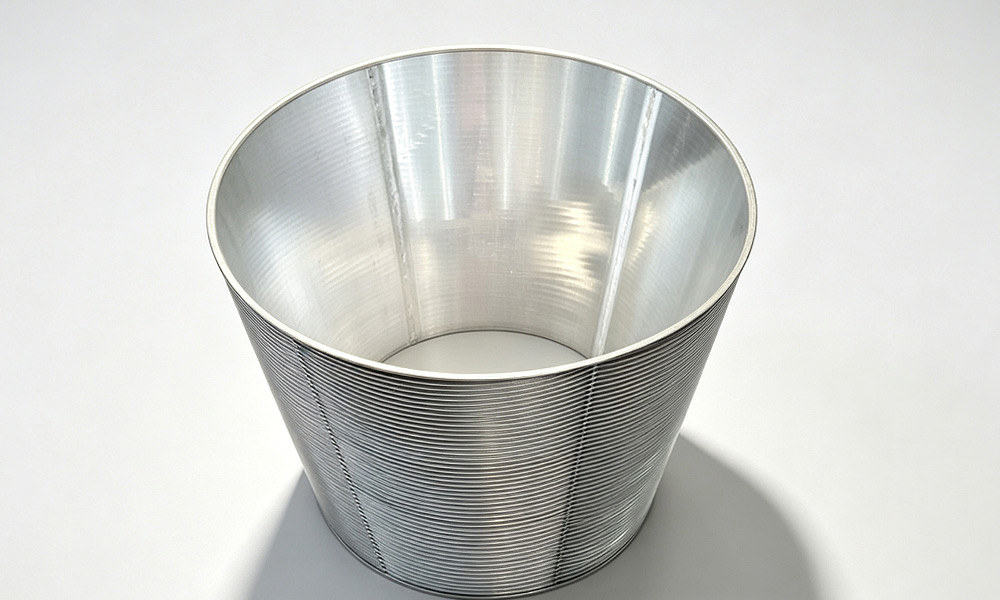
Unlike standard arc screens that rely on external bolted frames to hold their shape, these self-supporting slotted arc screens integrate full load-bearing support ribs directly into the curved wedge wire panel, with every V-shaped wire fully welded to the underlying support structure for maximum rigidity. The tapered V-shaped slot design resolves the material clogging issues associated with curved screen plates featuring circular holes; meanwhile, precision welding ensures that slot tolerances remain within 0.02 mm even under continuous high-flow feed conditions. For materials such as highly corrosive mine tailings or acidic food products, corrosion-resistant materials—specifically 316L or other high-grade stainless steels—are more suitable, as they are less prone to rapid wear.
No-Fuss Installation and Field Adaptability
The biggest on-site win for operations teams is that these self-supporting wedge wire arc screens drop directly into existing arc screen mounting slots with no custom frame fabrication, cutting full installation time from 8+ hours down to 1.5 hours for a standard 1200mm wide unit. Their compact, no-bulk design also lets you slot them into tight retrofitted line spaces where full framed screens could never fit, and many models support 180-degree rotation to flip worn inlet edges to the outlet side, effectively doubling the total service life of the screen panel before you need a full replacement.
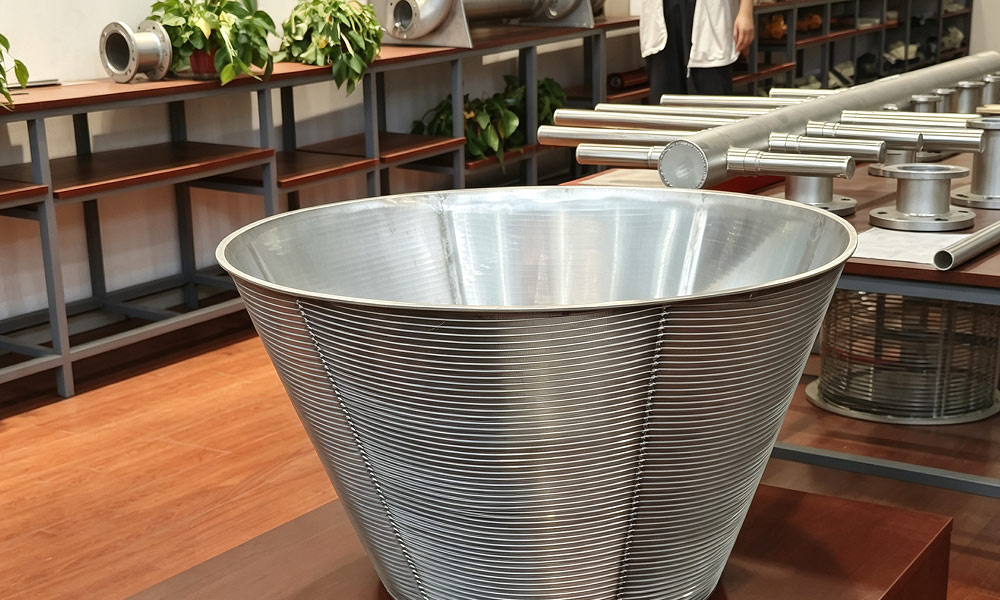
If you’re fed up with frequent screen warping, long installation delays and constant clogging that kills your dewatering throughput, our process team can help you size a custom self-supporting wedge wire arc screen perfectly matched to your exact feed particle size and flow rate. Reach out today for a free, no-obligation site layout check to cut your screen maintenance downtime and boost your separation efficiency right away.