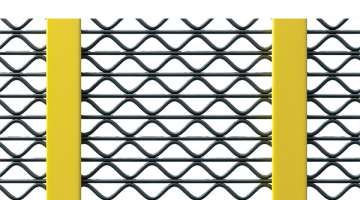
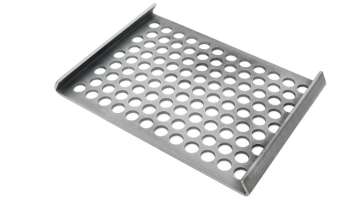
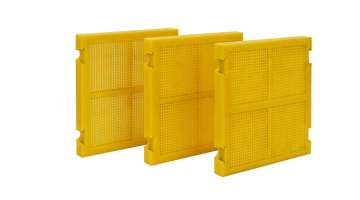
If you’ve ever swapped out a screen only to realize it’s completely mismatched to your flow pattern, you know how fast the wrong choice kills throughput and shortens service life. Flat and cylindrical wedge wire screens are both built from that same durable, non-clogging V-shaped wire, but their shapes make them fit totally different application scenarios. Picking the right one isn’t just a matter of part dimensions — it’s about matching the screen’s geometry to how your material actually moves through the system.
Flat Wedge Wire Screens: For Linear Flow Across a Deck
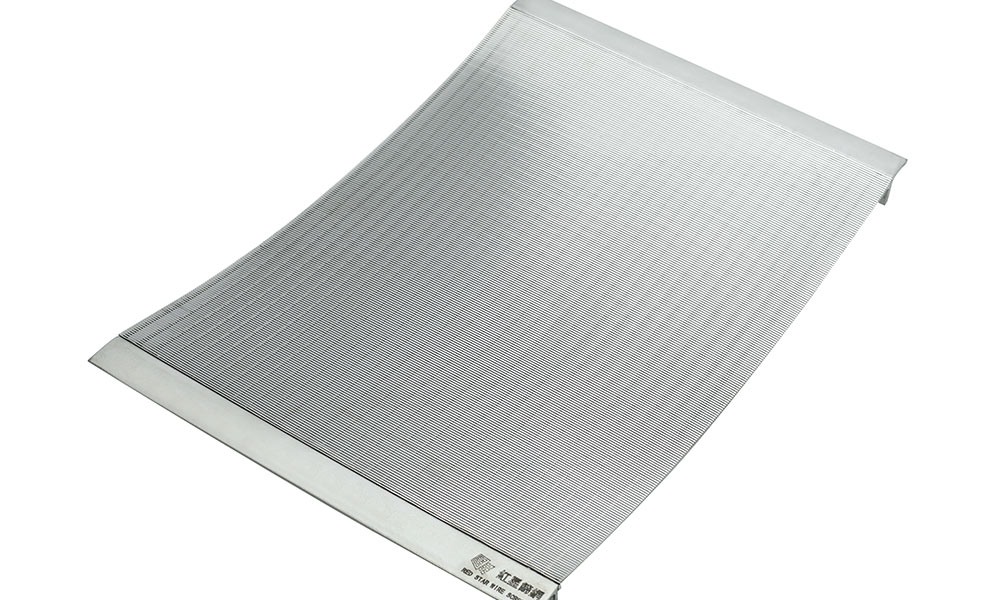
Flat wedge wire screens are the workhorses of linear screening and dewatering circuits. They lay flush on vibrating screen decks, filter presses, or sieve bends, where slurry or material flows in a thin, even layer across their flat surface. The uniform slot orientation lets water drain straight through without pooling, making them perfect for fine coal recovery, aggregate sizing, and dewatering wet sticky ore. They’re easy to install, replace, and clean, and they handle heavy material bed loads far better than curved designs in these open-deck application scenarios.
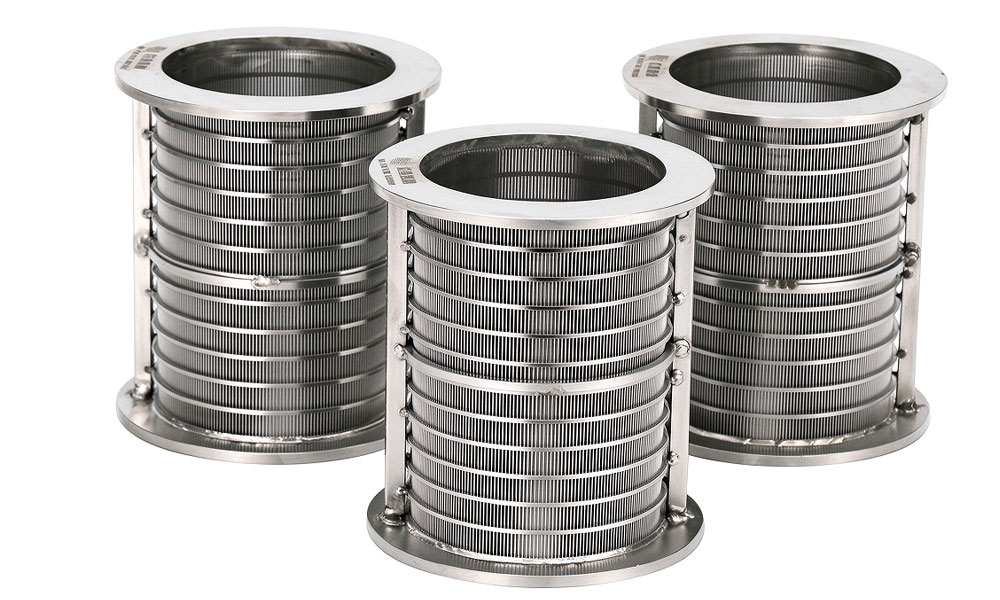
Cylindrical Wedge Wire Screens: For 360° Radial Flow
Cylindrical wedge wire screens are built for systems where flow moves around or through a full 360° circumference. You’ll find them inside centrifuges, hydrocyclones, pressure filters, or water well filters, where liquid or slurry flows radially through the screen’s curved surface from outside in or inside out. Their round shape creates an even, consistent flow path across every inch of the screen, which makes them ideal for centrifugal dewatering, fine particle classification, and self-cleaning systems where a rotating brush or spray can hit the entire surface in one pass.
Key Scenarios Where You Can’t Swap One For the Other
Trying to jam a cylindrical screen onto a flat vibrating deck will leave you with uneven material flow, dead spots, and premature wear. Sliding a flat screen inside a pressure filter housing will create gaps that let unfiltered material slip right past. Flat wedge wire screens win for open, linear deck processes, while cylindrical designs are non-negotiable for enclosed, radial flow systems like centrifuges and well screens. There’s almost no overlap in their highest-performance application scenarios.
At the end of the day, the biggest mistake operations make is treating wedge wire screens as a one-size-fits-all part. By picking flat wedge wire screens for your linear deck screening and dewatering jobs, and cylindrical wedge wire screens for all your radial flow, centrifuge, and filtration work, you’ll get longer screen life, better separation efficiency, and far fewer unexpected leaks or blinding issues that throw your whole circuit off balance.