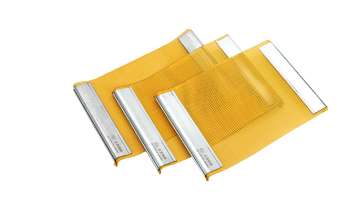
Custom Polyurethane Screen Panel Mold Development Cycle and Mass Production Scheduling
For mineral processing and industrial clients that need non‑standard Polyurethane Screen Panel designs to match unique vibrating screen deck dimensions, special aperture requirements or highly abrasive working conditions, unclear mold development timelines and messy mass production scheduling are the two most common reasons that lead to delayed delivery, missed on‑site maintenance windows and costly unplanned production downtime. Many clients have experienced situations where their custom screen order gets pushed back repeatedly because the supplier did not properly map out every stage of mold development, test sampling and mass production in advance, leaving the entire site waiting for critical replacement parts that they cannot source from standard inventory. A transparent, well‑planned workflow for custom Polyurethane Screen Panel mold development and mass production scheduling eliminates almost all these avoidable delays.
Structured Mold Development and Validation Process
The first core stage of the full workflow for a custom Polyurethane Screen Panel order starts with detailed technical confirmation, where the supplier’s engineering team cross‑checks every dimension, aperture shape, reinforcement layout and mounting detail from the client’s drawings before starting any mold machining work, which usually takes 2 to 3 working days for most standard custom designs. After the initial mold is completed, the team will cast a full test sample of the Polyurethane Screen Panel and carry out full dimensional inspection, hardness testing and aperture verification to make sure every parameter fully matches the client’s requirements, before the mold is approved for formal mass production, and this validation step usually takes another 3 to 4 working days to complete.
Drawing Lock and Mold Feasibility
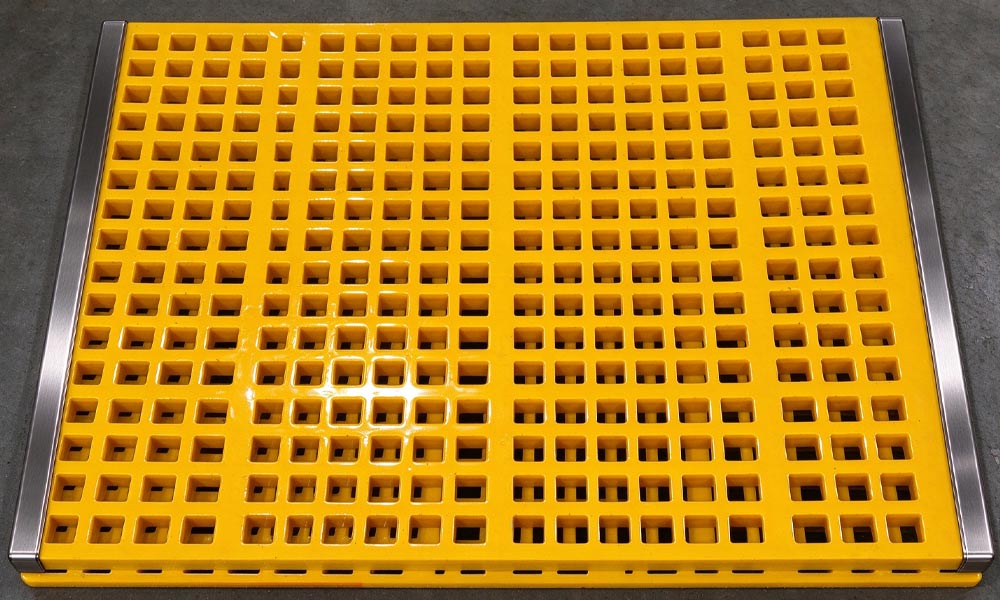
Everything starts with a drawing that tells the truth. A useful inquiry for PU Screens names panel length and width, thickness profile, aperture shape and size, slot taper, crown height, Shore A target, polyether or polyester base, reinforcement type, fastening system—pin-and-sleeve, rail, bolt, hook, or snap-in—support-bar spacing, deck angle, stroke, feed moisture, and the exact failure of the old panel. The factory then does feasibility, not romance: can the aperture be woven into the mold steel, will the slot bridge survive demold, is the bolt boss too close to the edge, does the compound need UV or hydrolysis package, and does the deck frame actually accept this geometry. Technical confirmation usually takes a couple of working days; mold machining for a new custom panel commonly runs into the 15–20 day range when steel tooling is configured from scratch, while suppliers with a large existing mold library can sometimes adapt inserts instead of cutting a full new tool. The buyer’s job at this stage is to stop changing the aperture every email—every revision resets the tool path and turns a 3-week mold job into a 6-week argument.
Master Pattern, Mold Build, and First-Article Cast
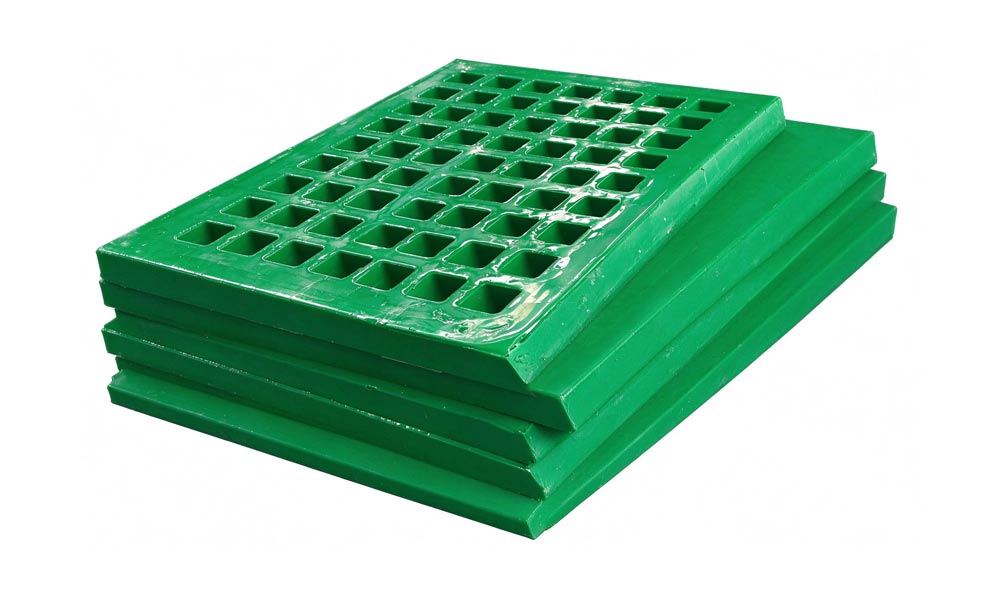
Once the drawing is frozen, the shop builds the tool. Cast mining PU Screens are not injection toys: the mold is usually aluminum for shorter runs or hardened steel for volume production, CNC-machined to the aperture and fastening geometry, polished or textured where demold and wear demand it, then fitted to the casting station. A master pattern or direct CNC mold comes first; the trial pour follows. The first-article PU Screens panel is then measured like evidence—Shore A at several points, aperture width with gauge or optical scanner, slot length, crown thickness, bolt-hole position, flatness, edge seal land, and open-area percentage. This validation step often takes another 3–4 working days after the mold is ready, because a panel that looks right and measures wrong is still a reject. A mature supplier photographs the first article next to the worn panel from site, sends the inspection sheet, and waits for sign-off before touching bulk material. That pause is not slowness; it is the difference between “custom” and “expensive mistake shipped in a container.”
Cure, Post-Cure, and Why the Clock Is Not the Pour Time
Buyers underestimate curing because pouring looks fast. Gel and demold on a cast PU Screens panel can be minutes per shot, but the molecular network is not finished when the part leaves the steel. Oven post-cure at 60–80°C for several hours—sometimes a stepped profile with pre-cure and higher post-cure for fine or thin-rib panels—is what gives the panel final Shore hardness, tear strength, and compression-set behavior. A factory that ships panels straight off the mold is shipping under-cured elastomer that will harden oddly, lose rebound, and tear at the support bar under vibration. Mass production scheduling has to include this thermal step, not hide it: raw-material prep, mold preheat, metering and degassing, pour, gel, demold, flash trim, post-cure, cool-down, final QA, and pack-out. A single low-pressure metering unit on an 3–5 minute mold cycle can produce on the order of 90–150 panels per day per station, so volume scales by adding mold stations and rotating carts, not by rushing the oven. When a salesperson promises “same-week bulk custom panels,” ask which step they skipped.
Mass Production Scheduling Around the Standard Queue
The trap in mass production is that your custom order is urgent and everyone else’s standard order is also urgent. Good schedulers isolate custom PU Screens from the standard 305×305 mm and 610×610 mm queue. Standard panels may ship in 3–7 working days; custom cast panels often need 15–30 working days including tooling and validation, and complex fine-aperture or dual-hardness decks push toward 30–45 days. A realistic schedule reads like this: deposit and drawing lock → mold machining → first-article cast and approval → raw-material batching → production pours in reserved shifts → post-cure windows → QA by lot → palletize and book container. The plant should ask for a Gantt, not a sentence: which week is mold, which week is samples, which week is bulk, which inspections happen at 10%/50%/90% completion, and what happens if the polyol shipment is late. PU Screens buyers who accept “around three weeks” get surprises; buyers who accept “mold done day 18, FA approved day 22, bulk days 23–30, sea freight after inspection” get panels during the shutdown instead of apologies after it.
Optimized Mass Production Scheduling Arrangement
Once the mold passes final sample approval, the mass production stage for custom Polyurethane Screen Panel orders is structured to prioritize consistent quality and reliable lead times, with production batches arranged to avoid conflicts with existing standard product orders that alread have confirmed delivery dates. Most well‑organized suppliers can finish the full mass production process for a standard volume custom orer in 7 to 10 working days, including raw material preparation, casting, post‑curing, final quality inspection and packaging, and they will send regular progress updates to the client throughout the whole process to make sure no unexpected issues cause unplanned delays.
A clearly communicated, strictly followed mold development cycle and mass production scheduling system for custom Polyurethane Screen Panel orders eliminates almost all the timeline uncertainty that clients usually face when sourcing non‑standard screening parts, making it far easier for sites to plan their maintenance shutdowns without worrying about missing critical part delivery. If you have a custom screen requirement and need a fully customized, timeline‑guaranteed production schedule tailored to your exact delivery deadline, our engineering team can work out a detailed actionable plan that makes sure your custom parts arrive exactly when you need them.