How to Select Suitable Steel Gratings for Drainage Systems in Coal Preparation Plants and Tailings Ponds
Most coal preparation plant and tailings pond operators have faced unexpected breakdowns: cheap steel gratings bend under heavy truck loads, clog quickly with coal slime, or rust through in less than two years, leading to blocked drainage, flooded walkways, and costly unplanned shutdowns. Choosing the right load-bearing steel gratings for drainage systems in coal preparation plants and tailings ponds is not a trivial purchase, but a critical decision that prevents long-term operational and safety headaches.
Match Load Rating to Real Site Traffic
The first step is to define your actual load requirements instead of picking a generic "heavy duty" label. For tailings pond access roads where 50-ton slurry trucks pass daily, you need steel gratings with a minimum 75 kN load rating and 6mm thick bearing bars. For coal preparation plant floor drainage areas that only see foot traffic and light forklifts, a 25 kN rating steel grating works perfectly. Australian coal mine site data shows 60% of early grating failures happen because teams select load ratings far below real site vehicle weights.
Start With What the Water Is Carrying, Not What the Trench Dimensions Are
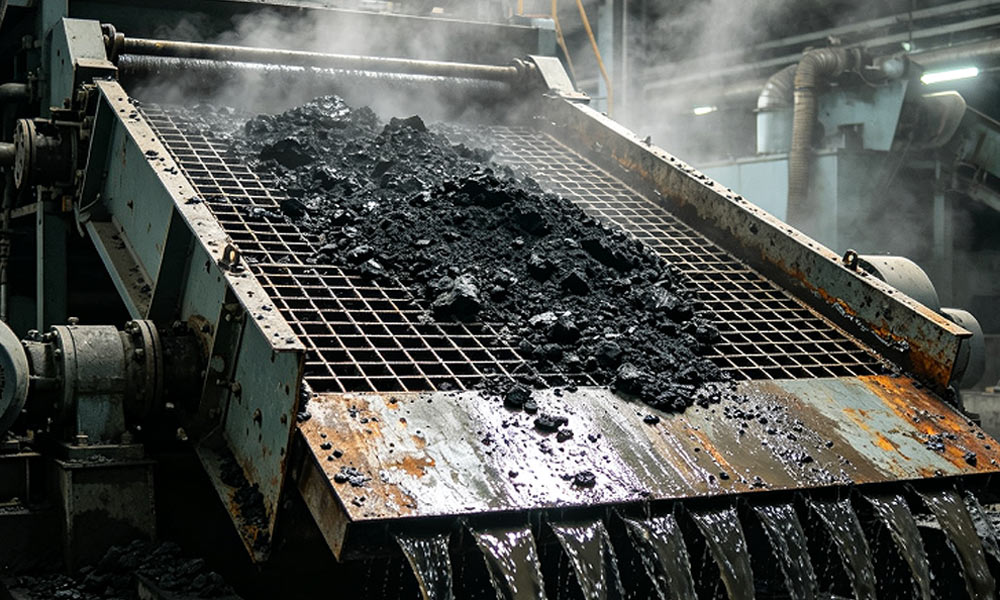
The first specification error is drawing the trench before understanding the slurry, because a drainage channel in a prep plant is rarely moving clean rain. Fine coal and magnetite fines are heavy and settle fast, clay slimes form a paste that bridges narrow openings, and flotation reagents leave a film that encourages sticking and biological growth in warmer climates. A steel grating with apertures sized only for stormwater will blind within a shift under that load, and once blinded it holds water, which turns the trench into a corrosion bath rather than a drain. The practical move is to size the opening for the worst realistic solids loading, not the average: if the trench sees coarse spillage and hose water, larger rectangular openings with a secondary catch screen downstream may outperform fine mesh that looks tidier on the drawing; if the flow is mostly fine slurry, the grating needs enough open area to pass liquid while letting settled solids be flushed or raked, rather than trapping them. Tailings ponds add the chemical dimension — sulphate and chloride loads, pH swings from acid drainage to lime-dosed effluent — and those conditions, not the particle size alone, should drive both the steel grade and the coating system.
Load Class, Bar Spacing and the Heel-Catch Problem Nobody Mentions
Drainage steel gratings live at the intersection of two conflicting requirements: they must let water through, and people must be able to walk over them safely. A 30 mm bar spacing that is perfectly acceptable on a structural walkway can be a problem on a drainage trench beside a screen, because a heel, a tool handle, or a small wrench will drop straight through, and on a narrow trench cap that feels unsafe even when it technically meets the load code. Many plants solve this with a 19 mm or finer bearing-bar spacing on pedestrian trenches, or by using a serrated bar profile plus a partial mesh overlay where small components are handled nearby. Load class is the other half: a trench grating in a prep plant haulage area may see fork trucks and loaded buggies, while a tailings pump bay sees occasional maintenance loads rather than continuous traffic, and specifying the same grating for both wastes money in one place and risks failure in the other. The trick is to separate pedestrian trench caps, vehicle-crossing trench covers, and equipment-bay pits, then specify each separately instead of buying one "drain cover" for the whole site.
Coating and Base Steel: Why Paint Dies and Zinc Survives
Corrosion is where drainage gratings actually retire, and drainage is the worst case because the coating is continuously wetted, abraded by passing solids, and scratched by boots and tools. Painted steel looks good in the store and fails first in service, because every scratch at a trench edge exposes bare steel and the trench never dries long enough for luck to help. Hot-dip galvanizing is the workhorse here: the zinc layers are metallurgically bonded, they sacrifice themselves to protect cut edges and welds, and they withstand the wet-drip environment far better than field-painted joints. For more aggressive tailings duty — high chloride, low pH, or warm effluent — galvanized carbon steel may still underperform over a long horizon, and the conversation shifts to 316L stainless, duplex stainless, or a stainless grating with a galvanized support frame to control cost.
Anti-Clogging Aperture Design for Slurry Conditions
Coal slime and fine tailings particles easily block standard square mesh gratings, cutting drainage capacity by 70% in months. The best choice is 30mm wide, 5mm gap serrated bar gratings with a smooth, sloped top surface. This design lets fine particles wash through automatically instead of getting stuck, and the serrated texture also prevents slipping on wet, slime-covered surfaces. North American coal preparation plant tests show this style of load-bearing steel gratings for drainage systems stays 90% clear after 12 months of continuous use.
Corrosion Resistance for Long-Term Outdoor Service
Tailings ponds and coal preparation plants have constant exposure to acidic mine water, salt, and humid outdoor air. Skip cheap plain carbon steel without treatment — hot-dip galvanized coating with an 85μm minimum thickness adds 10 years of rust protection. For sites with highly acidic tailings water, adding a thin polyurethane surface coating can extend 40% service life, avoiding frequent replacement work over water.
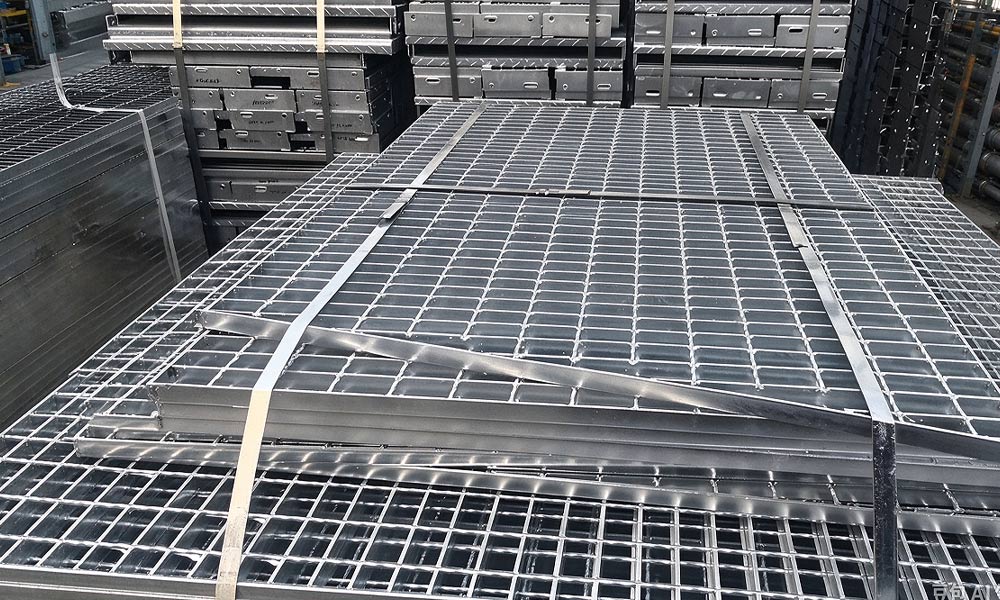
Picking suitable load-bearing steel gratings for drainage systems in coal preparation plants and tailings ponds does not need overspending on unnecessary premium materials. Matching load rating, anti-clog aperture design, and corrosion treatment to your exact site conditions will cut long-term maintenance costs by 65% and eliminate hidden drainage safety risks for years.