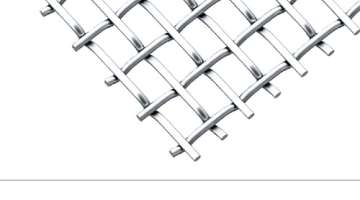
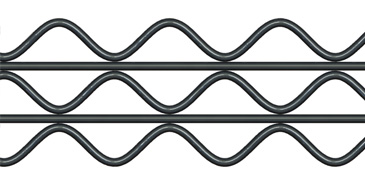
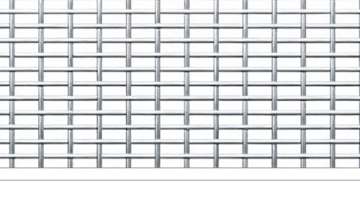
Most people think strength of wedge wire screen comes from its profile rods. That's only half the story. The real durability and the reason some screens snap under load while others run for years is locked in the winding and welding process. This is where the structure of a wedge wire screen transitions from a collection of parts into a single, load-bearing unit.
 The Critical Role of the Winding Wire
Think of the winding wire as the skeleton's backbone. This wire, wrapped perpendicularly around the profile rods under high tension, is what pulls the entire assembly tight before welding. The winding tension, its diameter, and the spacing between wraps are critical. Too little tension, and the wedge wire screen is loose, prone to deformation under load. Too much, and you induce pre-stress that can lead to premature failure. The ideal is a uniform, high-tension wind that locks every profile rod in place without overstressing the wire itself. It's a balancing act that defines the initial structural integrity.
Where the Magic Happens: The Welding Process
This is the moment of truth. Modern wedge wire screen manufacturing typically uses resistance welding. A powerful electrical current is passed through the contact points between the winding wire and each profile rod, creating a localized melt that forms a robust, metallic bond. The key is consistency and penetration. Each weld nugget must be deep enough to fuse the materials but controlled enough to avoid burning through the thinner winding wire. Automated, CNC-controlled welders are essential here. A perfect weld creates a continuous, conductive path, turning the screen into a unified grid capable of distributing impact forces across its entire surface.
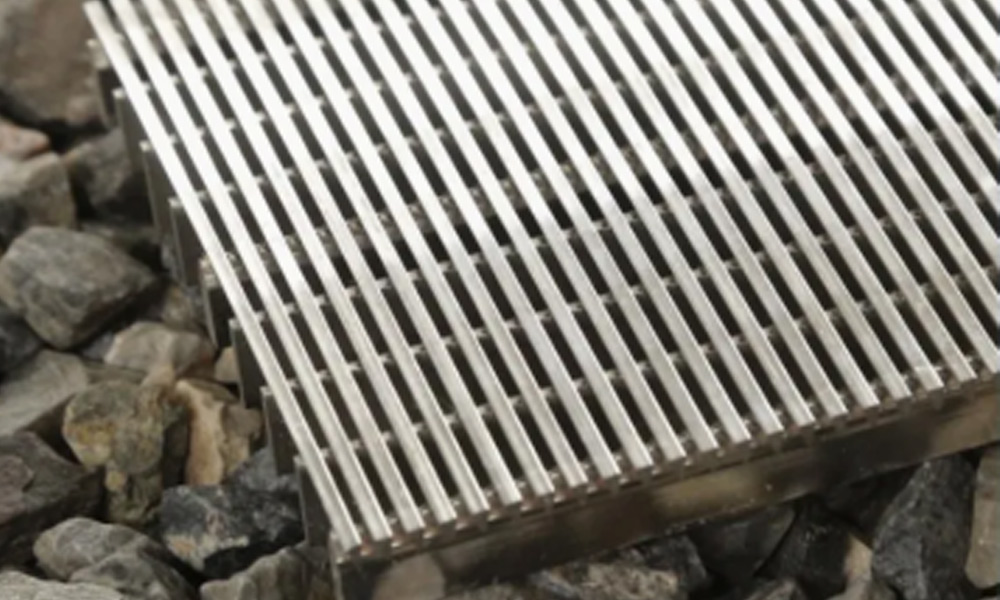
How Winding and Welding Dictate Structural Strength
The combined effect of winding and welding determines the structural strength of the slotted wire screen. A tightly wound and uniformly welded screen behaves like a monolithic plate under tension and shear. It resists the "doming" effect common in high-pressure applications like centrifuge baskets or sieve bends. The welds act as fixed nodes, preventing individual profile rods from working loose or "walking" under cyclic loading. This is why two screens with identical slot sizes can have wildly different service lives, the difference is in the quality of the unseen joints.
When selecting a wedge wire screen, move beyond the slot width and profile dimensions. Ask the manufacturer about their winding tension control and welding technology. Request a sample and inspect the weld points under magnification. Consistent, clean, and fully penetrated welds are the hallmark of a screen built for structural strength and longevity. This behind-the-scenes process is what you're truly paying for, and it's the best predictor of performance in demanding applications like mining dewatering or high-flow filtration.