Wedge Wire Screen Selection Scheme for Tailings Dry-Stacking Dewatering
Implementing a tailings dry-stacking system hinges on efficient solid-liquid separation, where the wedge wire screen is a critical component. Tailings slurry—often fine, abrasive, and variable—poses unique challenges like blinding and wear. A poorly selected screen undermines the entire operation. This selection scheme provides a framework to choose a wedge-wire screen that reliably achieves target cake dryness and continuous operation for dry-stacking.
Analyzing Feed Slurry Characteristics
Selection of slotted wire screens starts with a detailed slurry analysis. Key parameters are the particle size distribution , solid density, and slurry rheology. High fines content increases blinding risk; abrasive particles accelerate wear. The target underflow density or cake solids percentage is the primary performance goal, dictating the required separation efficiency. This analysis is foundational for all subsequent choices.
Feed Slurry First: Fines Load and the Cake the Plant Actually Wants
Nobody should pick a Wedge Wire Screen before reading the slurry like a weather report, because tailings are not one material—they are a mood that changes with ore zone, grind size, reagent suite, and whether the cyclone overflow decided to arrive slimy that afternoon. Fine tailings with a fat minus-20-micron fraction blind faster, carry water tighter, and demand smaller slots that strangle open area; coarser crushed-ore or flotation tailings let the deck breathe and still hit stackable moisture. The selection scheme starts with the D50/D80, the clay/slime fraction, solids density, slurry pH, and the target underflow solids percentage, because a 0.25 mm slot that looks “safe” on a datasheet can turn into a clogged plate in a high-fines gold or lithium tailings stream, while a 0.75–1.0 mm slot may be perfect for sandy tailings but hopeless where the permit demands <18% moisture cake.Vibrating wedge-wire decks typically run finer slots for sticky/high-fines feeds, static sieve bends sit around 0.25–1.0 mm, and vibrating dewatering decks around 0.3–2.0 mm; the number is meaningless without the slurry attached to it.A good scheme writes the feed envelope first, then lets the slot fall out of the process rather than the catalog.
Slot, Open Area and Support Pitch
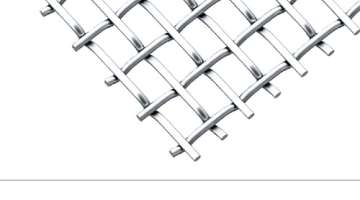
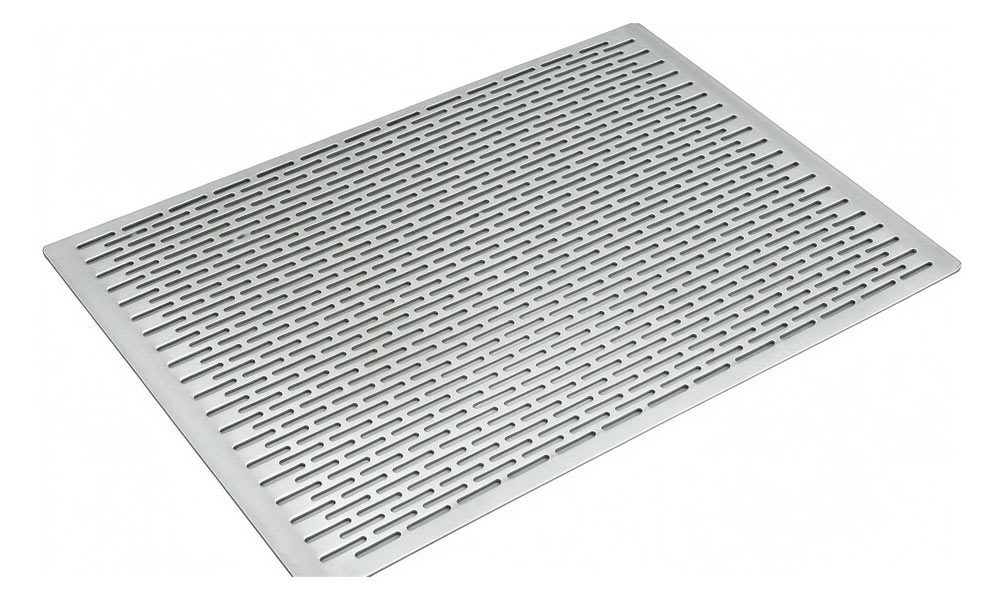
The seductive mistake in tailings dewatering is chasing the smallest slot for “cleaner water” until the open area collapses and the deck floods solids over the lip. In dry-stack duty that translates directly into cake thickness, retention time, and whether the stack slopes the geotech engineer promised. But wider slots invite coarser bypass, so the scheme balances cut point against hydraulic loading: if feed rises, either the slot widens, the deck area grows, or the cake gets wet—those are the only three exits. Support-rod pitch is the forgotten variable; too wide and the panel drums under linear vibration, fatigue cracks start at the weld toe, and the slot drifts even though the wire never wore out. Too tight and you rob open area to buy beam strength you did not need. A tailings scheme therefore specifies profile-wire depth, support-rod section, pitch, and frame stiffness together, because the Wedge Wire Screen that survives 4,000 hours in abrasive copper tailings is rarely the one with the prettiest slot tolerance—it is the one whose load path was respected.
Why Corrosion and Abrasion Share the Same Invoice
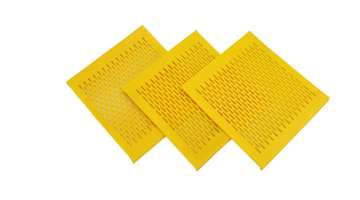
Tailings water is rarely polite: it can be alkaline from flotation reagents, acidic from sulfide oxidation, salty in coastal or brine-assisted circuits, and loaded with sharp silica or ground host rock that sands the wire crown like a file. A Wedge Wire Screen in that duty is fighting two wars at once, so material selection becomes a cost-per-tonne decision rather than a grade label. 304L is fine for benign neutral water, 316L earns its money where chlorides or process chemicals appear, and duplex 2205 / super duplex 2507 enter when seawater, aggressive brine, or long asset life justifies the alloy premium.For abrasive tailings, the modern scheme often goes hybrid: stainless wedge wires for slot accuracy and corrosion resistance, polyurethane encapsulation or frame for edge protection, impact cushioning, and quieter installation, sometimes with carbide or hardfaced crown strips on the feed-landing zone.Polywedge panels do not replace stainless—they protect the parts stainless is bad at, namely edges, clamps, and impact lips, while leaving the working slot precise. The scheme also decides cleaning philosophy up front: spray bars along the deck, backwash pulses, or a sieve-bend pre-stage that takes the slime before it reaches the vibrating wedge deck.
Choosing the Screen Type: Static Sieve Bend and Vibrating Deck
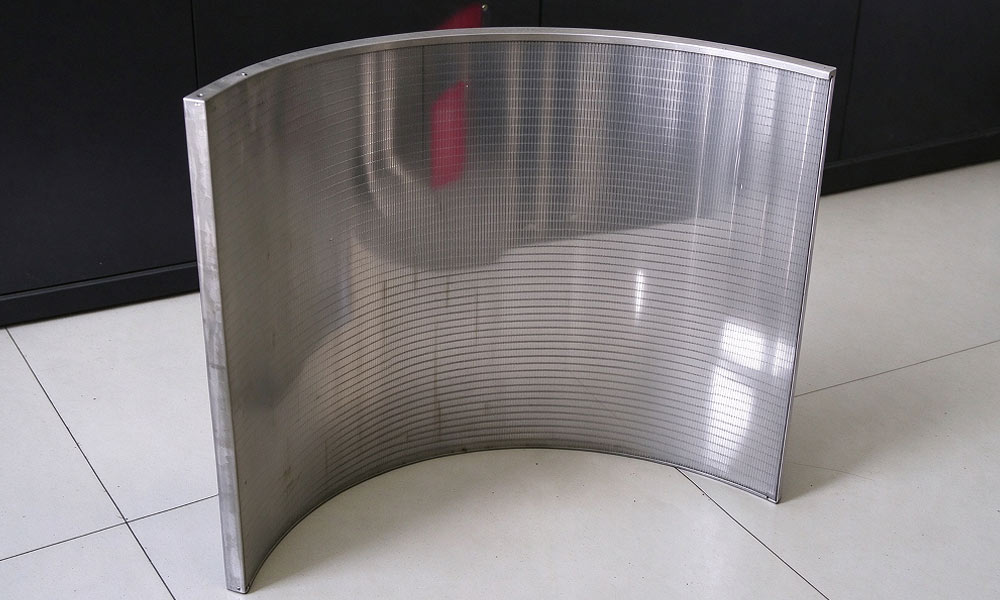
For the dry stacking of tailings, the primary choices for wedge-wire screens are static curved slot screens and vibrating wedge-wire screens. Static curved screens feature a simple structure and low energy consumption; they rely on gravity drainage and are suitable for the preliminary dewatering of coarse tailings. Vibrating wedge-wire screens offer superior performance for fine tailings or highly viscous materials, as the vibration energy releases more water and prevents screen blinding, thereby enhancing screening quality and efficiency.
Specifying Screen Surface and Aperture
The panel must be engineered for the duty. Aperture size is set by the target cut-point. Smaller apertures give finer separation but are more prone to blinding. The wedge-wire profile should have a smooth, narrowing slot to minimize particle hang-up. For abrasive feeds, specify abrasion-resistant materials like 316 stainless steel or specialized alloys. The surface finish should promote clean cake discharge.
Determining Key Operating Parameters
Performance is tuned through operational settings. For vibrating screens, adjust frequency and amplitude to balance dewatering efficiency and wear. The deck angle controls retention time; a steeper angle increases throughput but may reduce cake dryness. Even feed distribution across the width of wedge wire screens is critical to prevent localized overloading. These parameters often require fine-tuning during commissioning.
Integrating with the Overall System
The screen must fit the broader system. Consider upstream feed stability and downstream cake handling. Adequate feed box design and provision for a spray wash system to manage blinding are important. The screen's capacity must match plant throughput, with appropriate redundancy for maintenance.
Selecting a wedge wire screen for tailings dry-stacking is a performance-driven engineering process. It begins with slurry analysis, matches screen type and surface to material behavior, tunes operations for target dryness, and ensures reliable integration into the dewatering circuit.