How to Select the Appropriate Screen Based on Ore Hardness
Choosing the right screen for mineral processing requires matching the equipment to the specific challenges of your ore's hardness. Soft, clay-rich ores cause blinding and sticking, while hard, abrasive rocks lead to rapid wear. A mismatch results in poor efficiency and high maintenance costs. This guide provides a practical framework for selecting screens that perform reliably across the entire hardness spectrum, from sticky fines to abrasive rock.
Understanding the Hardness Spectrum and Its Challenges
The first step is accurately characterizing your feed material. Soft, clayey ores are defined by high moisture and fines content, leading to material adhesion and aperture blinding. Hard, abrasive ores like granite or iron ore present a challenge of high-impact wear and cutting abrasion, which quickly degrades screen surfaces. Mid-range materials may combine moderate abrasion with some stickiness. Identifying the dominant behavior—sticking or abrasion—is crucial for the next selection steps.
Soft, Sticky, and Cohesive Feeds
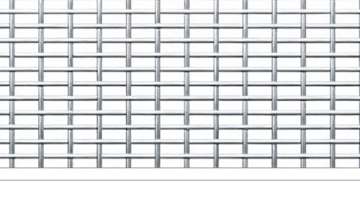
When the ore leans toward soft clay, weathered shale, damp coal fines, or gold/lithium material loaded with slime, hardness is almost irrelevant and surface behavior is everything, because once moisture climbs past the few-percent range the fines stop acting like particles and start acting like paste. A standard Metal Woven Screen or plain square mesh will size this material for about twenty minutes and then silently blind, with near-size granules straddling the wires and a capillary film of moisture gluing the aperture shut faster than any amplitude increase can fix. The selection logic flips: open area stops being king, and anti-blinding becomes the product. Polyurethane panels with tapered self-relieving slots, harp-style self-cleaning wire, flexible PU fingers, or rubber panels on the impact zone usually win here, because the deck surface moves locally, the sticky granule gets nudged instead of nested, and the circuit keeps stratifying instead of baking a clay cake. Plants that insist on wiredecking sticky ore “because wire is cheaper” usually pay for it in scraper labor, off-spec product, and a screen room everybody avoids—so the honest Screen Selection rule for soft and sticky feed is simple: buy the media that stays open, not the media with the highest open area on a dry bench test.
Limestone, Gravel, and the Throughput-versus-Wear Bargain
The comfortable middle of the hardness scale—limestone, dolomite, dry sand, washed gravel, certain crushed aggregates—is where most plants fool themselves, because the ore is not viciously abrasive and not disgustingly sticky, so buyers reach for the familiar woven wire and never question the lifecycle math. Woven wire is genuinely good here: high open area, accurate cut point, low capital cost, and easy changeout, which is why dry limestone scalping and coarse aggregate sizing still run happily on crimped mesh for years. The moment tonnage rises, though, the wire starts thinning, the aperture drifts, and the “cheap” cloth becomes a quarterly consumable that eats labor and hurts grade consistency. A smarter Screen Selection approach zones the deck: woven wire where throughput and precise cut size dominate, polyurethane where abrasion and downtime matter more than the last percent of open area, and slotted rather than square apertures when near-size content gets annoying. Limestone at Mohs 3–4 can run wire all day; limestone at 2,000 t/h with steel-cord conveyor shock and a rainy season blended in may quietly prefer modular PU with reinforced feed-end modules.
Hard Rock and Abrasive Ores: Why One Panel Never Wins
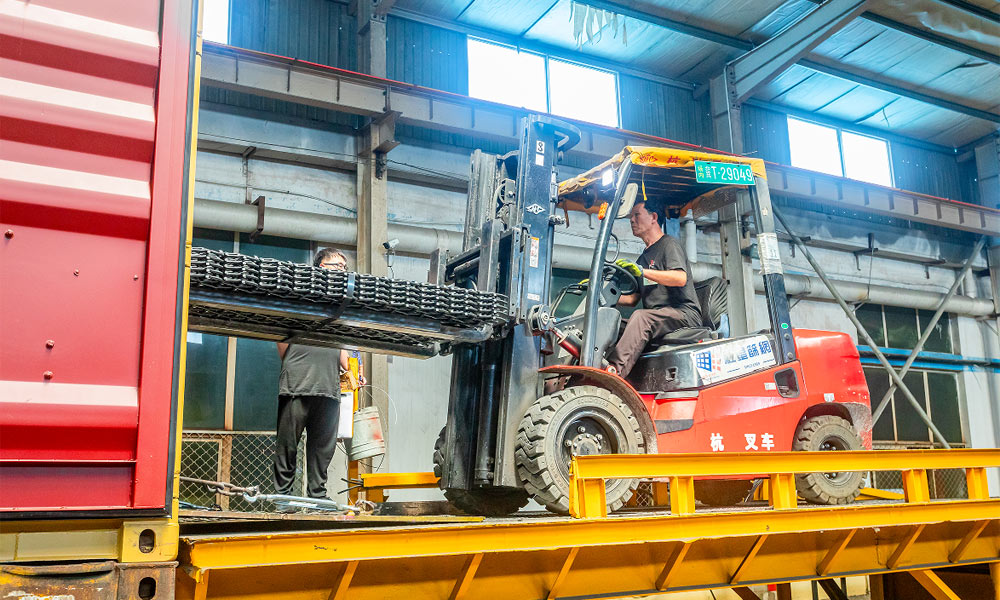
Hard rock—granite, basalt, quartz, iron ore, abrasive copper/gold host rock—does not argue with the screen, it erodes it, and the selection error here is usually emotional: either buy manganese wire because “mining screens are steel,” or buy super-thick PU because “polymer lasts forever” and then wonder why the impact end looks like a chew toy after a loader dumped slab rock from too high. Real Screen Selection for hard abrasive ore is zoned and slightly cowardly in the best way: punch plate or reinforced rubber at the feed landing zone to absorb impact and protect what sits behind it, high-tensile manganese or high-carbon crimped wire where open area and cut accuracy still matter on coarser cuts, and polyurethane or polywedge systems on abrasive classification/dewatering sections where the ore is smaller but still sharp enough to file down metal. Rubber earns its place not because it sizes precisely but because it absorbs kinetic energy and saves the frame, the bearings, and the ears of anyone standing near the deck; polyurethane earns its place because in abrasive duty it can outlive steel wire several times over despite giving up some open area. Wedge wire enters when the duty becomes dewatering, desliming, or tailings recovery, because V-wire slots drain better and hold aperture longer than a woven cloth that drifts the moment vibration fatigues the crimp.
Matching Screen Type and Technology to the Ore
The core screening technology must address the primary challenge. For soft, clayey ores that blind easily, high-frequency screens are highly effective. Their rapid, low-amplitude vibration breaks the surface tension of water and fines, preventing them from plugging apertures. Banana or multi-slope screens with progressively steeper decks also help by continuously conveying sticky material. For hard, abrasive ores, durability is paramount. Robust linear motion vibrating screens with high G-forces are the standard workhorses for sizing dense, hard rock, as their design handles significant stress and promotes good stratification.
Selecting the Optimal Screen Surface Media
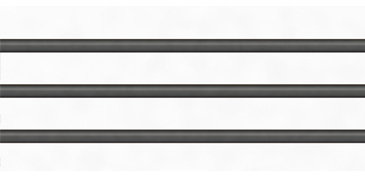
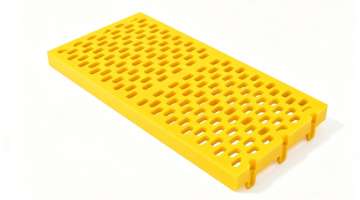
The screen surface is the critical wear component. For sticky, soft materials, choose surfaces that minimize adhesion. Polyurethane panels with a smooth, hydrophobic surface or rubber screen cloths resist material buildup. Tensioned systems that flex, like certain polyurethane designs or piano wire screens, can provide a "self-cleaning" action. For hard, abrasive rock, prioritize wear resistance above all. High-tensile, hardened steel wire mesh offers proven durability. For maximum service life, polyurethane panels infused with ceramic or other abrasion-resistant fillers provide an excellent balance of flexibility and extreme wear resistance, though at a higher initial investment.
Fine-Tuning Operational Parameters
Operational settings should be optimized for the material. For soft ores, use a higher vibration frequency with lower amplitude. This promotes material movement and stratification without compacting the bed, helping to prevent blinding. Ensuring an adequate deck slope is also key to assisting flow. For hard ores, you can often utilize higher amplitude and G-force to improve throughput and sizing, but this accelerates wear on both the surface and the machine structure, requiring a balance between performance and maintenance intervals.
Successful screen selection views ore hardness as a set of material behaviors rather than just a number. The goal is to choose a screening solution—encompassing machine type, surface media, and operating parameters—that is specifically engineered to manage the adhesion, abrasiveness, and flow characteristics of your feed. For complex ore blends, a multi-deck screen with different surfaces may be the most effective solution, ensuring efficient, reliable operation from feed to discharge.