Slot Width Tolerance Control and Precision Screening Requirements for Wedge Wire Screens
When your screening process demands absolute consistency — think high-value minerals, fine chemicals, or critical size fractions — the advertised slot width on a wedge wire screen isn't the whole story. The slot width tolerance control during manufacturing is what separates a precise tool from a source of constant product variation. Tight tolerances are non-negotiable for meeting precision screening requirements, where even a 0.1mm deviation can shift your entire product curve.
Why Slot Width Tolerance Isn't Just a Spec Sheet Number
Slot width tolerance control refers to the allowable variation from the nominal slot size across the entire wedge wire screen. On a standard panel, this might be 0.05mm, but for precision screening requirements, that's often too loose. Inconsistent slots lead to "blinding" of narrower openings while wider ones pass oversize material. This creates a bimodal distribution in your product, forcing downstream adjustments and increasing waste. The root cause is often in the welding and tensioning process, where heat distortion or uneven pull can warp the profile wires.
Why slot width is the whole product
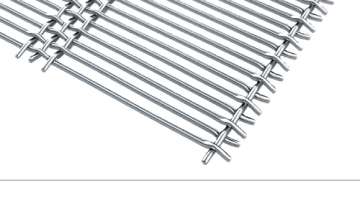
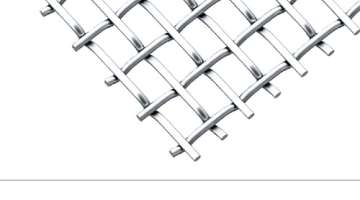
In a conventional woven wire screen, aperture accuracy is governed by wire diameter and crimp pitch, and a little drift can be masked by the randomness of the weave; in wedge wire, the slot is a manufactured gap, not a hole formed by crossing wires, so the tolerance is the product. If the profile wire is wound or resistance-welded onto the support rods with inconsistent pitch, the slot opens and closes along the panel like a badly tuned guitar string, and the plant chases phantom problems—bad feed, wrong vibration, poor polymer dose—when the real culprit is that slot 47 is 0.75 mm and slot 12 is 0.48 mm. Precision duties magnify this: in wastewater screens a few tenths of a millimeter decides whether hair and fiber pass, in sugar juice screening it changes mud clarity, in frac-sand or silica classification it rewrites the sieve curve, and in gold/CIP circuits it determines whether valuable carbon or fine gold reports to the wrong stream. A wedge-wire panel that looks immaculate on the outside can still wreck a P&L if the slot-width standard is “about right,” because precision screening has no mercy for “about.”
How tolerance is actually controlled
Real slot-width control starts long before welding, with calibrated wire guides, pitch gauges, laser or vision measurement during winding, and a welding current profile that does not shrink or bulge the profile wire as it fuses to the support rod. Unlike a woven wire screen, where tension and crimp hide minor inconsistencies, wedge wire exposes every pitch error as a visible, measurable slot change, so reputable shops check slots with feeler gauges, optical comparators, CMM probing, or automated slot-scanning rigs, and they issue a slot map rather than a vague “±0.05 mm” footnote. Thermal effects matter too: a panel welded hot and cooled unevenly can relax into a bowed deck where the slots are perfect locally but wrong globally, so precision orders often specify stress relief, controlled cooling, and flatness tolerance alongside slot tolerance. Surface finish is the quiet accomplice—rough fusion beads or spatter inside the slot act like miniature ledges where sticky solids lodge, so electropolishing or passivation is not cosmetics in food, pharma, or high-purity-water duty; it is part of keeping the effective slot where the drawing said it would be. The buyer who only reads “slot 0.50 mm” on the quote is missing the actual specification: pitch consistency across width, slot variation from leading edge to discharge, weld penetration without profile deformation, flatness after cooling, and a documented inspection method that proves the panel in the crate matches the panel on the deck.
Matching tolerance to the duty, not the catalog
Precision is expensive, so the smart plant does not demand micron-level slots everywhere—it maps the process and pays for tightness only where the money lives. A coarse tailings dewatering wedge screen can tolerate a broader slot band than a woven wire screen replacement doing 200-micron classification of ceramic-grade silica, because in the first case the goal is drain fast and survive abrasion, while in the second case a 30-micron drift changes the customer’s whole product grade. Food and beverage loops often need polished wedge surfaces and validated slot maps for hygiene and recall defense; mining leach screens need hardness and weld integrity more than laboratory-grade slots; municipal headworks screens care about capture of solids at a declared opening and about not shredding rags, which is a different precision than pharmaceutical filtration.
How Precision Screening Requirements Dictate Tolerance
Precision screening requirements for applications like silica sand for glass or high-purity iron ore concentrate typically demand tolerances of 0.025mm or tighter. This level of slot width tolerance control ensures that the 95% passing point on your product size distribution is predictable and repeatable. It allows you to run closer to your target cut point without fear of contamination, maximizing yield and quality.
Achieving and Maintaining Tight Tolerances
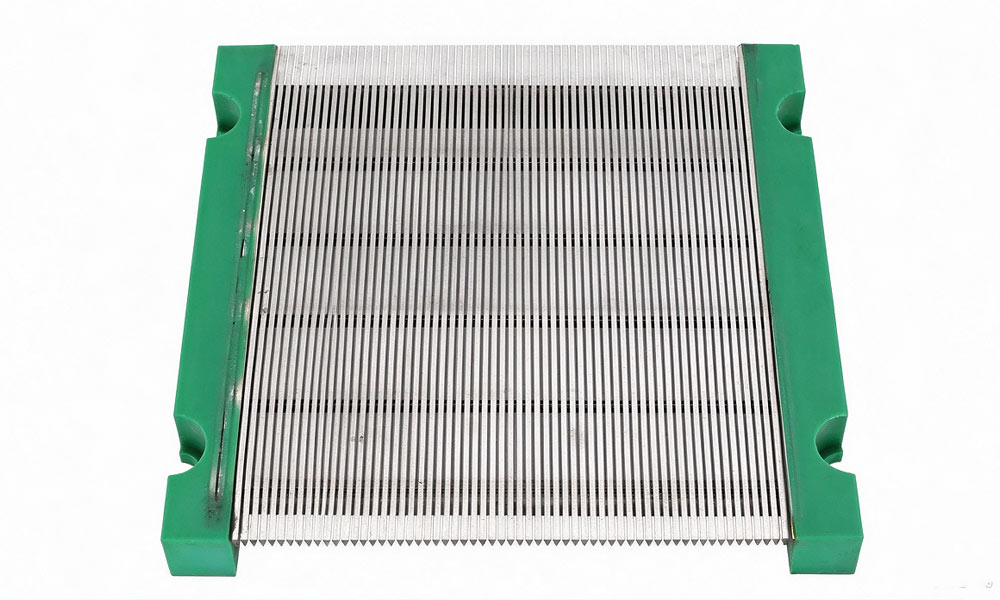
True slot width tolerance control of wedge wire screen panel starts with precision-ground profile wires and automated, computer-controlled welding rigs that apply consistent heat and tension. Post-weld stress relieving and laser verification of every slot are hallmarks of a quality supplier. In the field, tolerance is maintained through proper tensioning during installation and avoiding impacts that can deform the wires.
If your product specs are tight, your screen tolerances need to be tighter. Don't just accept a manufacturer's standard range. Specify your required slot width tolerance control based on your precision screening requirements. Share your target cut size and acceptable product variation with us—we'll provide the verification data to ensure your wedge-wire screens perform as engineered.