Self-Cleaning Independent Vibration Technology
There are some common problems in mineral screening and processing.Screen clogging is a hidden killer of production capacity in mining screening operations. During the screening process, sticky clay, small particles stuck in the pores, and moisture all stick together, leading to screen clogging. Workers have to stop the machine to solve the problem, resulting in a certain degree of production loss. This is why self-cleaning independent vibration technology has gradually gained attention.
What is the Real Cause of Screen Clogging
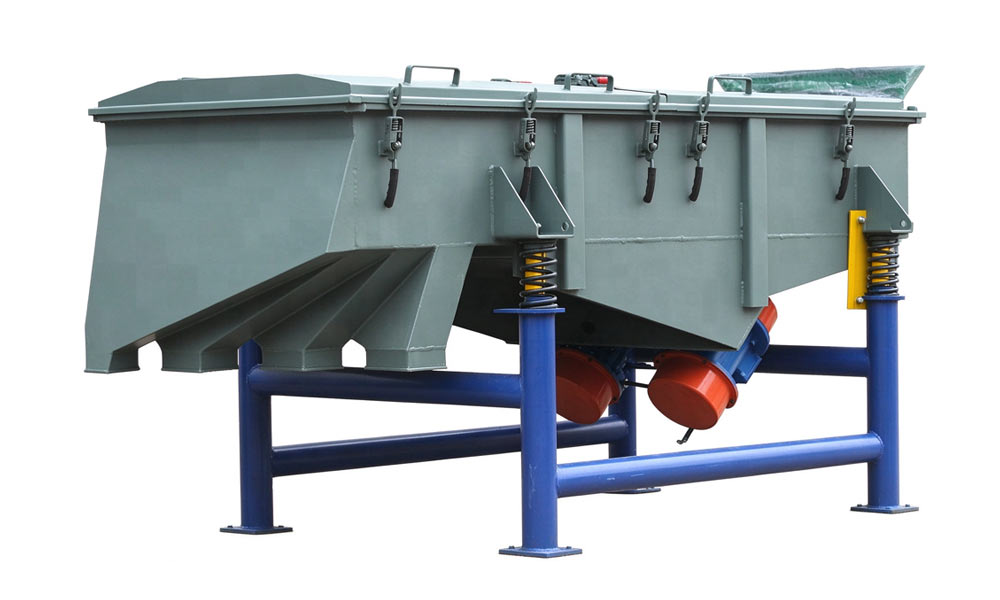
Most people attribute clogging problems to the material itself. Of course, wet or clay-rich materials are indeed difficult to handle. But the real problem lies elsewhere. When particles are stuck in the screen holes, and vibration alone is insufficient to clear them, progressive clogging occurs. Traditional vibrating screens rely on a single motor to drive the entire screen, resulting in dispersed energy. Independent vibration technology changes this; each screen plate is equipped with an independent actuator tuned to a specific frequency. This precise energy acts on the source of the clogging without causing the entire screen frame to vibrate violently.
Why Conventional Decks Quietly Blind on Difficult Ore
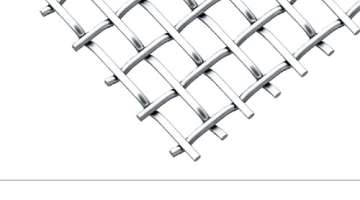
The old way of fighting clogging is to crank amplitude, add wash bars, or send a crew in with a hammer, but a rigid High-Tensile Wire Mesh–style woven deck still moves as one stubborn object, so once a moist fines layer bridges the openings, the energy from the exciter gets spread thin across the whole panel. Near-size particles wedge, clay smears over the crown of the wire, and the open area shrinks while the plant keeps feeding it ore that now rides across a half-blind surface. Blinding and pegging are not separate mysteries here—blinding is adhesion from above, pegging is geometry from inside—and a traditional screen treats both with the same blunt vibration, which is why the fix never sticks.
How Independent Vibration Breaks the Trap at the Aperture
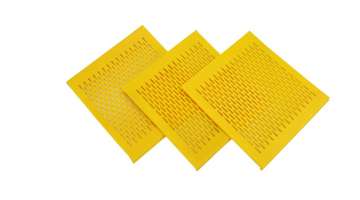
This is the part that changes the game: Self-Cleaning Vibration Technology lets individual longitudinal wires, polyurethane strands, or modular actuators move on their own natural frequency instead of being locked to every neighbor. When ore hits the deck, each element flexes a fraction of a millimeter out of phase with the one next to it, so the aperture is never a fixed hole—it breathes, narrows, widens, and throws the trapped particle before a bond can form. Some systems use harp-style free wires, others use electromagnetic or piezo actuators mounted per module generating high-frequency micro-bounce, but the principle is identical: put the cleaning motion exactly where the clog is born, not somewhere else hoping it travels.
What It Actually Restores on a Running Plant
Operators do not care about the mechanism until it shows up as numbers, and that is where this technology earns its keep, because a surface that refuses to blind stops trading throughput for manual cleaning. Effective open area stays stable shift after shift, so the cut point holds, the oversize stream stops carrying fines, and the downstream crusher or mill stops choking on material that should never have crossed the deck. In coal, iron ore, and clay-heavy aggregate lines, plants running independent-vibration panels routinely report fewer stoppages, longer intervals between changeouts, and a screening efficiency curve that does not nosedive the moment moisture climbs—which is the difference between a screen that is "working" and one that is actually making money.
Matching the Technology to the Material, Not the Brochure
The mistake buyers make is assuming self-cleaning means "never blind, no matter what," but the smart move is to match the variant to the failure: harp and wave wires for high-capacity dry fines, triangle or diamond openings for sticky near-size pegging, polyurethane flexible strips for abrasive wet ore, and actuator-driven modules when the feed is so cohesive that passive flexing is not enough. Pair that with decent feed distribution, correct deck angle, and tension that does not strangle the independent movement, and the mesh finally does what the catalog promised. Specified blindly, even the best self-cleaning panel becomes an expensive compromise; specified against real moisture, clay content, and particle shape, it becomes the cheapest upgrade on the whole circuit.
Working Principle of Self-Cleaning Independent Vibration Technology
The working principle of self-cleaning independent vibration technology is as follows: Piezoelectric or electromagnetic actuators are directly mounted on each screen module. They generate high-frequency micro-vibrations, with a frequency of approximately 3,000 to 5,000 rpm, creating a rapid bouncing effect on the screen surface. Particles that were originally spread out and clogged are thrown out. The system can continuously self-clean during operation. No downtime or manual intervention is required, and there is no production loss.
Practical Impact of Self-Cleaning Independent Vibration Technology on Industrial Screening
Many countries have begun testing these systems on dewatering and grading screens. The test data speaks for itself: after switching to the new system, unplanned downtime was reduced by 40%, and screening efficiency was significantly improved.
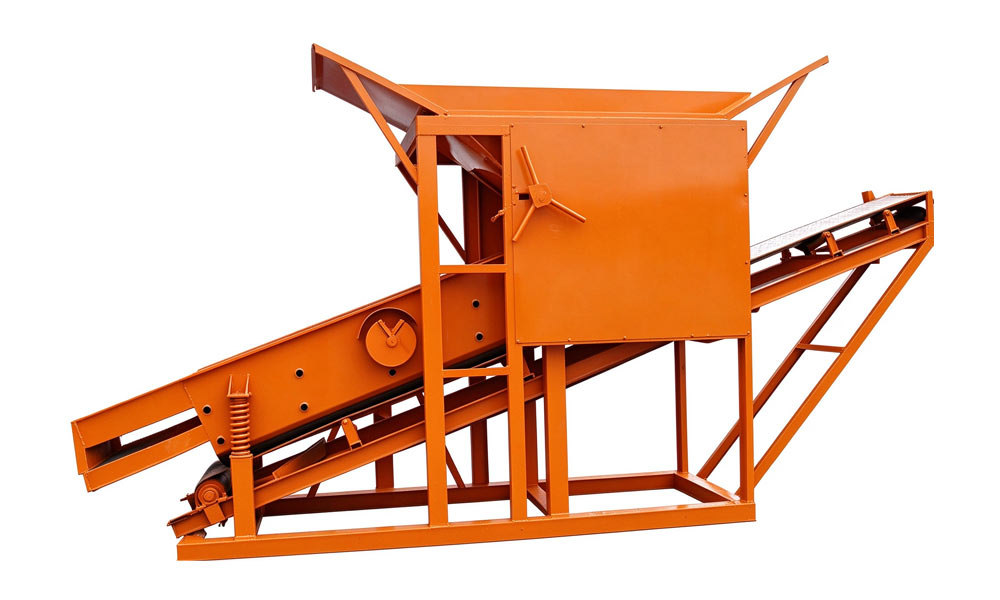
In mining screening operations, screen clogging is a common problem, but the solution can be more efficient. Self-cleaning independent vibration technology has been field-proven and is being rapidly deployed. If your screening equipment requires frequent downtime for maintenance, consider self-cleaning independent vibration technology.