If you're running heavy-duty screening in mining or quarrying, you already
know that standard mesh dies fast. A high-carbon steel self-cleaning screen changes the game ,but only if you understand what's happening inside the
material. Here's the full picture on tensile behavior and the heat treatment
processes that make these screens last.
Tensile Properties That Actually Matter
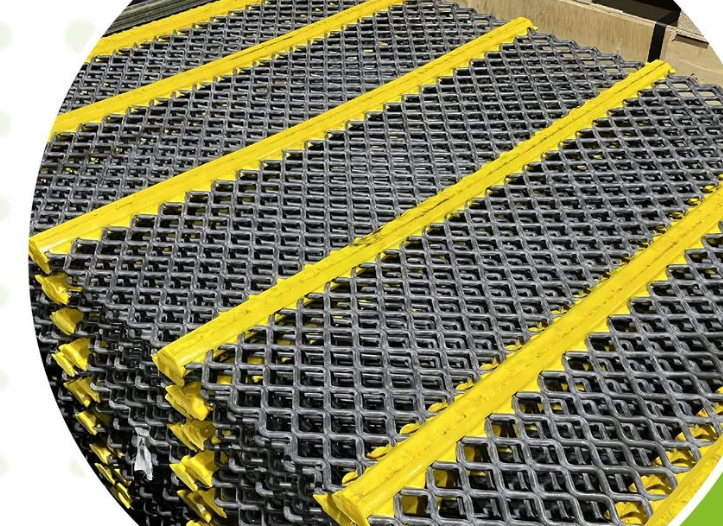
High-carbon steel screen wire which typically 65Mn grade hits a tensile
strength above 1200 MPa. That's roughly three times what you get from ordinary
carbon steel wire. The manganese content (≥0.6%) triggers work hardening under
impact: surface hardness climbs to HRC 50–55 while the core stays tough. For a
self-cleaning screen, this matters because the mesh flexes under high-frequency
vibration without cracking. Wire diameters range from 1.2 mm to 16 mm, and the
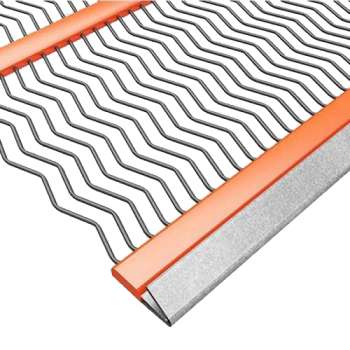
woven structure which often using bidirectional wave-bend or lock-crimp patterns
keeps aperture uniformity even after thousands of stress cycles.
Heat Treatment: Where the Real Hardening Happens
Untreated high-carbon steel cannot meet usage standards, and the key step in
treatment is heat treatment hardening. Manufacturers typically use a quenching
and tempering process: first, austenitization is performed at around 800–850°C,
followed by oil quenching to form martensite, and finally tempering at
500–560°C. This ultimately forms a bainitic-martensite composite structure,
balancing hardness and impact toughness. To obtain a smaller carbide
distribution, some manufacturers use a process of high-temperature solution
quenching followed by high-temperature tempering. This process makes the
carbides into fine spherical shapes and uniformly dispersed, thus increasing the
wear life several times compared to untreated steel wire. One proven alternative
is austempering at 425°C to generate bainite directly, boosting contact fatigue
life by 2–3x.
Why Self-Cleaning Works Better With Treated High-Carbon Steel
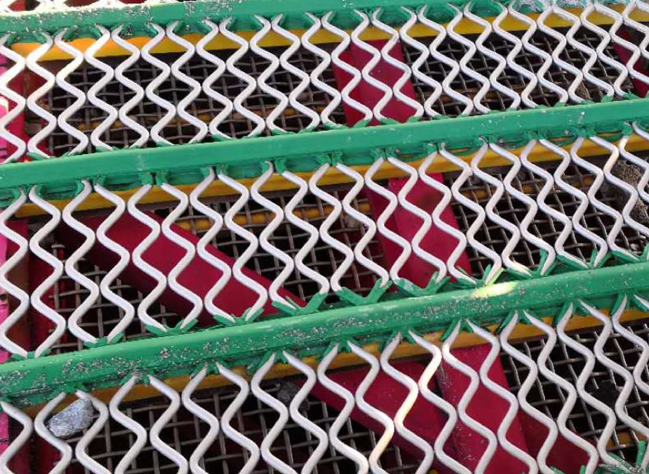
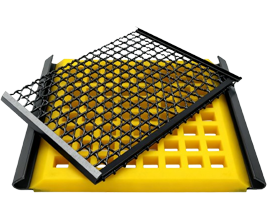
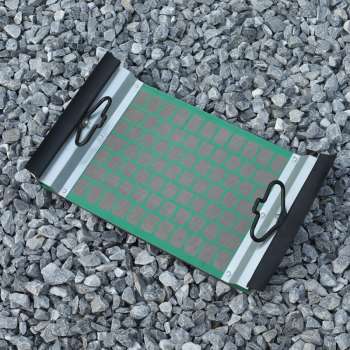
The wedge-shaped or polyurethane-reinforced surface on a self-cleaning screen relies on the substrate staying rigid under vibration. Heat-treated high-carbon
steel delivers that rigidity. The screen bounces material off instead of letting
it embed, cutting blinding events by half. Combined with the tensile strength to
survive constant impact, you're looking at 6–12 months of continuous operation
compared to weeks with untreated mesh.
Don't just check the aperture size. Ask your supplier about the heat
treatment spec such as quench temperature, temper range and carbide grade.
That's what separates a high-carbon steel self-cleaning screen that pays for
itself from one that burns through your budget.


Leave A Reply
By using form u agree with the message sorage, you can contact us directly now