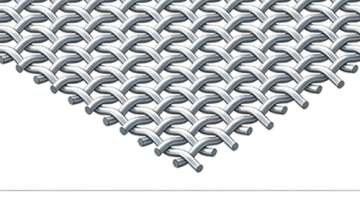
High-Tensile Steel Wire Mesh for Heavy Primary Screening
If your purchased screens always easily screen materials immediately after purchase, but begin to sag, deform, or lose tension after a short time, it means your screens are unsuitable. Most factories reduce screen specifications to save costs, ultimately resulting in greater losses. Cheap steel wire is prone to bending and mesh stretching, leading to a rapid decline in primary screening efficiency. This is not a material problem, but a problem with the screen specifications. High-tensile steel wire mesh was developed precisely for this purpose; it can maintain its shape under heavy pressure.
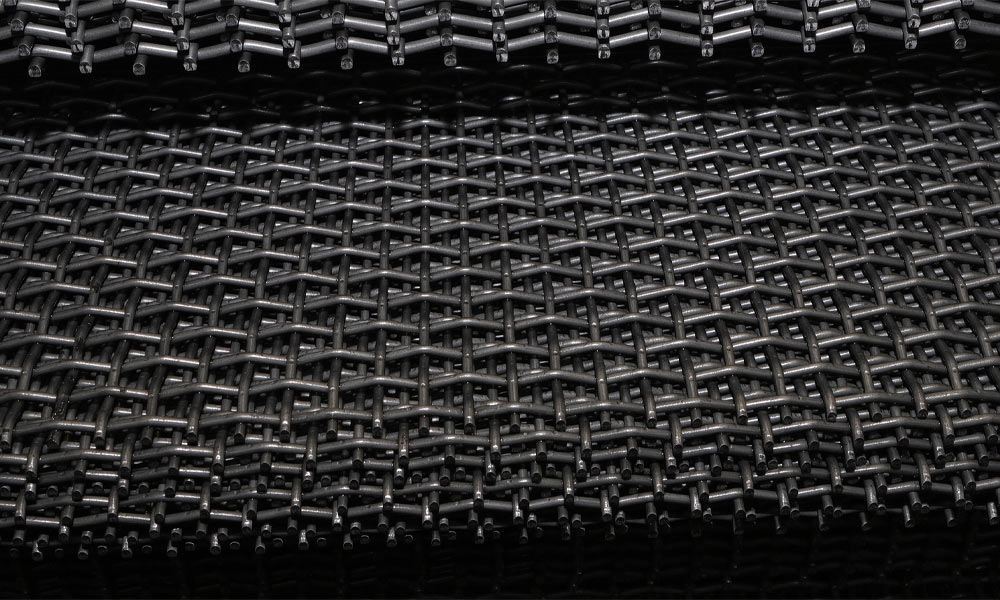
The Unique Features of High-Tensile Wire Mesh
High-tensile steel wire mesh not only has thicker wires but also higher tensile strength. It is made of special alloy steel, typically manganese steel or high-carbon steel, with a tensile strength between 1200 and 1800 MPa. It can withstand the heavy impact loads common in primary screening applications, thus maintaining excellent resistance to deformation. In heavy mining operations handling raw ore, the ore size can be very large, easily causing ordinary screens to bend and fatigue. High-strength screens absorb this energy without permanent stretching. Their mesh size remains consistent throughout use, ensuring precise cutting points.
What "High-Tensile" Actually Means in a Mining Wire
A High-Tensile Wire Mesh is not defined by being thick for the sake of thickness—it is defined by what the steel can survive before it yields, usually drawn and heat-treated high-carbon or manganese-alloy wire sitting anywhere from around 1200 MPa up to 1800 MPa depending on grade and process. That number changes how the deck behaves under load: low-carbon mesh bends and stays bent, so apertures drift and the material bed starts riding on a deformed surface, while a high-tensile wire resists permanent stretch and returns to its original geometry after each impact. In plain workshop language, tensile strength is the difference between a screen that "remembers" its shape and one that slowly turns into a sagging hammock, because the wire itself refuses to give up the crimp it was born with.
Standing Up to the First Drop on a Scalping Deck
Primary scalping is the ugliest job in the plant, and it is also where High-Tensile Wire Mesh earns the money back fastest, because the feed end is not screening so much as absorbing falling boulders that arrive with momentum, edges, and attitude. Ordinary panels punch through or loosen at the hooks within days, but a high-tensile weave paired with a lock-crimp or double-crimp structure spreads that shock across a wide group of wires instead of letting one crossing carry the whole hit. The mesh flexes microscopically, dissipates the energy, and keeps the oversize rolling forward instead of punching a hole that takes the shift down with it—which is why veteran crews stop patching the feed zone and start specifying wire that was never going to flinch in the first place.
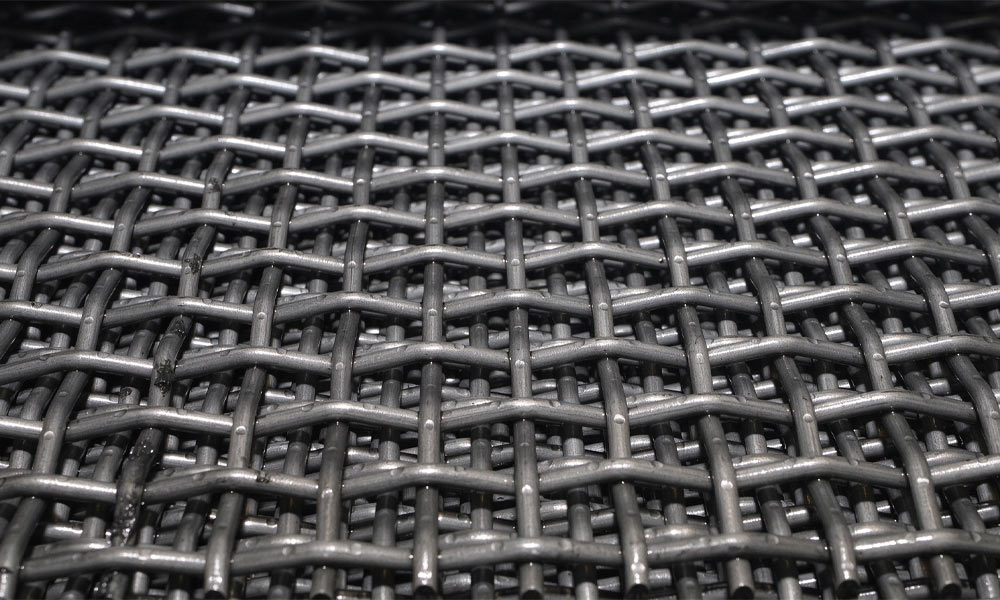
Fatigue Life Is the Quiet Advantage Nobody Sees
People shop for impact resistance, but the thing that actually kills most mining screens is not the first rock—it is the nine millionth vibration, and this is the part of High-Tensile Wire Mesh that does not show up in a casual inspection. Low-grade wire work-hardens in the wrong way: it gets brittle at the crimp toes, cracks quietly near the support rails, and then rips open along a line nobody noticed until the belt backed up. High-tensile spring-steel-type wire keeps a springy core under a harder surface, so it rolls with cyclic stress instead of accumulating it, and the panel keeps working through weeks of 24/7 duty without the sudden midnight failure. In hard-rock service that usually reads as "the screen just lasts," but underneath it is a fatigue curve that was engineered instead of hoped for.
Aperture Stability Protects Everything Downstream
The last reason a High-Tensile Wire Mesh matters is not about the mesh itself—it is about the crusher, the mill, and the product grade sitting downstream, because once the openings start wandering, the whole plant eats the mistake. A stretched panel lets oversize sneak through, chokes the secondary crusher, dilutes the screened fraction, and turns a tight gradation spec into a guessing game at the load-out bay. High-tensile wire holds the aperture window inside tolerance for the length of the campaign, so the cut stays where it was set and the downstream machines run at the tonnage they were designed for. That stability is what converts "strong mesh" into lower cost per ton: fewer changeouts, fewer off-spec piles, and a deck the metallurgist stops arguing with.
Cost Advantages of High-Tensile Wire Mesh
While high-tensile wire mesh does have a higher initial cost, it offers a longer lifespan and fewer replacements in the long run. The uniform mesh size means more consistent screening efficiency, less clogging, less downtime, and the ability to process more material. Its lifespan is also two to three times that of traditional screens. This quickly translates to a cost advantage.
If you are choosing the right screen for heavy mining or primary screening, don't just consider the purchase price; consider the overall cost-effectiveness. High-tensile wire mesh is an excellent choice for heavy mining and primary screening operations.