Anti-caking Performance and Effectiveness of Self-cleaning Screens in Processing Potash Materials
Processing potash presents a unique screening challenge beyond simple size separation: the material's tendency to cake, hygroscopic nature and the fine dust of potash generated during handling can combine with ambient moisture to form a hard, cement-like layer on screen surfaces. This caking severely reduces throughput, compromises sizing accuracy, and demands frequent, disruptive cleaning. The deployment of self-cleaning screens specifically engineered for this duty offers a powerful countermeasure. Their design directly targets the root causes of caking, providing superior anti-caking performance and restoring screening effectiveness in potash circuits.
The Mechanism: How Self-cleaning Screens Combat Caking
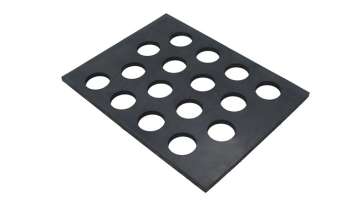
Self-cleaning screens for potash are not merely wear-resistant; they are functionally designed to prevent adhesion. Their anti-caking performance stems from a combination of material science and mechanical design. The screen’s made from a special polyurethane mix that’s both hydrophobic and has low surface energy. Basically, it keeps damp potash and fine particles from sticking, like a non-stick barrier. Anti-static additives are also mixed in, so any electrical charge that would draw in fine dust—usually the main culprit behind that first caking layer—gets dispersed right away.
Why Potash Cakes Where Other Materials Only Clog
Clogging and caking are cousins, but potash turns the family reunion ugly, because the material is already a salt that wants to be in solution and then wants to come back out of solution exactly where you do not want it. On a conventional woven or punched deck, fine potash dust wets with brine mist, slips into the wire crossings or punched holes, and as the deck heats from friction or the surrounding air drops in humidity, that brine evaporates and leaves needle-like crystals bridging the opening. Unlike sticky clay that smears, potash cake is crystalline and self-reinforcing: once a few salt bridges form, coarse granules bump against them, trap more fines, and the aperture shrinks with an almost geological patience. A Self-Cleaning Screen disrupts this by making the opening move locally—polyurethane fingers flex, crimped wires jitter, paired strands rub at the contact point—so the brine film never settles long enough to deposit a stable crystal network. The key word is settles: potash does not need a huge force to cake, it needs stillness, and self-cleaning decks are fundamentally machines for removing stillness from the sizing surface.
Slot Geometry and Keeping Potash Crystals Unfused
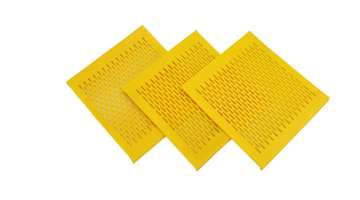
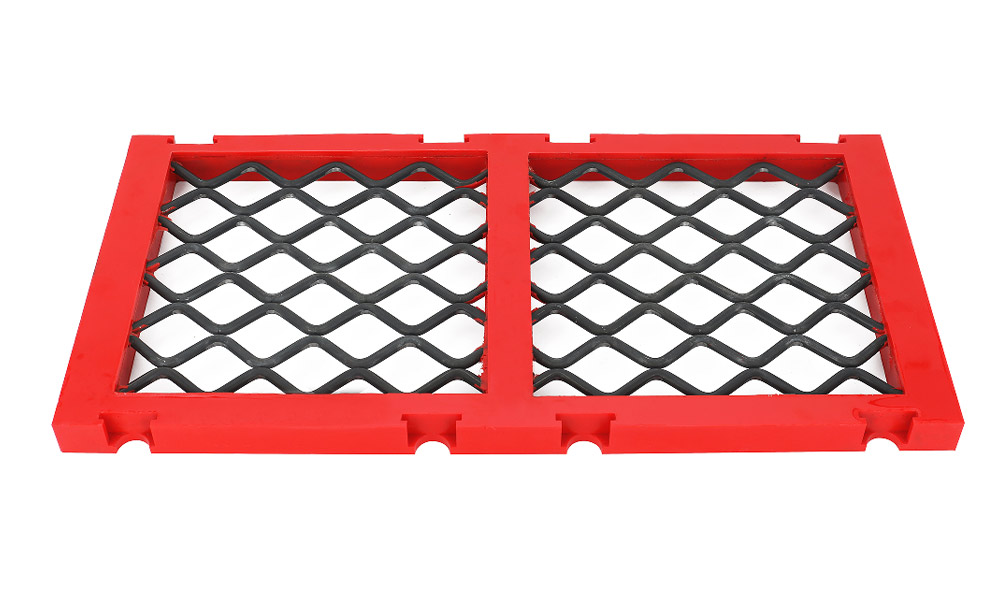
The anti-caking effectiveness of a Self-Cleaning Screen in potash service comes from three quiet design decisions: strand resilience, slot taper, and surface energy. Potash granules are angular but fragile, so the deck cannot be so aggressive that it generates new fines—those fresh fines are just more cannon fodder for caking—yet it must be lively enough to shed moisture films. Polyurethane self-cleaning panels with tapered slots let a near-size potash crystal enter, feel a slight expansion-contraction cycle, and either pass or reject without lodging; the taper means there is no flat ledge where saturated dust can park and crystallize. Wire-type self-cleaning constructions add a scrubbing action at the crossings, which sounds minor until you realize caking starts at the crossing, not in the middle of the hole. Surface energy matters too: a slightly lower-friction, non-porous face resists brine wetting better than a rough steel surface that wicks solution into every micro-groove. A Self-Cleaning Screen tuned for potash is not “a screen that moves,” it is a screen whose movement, slot shape, and face chemistry are aligned so crystals stay individual, fines stay mobile, and the deck stays open through humidity swings that would fossilize a rigid panel.
Dewatering, Dust Return, and the Circuit Conditions
No potash screen lives alone, and anti-caking performance is half deck design, half circuit discipline, because the Self-Cleaning Screen is only as good as the environment around it. Excess brine return from a upstream centrifuge, poor deck drainage, dead air in the screen housing, or recycled dust from the bagging line all raise the vapor pressure near the deck and feed the crystallization cycle. Support-bar spacing also enters the story: too wide and the polyurethane panel drums, creating low-pressure pockets where moist fines collect and bake; too tight and the deck loses open area, the bed thickens, and potash sits longer on the surface than its moisture content allows. Stroke and deck angle have to match the fragility of the granule—potash does not forgive a violent screen throwing crystals back onto the same row of slots—so the machine tuning and the Self-Cleaning Screen specification have to be written in the same sentence. Plants that win at anti-caking usually do boring-but-powerful things: control feed moisture, vent the screen housing, keep recycled dust out of the sizing zone, and choose a self-cleaning deck whose flex pattern matches the granule size instead of copying a coal or phosphate screen.
Key Design Features for Maximum Effectiveness
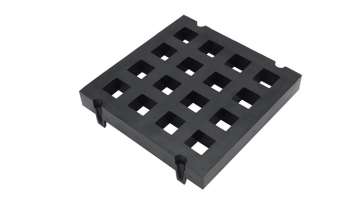
The physical design of the self-cleaning screen amplifies its anti-caking properties. A critical feature is the use of tapered or flared apertures. These openings are wider on the discharge side than on the feed side, creating a geometry that prevents near-size particles from becoming mechanically wedged. Combined with the screen deck's vibration, this design promotes a "pop-out" effect. Additionally, some panels feature a slightly textured or crowned surface profile. This subtle contour discourages material from lying flat and compacting, instead encouraging it to roll and shift, which breaks up incipient cakes before they can solidify.
Operational Synergy and Long-term Benefits
The effectiveness of self-cleaning screens is maximized when the screening equipment is properly tuned. Adequate vibration amplitude is crucial to keep the material bed fluid and to impart the kinetic energy needed for the screen's self-cleaning action. Because of this, cake builds up much more slowly. The operation runs longer without stopping, the product quality stays steady, and there’s far less work and downtime spent scraping off buildup by hand. For anyone processing potash, it really means more uptime, less money spent on maintenance, and production that stays on track.
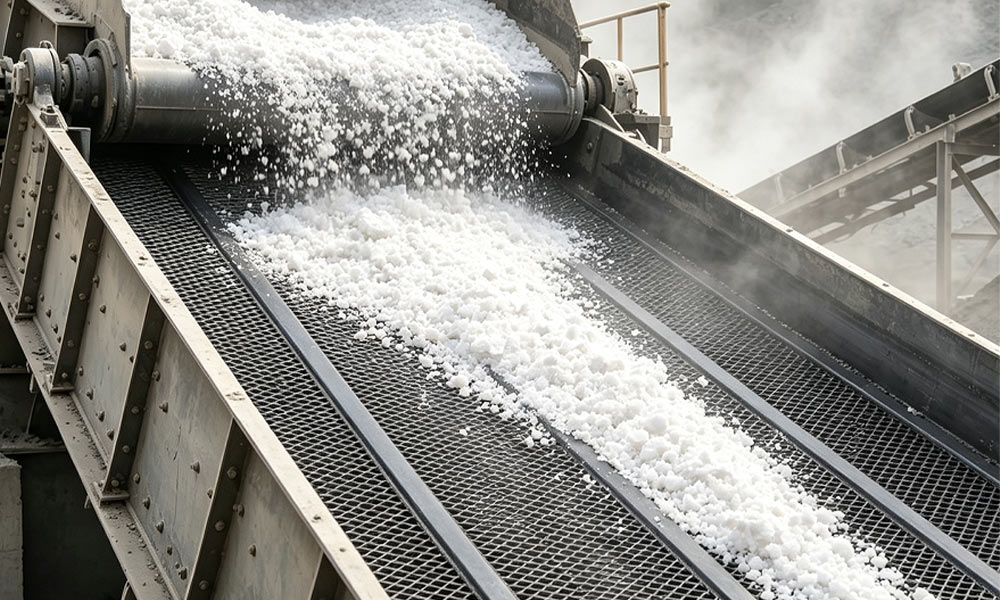
For facilities struggling with the costly and persistent issue of caking during potash screening, self-cleaning screens represent a targeted and effective engineering solution. By integrating a non-stick material compound with a clog-resistant physical design, these screens deliver proven anti-caking performance. Their effectiveness in maintaining open screening area and material flow directly addresses the core inefficiencies in potash processing. Investing in this specialized technology is a strategic move that enhances overall circuit reliability and operational productivity.